野付半島—縫いとめられた岬
野付半島は、北海道東端に位置する日本最大の砂嘴である。
潮流が運ぶ砂で形づくられ、全長約26キロメートル。
しかしこの岬は、風と波に削られ、森は立ち枯れ、
年に約1.5センチメートルの速度で沈み続けている。
潮流が運ぶ砂で形づくられ、全長約26キロメートル。
しかしこの岬は、風と波に削られ、森は立ち枯れ、
年に約1.5センチメートルの速度で沈み続けている。
本来であれば、その変化は「自然の新陳代謝」として
受け入れられるはずだった。
しかし、人間はその運命に介入した。
受け入れられるはずだった。
しかし、人間はその運命に介入した。
海岸線に沿って消波ブロックを並べ、地中に配水管を通し、
この岬を縫いとめようとしてきた。
守りたいものがあり、それを守るために線を引き、固定しようとした。
それは「治療」として始まった。
この岬を縫いとめようとしてきた。
守りたいものがあり、それを守るために線を引き、固定しようとした。
それは「治療」として始まった。
だが、岬はなお変わり続け、縫い目はほどけ続ける。
その処置が妥当だったのかは、今はわからない。
評価は遅れてやってくる。
10年後、20年後、あるいはもっと先にしか、
影響の全体像は見えない。
結果が出るまで、この場所の治療は暫定であり、診断は仮説である。
評価は遅れてやってくる。
10年後、20年後、あるいはもっと先にしか、
影響の全体像は見えない。
結果が出るまで、この場所の治療は暫定であり、診断は仮説である。
本プロジェクトでいう「治療」とは、
保護と支配、延命と代謝が同居する処置を指す。
消波ブロックは海岸を守ると同時に、自然の動きを止める。
漁場造成は生物を増やすと同時に、人間の利益のために増やす。
どちらが治療でどちらが破壊かは、視点によって反転する。
保護と支配、延命と代謝が同居する処置を指す。
消波ブロックは海岸を守ると同時に、自然の動きを止める。
漁場造成は生物を増やすと同時に、人間の利益のために増やす。
どちらが治療でどちらが破壊かは、視点によって反転する。
写真は判決ではない。写真はカルテである。
カルテがあれば、後から処置が何を残し、何を失わせたかを検証し、
次の手当てに活かすことができる。
カルテがあれば、後から処置が何を残し、何を失わせたかを検証し、
次の手当てに活かすことができる。
だから私は撮る。
Notsuke Peninsula — The Sutured Cape
Notsuke Peninsula is Japan's largest sand spit, located at the eastern edge of Hokkaido.
Shaped by sand carried on ocean currents, it stretches approximately 26 kilometers.
Yet this cape is being eroded by wind and waves, its forests are dying,
and it continues to sink at a rate of about 1.5 centimeters per year.
Shaped by sand carried on ocean currents, it stretches approximately 26 kilometers.
Yet this cape is being eroded by wind and waves, its forests are dying,
and it continues to sink at a rate of about 1.5 centimeters per year.
Normally, such change would be accepted as the natural metabolism of the land.
But humans intervened in that fate.
But humans intervened in that fate.
They lined the coastline with wave-dissipating blocks, laid drainage pipes underground,
and tried to suture this cape in place.
There was something to protect, so they drew lines and tried to fix it in place.
It began as "treatment."
and tried to suture this cape in place.
There was something to protect, so they drew lines and tried to fix it in place.
It began as "treatment."
But the cape keeps changing, and the stitches keep unraveling.
Whether that treatment was appropriate, we cannot know now.
Evaluation arrives late.
Only in 10 years, 20 years, or even further ahead
will the full picture of its impact become visible.
Until the results are in, the treatment of this place is provisional,
and the diagnosis is hypothesis.
Evaluation arrives late.
Only in 10 years, 20 years, or even further ahead
will the full picture of its impact become visible.
Until the results are in, the treatment of this place is provisional,
and the diagnosis is hypothesis.
In this project, "treatment" refers to an intervention
where protection and control, life extension and metabolism, coexist.
Wave-dissipating blocks protect the shore while stopping nature's movement.
Fishery cultivation increases marine life while increasing it for human benefit.
Which is treatment and which is destruction flips depending on perspective.
where protection and control, life extension and metabolism, coexist.
Wave-dissipating blocks protect the shore while stopping nature's movement.
Fishery cultivation increases marine life while increasing it for human benefit.
Which is treatment and which is destruction flips depending on perspective.
A photograph is not a verdict. A photograph is a medical chart.
With a chart, we can later examine what the treatment preserved and what it lost,
and apply that knowledge to the next intervention.
With a chart, we can later examine what the treatment preserved and what it lost,
and apply that knowledge to the next intervention.
That is why I photograph.
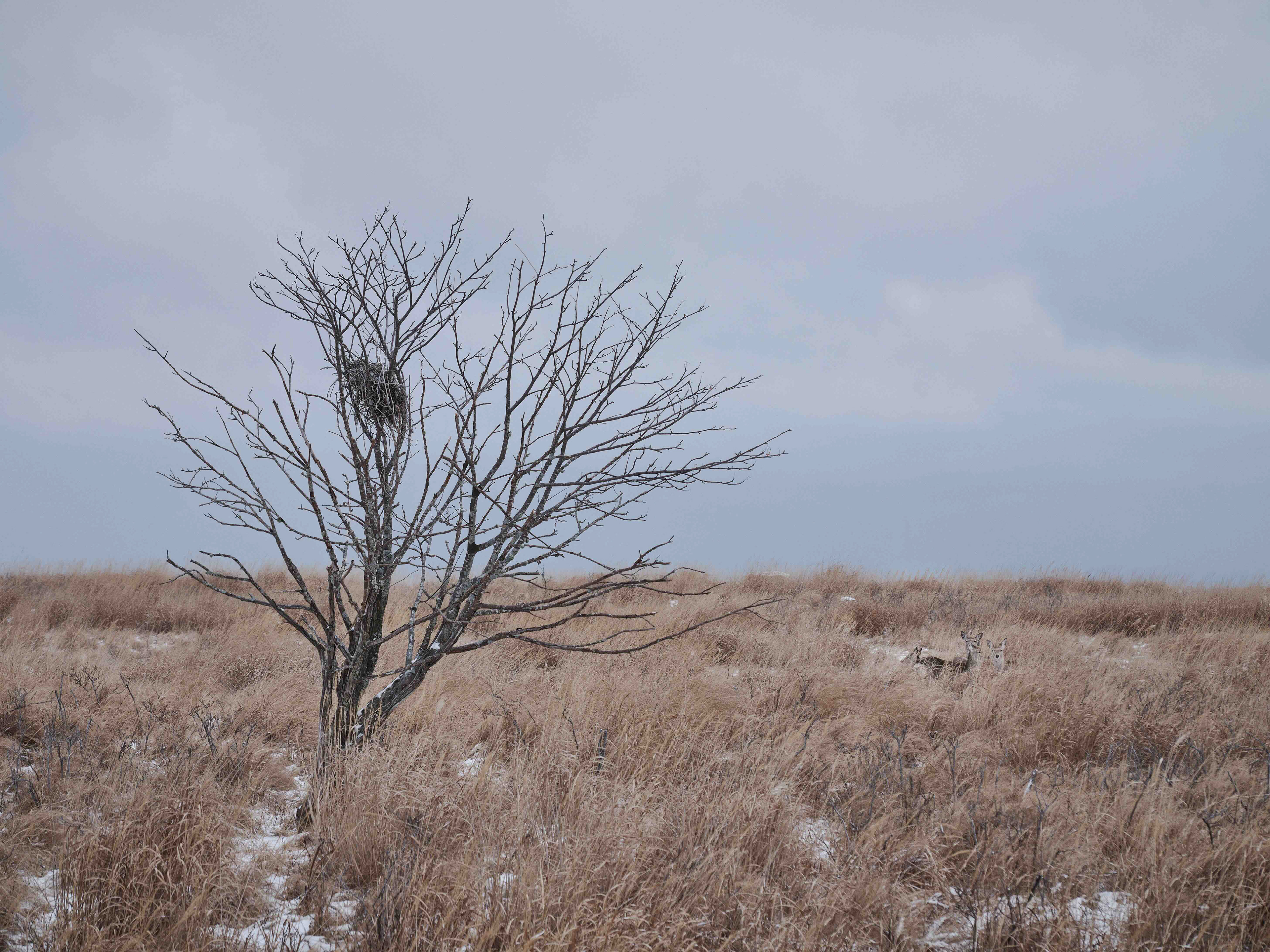
1. Nest in the Grass / 巣のある草地
Notsuke Peninsula, Hokkaido, JP / 2020-12
野付半島、北海道 | 43°34'N 145°20'E | 2020年12月
冬の草地に、鳥の巣がひとつ。
自然・野生・人工が最初から重なり合う「症状」として、
観察の入口に立つ。
自然・野生・人工が最初から重なり合う「症状」として、
観察の入口に立つ。
この一枚は、観客の速度を落とすために置かれている。
風景礼賛の速度から、観察の速度へ。
風景礼賛の速度から、観察の速度へ。
Notsuke Peninsula, Hokkaido | 43°34'N 145°20'E | December 2020
A single bird's nest in a winter meadow.
As a "symptom" where nature, wildlife, and human intervention
overlap from the very beginning, it stands at the entrance of observation.
As a "symptom" where nature, wildlife, and human intervention
overlap from the very beginning, it stands at the entrance of observation.
This image is placed to slow the viewer down—
from the pace of landscape appreciation to the pace of observation.
from the pace of landscape appreciation to the pace of observation.
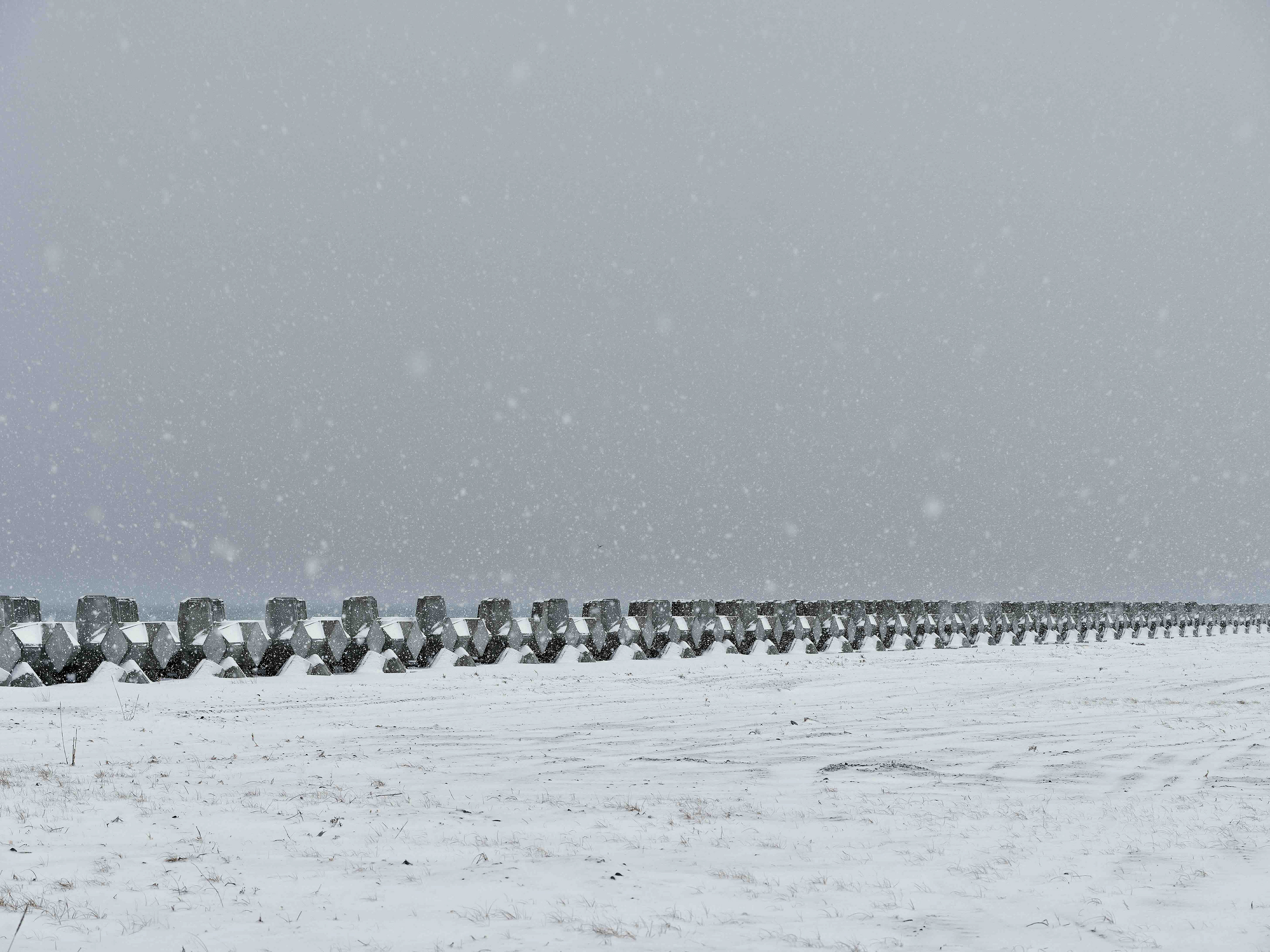
2. Suturing the Shoreline I / 海岸線の縫合 I
Notsuke Peninsula, Hokkaido, JP / 2020-12
野付半島、北海道 | 43°33'N 145°20'E | 2020年12月
テトラポッドの列が海岸線に沿って走る。
「守る」とは「線を引く」こと。
診断は常に、線引きから始まる。
「守る」とは「線を引く」こと。
診断は常に、線引きから始まる。
線は必要かもしれない。
だが線は、後から見れば「過剰」かもしれない。
どちらも今は確定しない。
だが線は、後から見れば「過剰」かもしれない。
どちらも今は確定しない。
Notsuke Peninsula, Hokkaido | 43°33'N 145°20'E | December 2020
A row of tetrapods runs along the shoreline.
To "protect" is to "draw a line."
Diagnosis always begins with drawing lines.
To "protect" is to "draw a line."
Diagnosis always begins with drawing lines.
The line may be necessary.
But the line may later prove "excessive."
Neither can be determined now.
But the line may later prove "excessive."
Neither can be determined now.
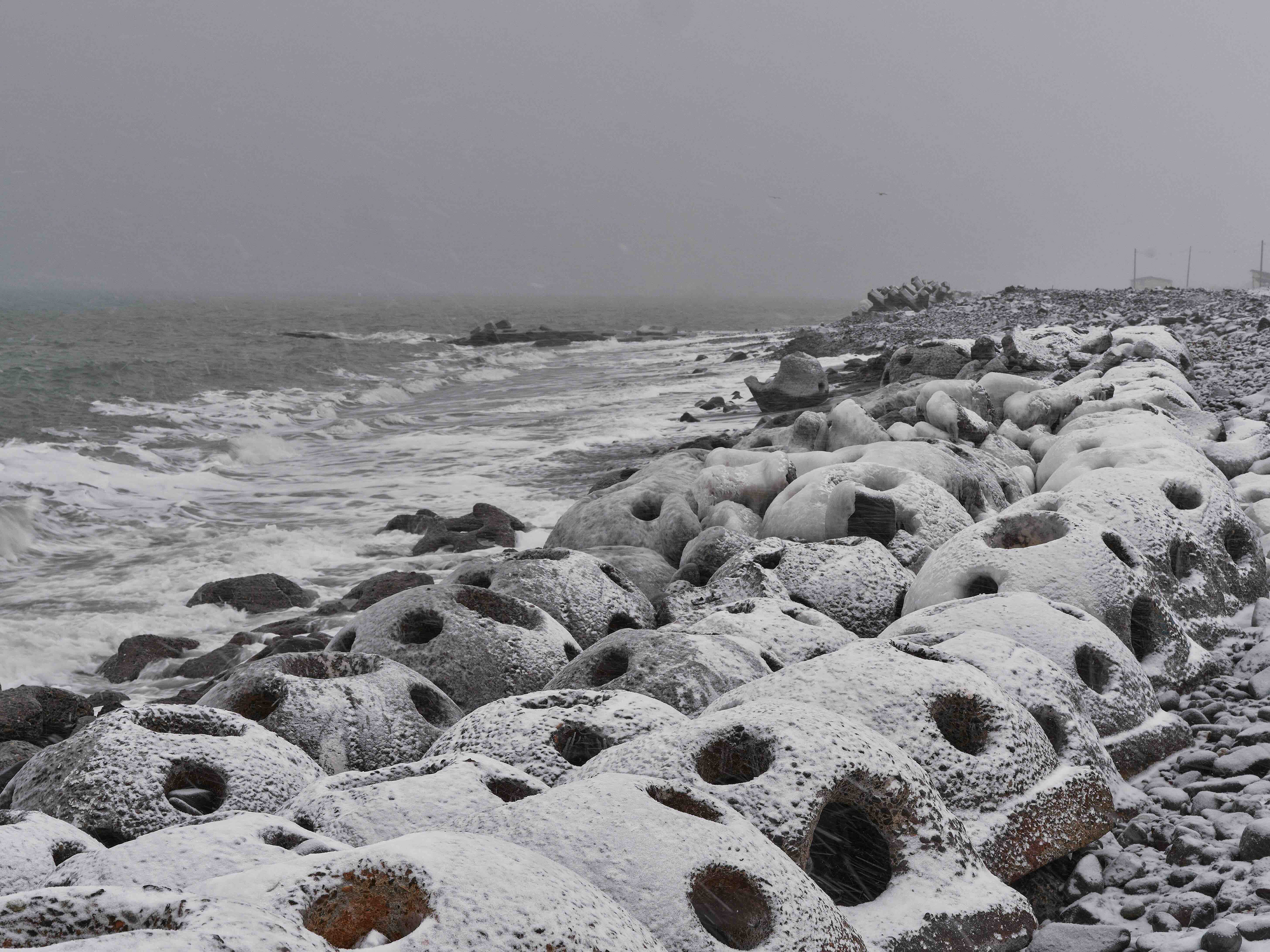
3. Suturing the Shoreline II / 海岸線の縫合 II
Notsuke Peninsula, Hokkaido, JP / 2020-12
野付半島、北海道 | 43°37'N 145°12E | 2020年12月
タートルブロック——半球状の中空構造に、多数の穴。
波を弱める穴と、生物を増やす穴が同居している。
波を弱める穴と、生物を増やす穴が同居している。
だが、どちらが「治療」かは確定しない。
波を弱めることは、自然の代謝を止めることでもある。
生物を増やすことは、採取のためでもあり、棲み場を与えることでもある。
波を弱めることは、自然の代謝を止めることでもある。
生物を増やすことは、採取のためでもあり、棲み場を与えることでもある。
二重の処置は、さらに二重に反転する。
Notsuke Peninsula, Hokkaido | 43°37'N 145°12'E | December 2020
Turtle blocks—hemispherical hollow structures with numerous holes.
Holes that weaken waves and holes that increase marine life coexist.
Holes that weaken waves and holes that increase marine life coexist.
But which is "treatment" cannot be determined.
Weakening waves also means stopping nature's metabolism.
Increasing marine life is both for harvesting and for providing habitat.
Weakening waves also means stopping nature's metabolism.
Increasing marine life is both for harvesting and for providing habitat.
The dual intervention flips back on itself, doubly.
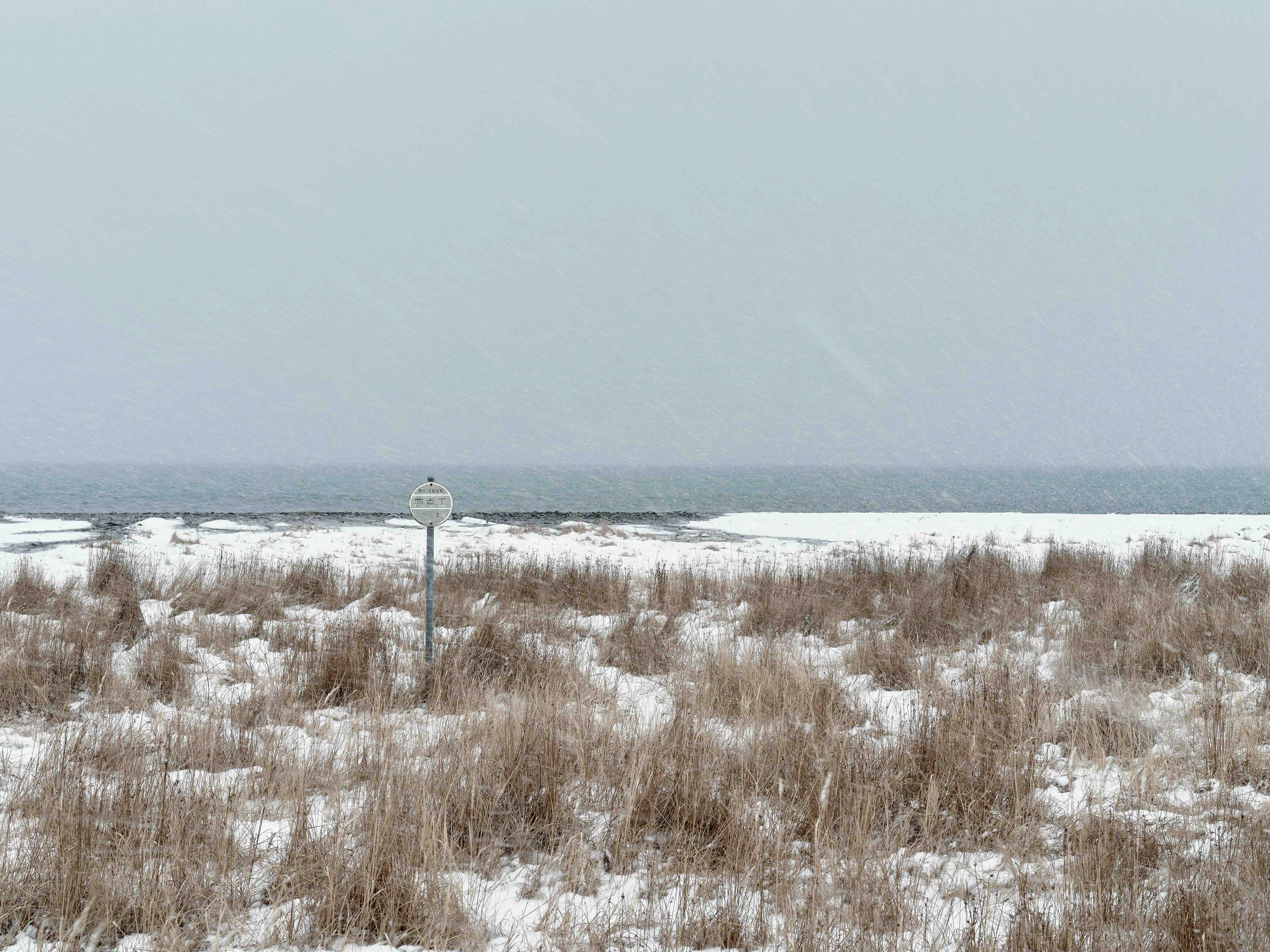
4. Marker for Underground Pipes / 配管の標
Notsuke Peninsula, Hokkaido, JP / 2020-12
野付半島、北海道 | 43°33'N 145°20'E | 2020年12月
雑草と雪の先に、小さな標識が一本。
これは地中に埋設された配水管の位置を示す。
これは地中に埋設された配水管の位置を示す。
見えているのは「静かな自然」だが、
足元には人間のライフラインが管として流れている。
処置は、見えないところにも及ぶ。
足元には人間のライフラインが管として流れている。
処置は、見えないところにも及ぶ。
Notsuke Peninsula, Hokkaido | 43°33'N 145°20'E | December 2020
A small marker stands beyond weeds and snow.
It indicates the position of drainage pipes buried underground.
It indicates the position of drainage pipes buried underground.
What we see is "quiet nature,"
but beneath our feet, human lifelines flow through pipes.
Treatment extends to places we cannot see.
but beneath our feet, human lifelines flow through pipes.
Treatment extends to places we cannot see.
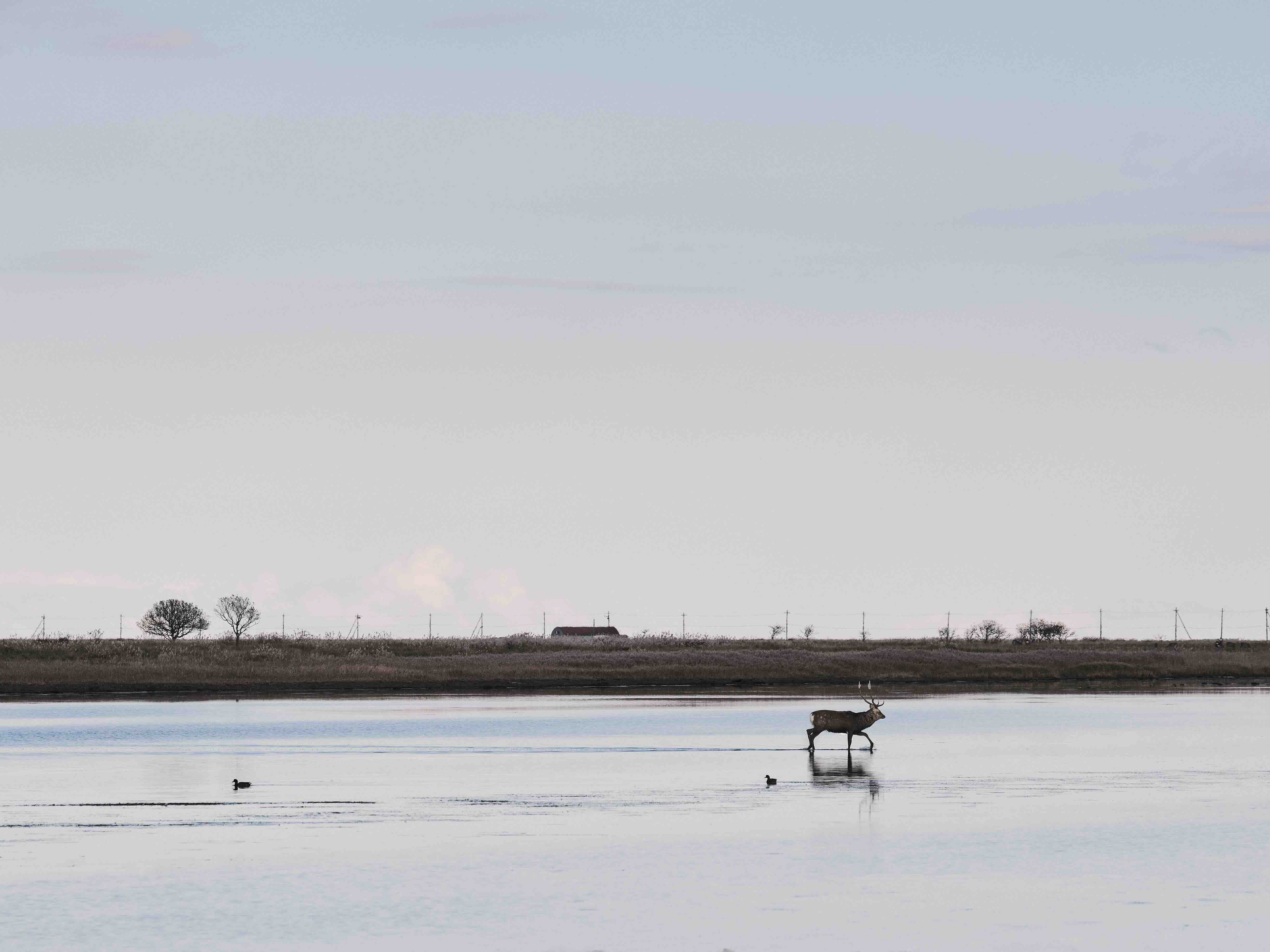
5. Crossing the Boundary / 境界の横断
Notsuke Peninsula, Hokkaido, JP / 2021-10
野付半島、北海道 | 43°33'N 145°18'E | 2021年10月
人間が引いた境界を、鹿はためらいなく越える。
遠景には堤防や電柱、建物の線が走る。
けれど鹿は、その境界を境界として扱わない。
遠景には堤防や電柱、建物の線が走る。
けれど鹿は、その境界を境界として扱わない。
線引きは、生の速度に追いつかない。
Notsuke Peninsula, Hokkaido | 43°33'N 145°18'E | October 2021
A deer crosses the boundary drawn by humans without hesitation.
In the distance, lines of embankments, utility poles, and buildings run across the landscape.
But the deer does not treat that boundary as a boundary.
In the distance, lines of embankments, utility poles, and buildings run across the landscape.
But the deer does not treat that boundary as a boundary.
Our lines fail to keep pace with the speed of life.
The exhibition in January 2026
このプロジェクトについて/About this project
私がこのプロジェクトを始めた背景には、二つの体験がある。
幼少期、私は川崎病を患った。
原因不明の急性熱性全身性血管炎——
発見から50年以上経った今も、原因は解明されていない。
当時、私の症状ははっきりと現れていたため、
症状のサンプルとして撮影され、記録された。
私自身がカルテの一部になった。
原因不明の急性熱性全身性血管炎——
発見から50年以上経った今も、原因は解明されていない。
当時、私の症状ははっきりと現れていたため、
症状のサンプルとして撮影され、記録された。
私自身がカルテの一部になった。
その後、私を含め多くの患者の記録が蓄積されることで、
現在の川崎病は、原因不明のまま、
後遺症が残りにくい治療法が確立されている。
しかし、私が治療を受けた時代にはそのノウハウがなかった。
私には後遺症が残り、今も定期検診による経過観察が必要な体である。
現在の川崎病は、原因不明のまま、
後遺症が残りにくい治療法が確立されている。
しかし、私が治療を受けた時代にはそのノウハウがなかった。
私には後遺症が残り、今も定期検診による経過観察が必要な体である。
もう一つは、父の脳梗塞である。
父が倒れ、搬送先の病院で別の病名を診断された。
しかし私は父の様子から脳梗塞を疑い、転院を決めた。
結果、後遺症は残ったが、父は一命を取り留めた。
父が倒れ、搬送先の病院で別の病名を診断された。
しかし私は父の様子から脳梗塞を疑い、転院を決めた。
結果、後遺症は残ったが、父は一命を取り留めた。
だが、ここで私が言いたいのは「私が正しかった」という物語ではない。
私の判断が別の結果を生んでいた可能性を、今も捨て切れない。
選択は不可逆で、やり直すことができない。
その処置が妥当だったのかは、後からしかわからない。
私の判断が別の結果を生んでいた可能性を、今も捨て切れない。
選択は不可逆で、やり直すことができない。
その処置が妥当だったのかは、後からしかわからない。
野付半島の消波ブロックを見たとき、同じ構造が目の前にあった。
守りたいものがあり、線を引き、固定しようとする。
しかし、その処置が妥当だったのかは、今はわからない。
評価は遅れてやってくる。
守りたいものがあり、線を引き、固定しようとする。
しかし、その処置が妥当だったのかは、今はわからない。
評価は遅れてやってくる。
私は、かつてカルテに記録される側だった。
そして今、カルテを残す側として撮影している。
そして今、カルテを残す側として撮影している。
記録は、未来の誰かのためにある。
私の川崎病の記録が、後の患者の治療を変えたように、
この風景の記録が、後の判断の材料になるかもしれない。
私の川崎病の記録が、後の患者の治療を変えたように、
この風景の記録が、後の判断の材料になるかもしれない。
私は裁かない。
ただ、線引きが現実の速度に追いつかない瞬間を、静かに観察する。
ただ、線引きが現実の速度に追いつかない瞬間を、静かに観察する。
Behind this project are two personal experiences.
As a child, I suffered from Kawasaki disease—
an acute febrile systemic vasculitis of unknown cause.
More than 50 years after its discovery, the cause remains unidentified.
At the time, my symptoms were clearly visible,
so I was photographed and documented as a sample case.
I became part of the medical record.
an acute febrile systemic vasculitis of unknown cause.
More than 50 years after its discovery, the cause remains unidentified.
At the time, my symptoms were clearly visible,
so I was photographed and documented as a sample case.
I became part of the medical record.
Since then, the accumulation of records from many patients, including myself,
has established treatment methods that minimize lasting damage,
even though the cause remains unknown.
But when I was treated, that knowledge did not yet exist.
I was left with aftereffects, and to this day,
I require regular checkups and ongoing observation.
has established treatment methods that minimize lasting damage,
even though the cause remains unknown.
But when I was treated, that knowledge did not yet exist.
I was left with aftereffects, and to this day,
I require regular checkups and ongoing observation.
The second experience involves my father's stroke.
When he collapsed, the hospital he was taken to diagnosed him with something else.
But observing his condition, I suspected a stroke and decided to transfer him.
As a result, he survived, though with lasting effects.
When he collapsed, the hospital he was taken to diagnosed him with something else.
But observing his condition, I suspected a stroke and decided to transfer him.
As a result, he survived, though with lasting effects.
But what I want to convey is not a story of "I was right."
I still cannot dismiss the possibility that my decision could have led to a different outcome.
Choices are irreversible; we cannot redo them under controlled conditions.
Whether the intervention was appropriate can only be known afterward.
I still cannot dismiss the possibility that my decision could have led to a different outcome.
Choices are irreversible; we cannot redo them under controlled conditions.
Whether the intervention was appropriate can only be known afterward.
When I saw the wave-dissipating blocks on Notsuke Peninsula,
I recognized the same structure before me.
There was something to protect, so lines were drawn and things were fixed in place.
But whether that treatment was appropriate, we cannot know now.
Evaluation arrives late.
I recognized the same structure before me.
There was something to protect, so lines were drawn and things were fixed in place.
But whether that treatment was appropriate, we cannot know now.
Evaluation arrives late.
I was once the one recorded in the chart.
Now, I am the one creating the chart.
Now, I am the one creating the chart.
Records exist for someone in the future.
Just as my Kawasaki disease records changed treatment for later patients,
these landscape records may become material for future decisions.
Just as my Kawasaki disease records changed treatment for later patients,
these landscape records may become material for future decisions.
I do not judge.
I simply observe, quietly, the moments when our lines fail to keep pace with reality.
I simply observe, quietly, the moments when our lines fail to keep pace with reality.
Thank you!