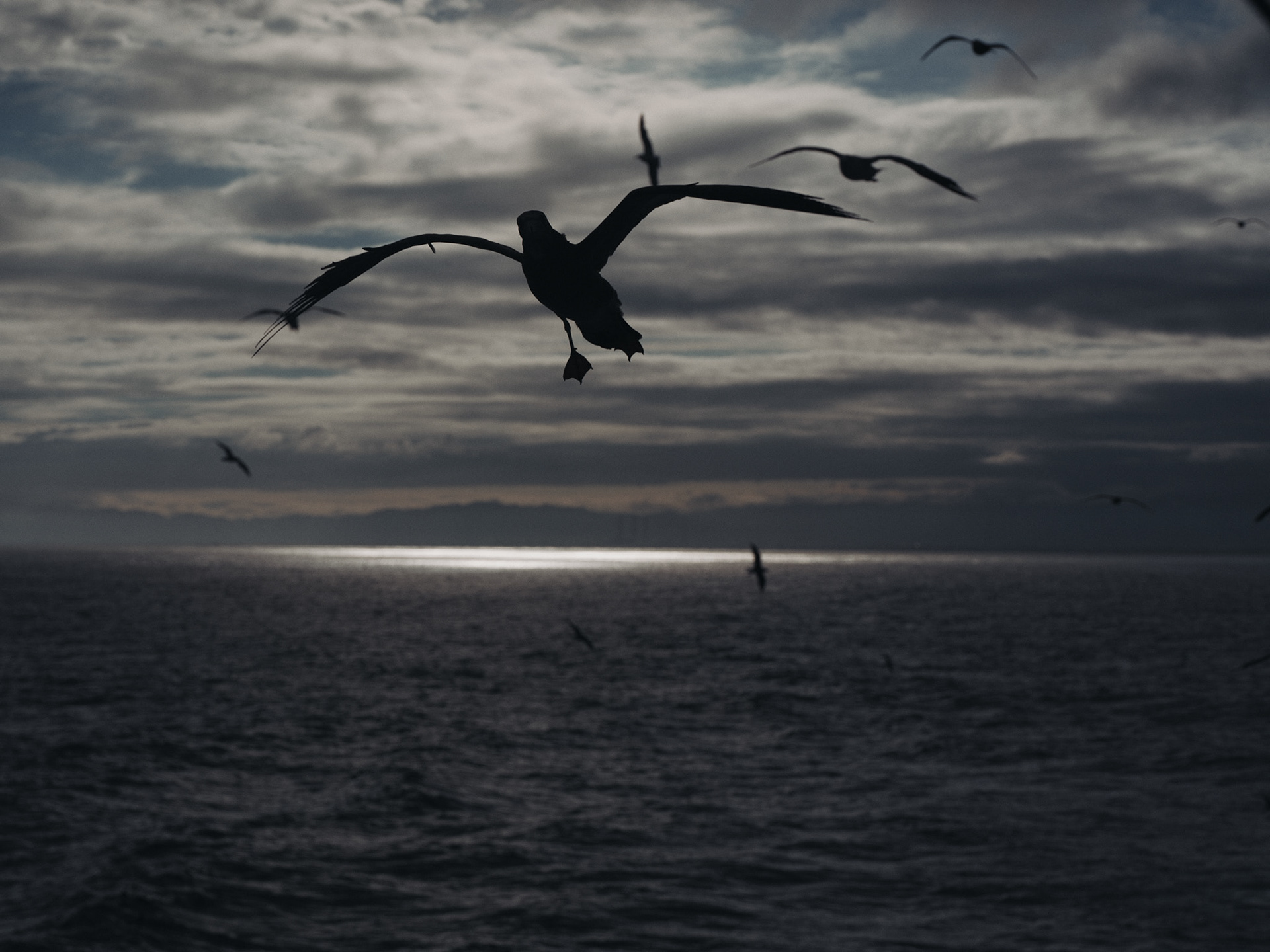
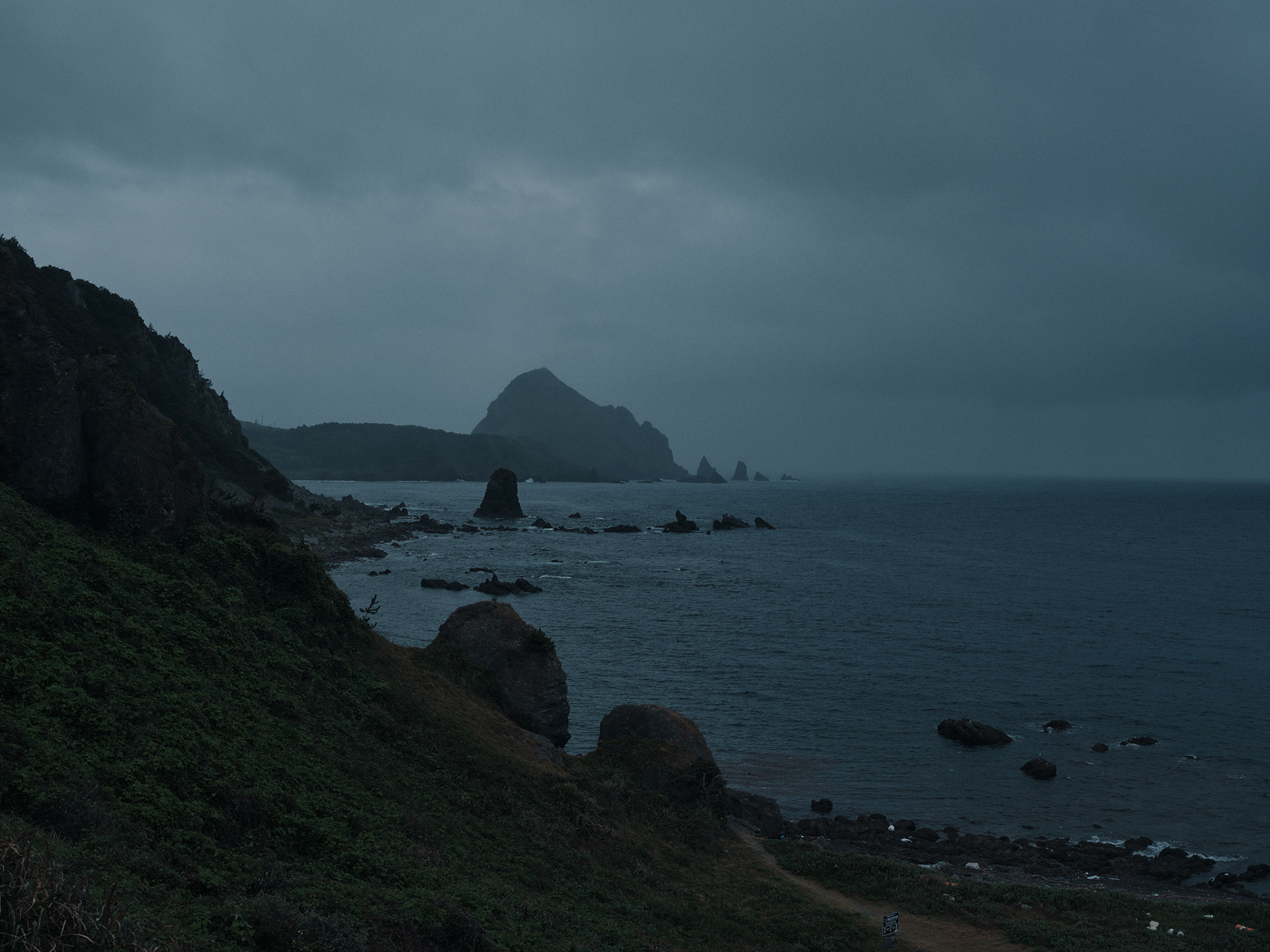
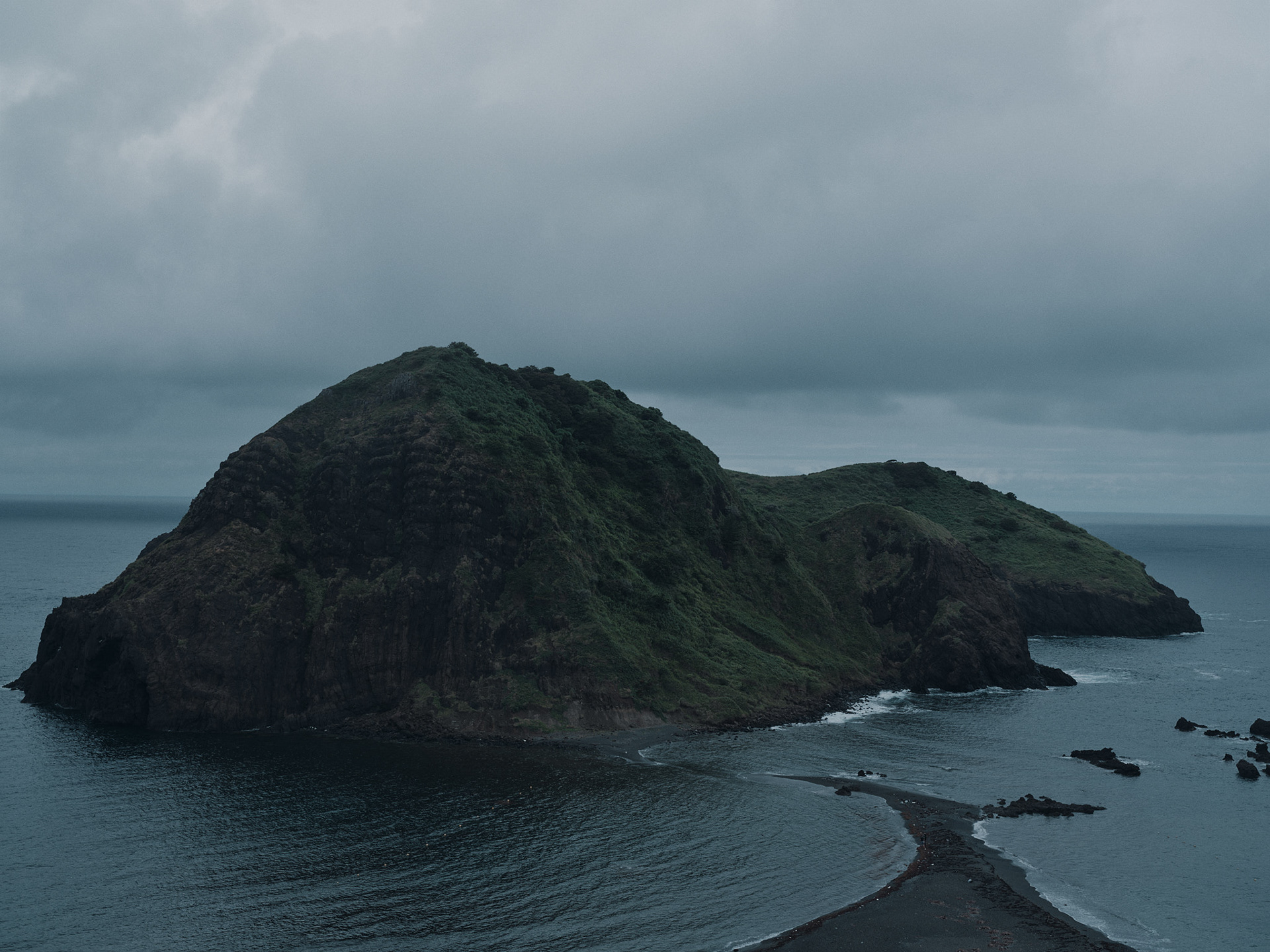
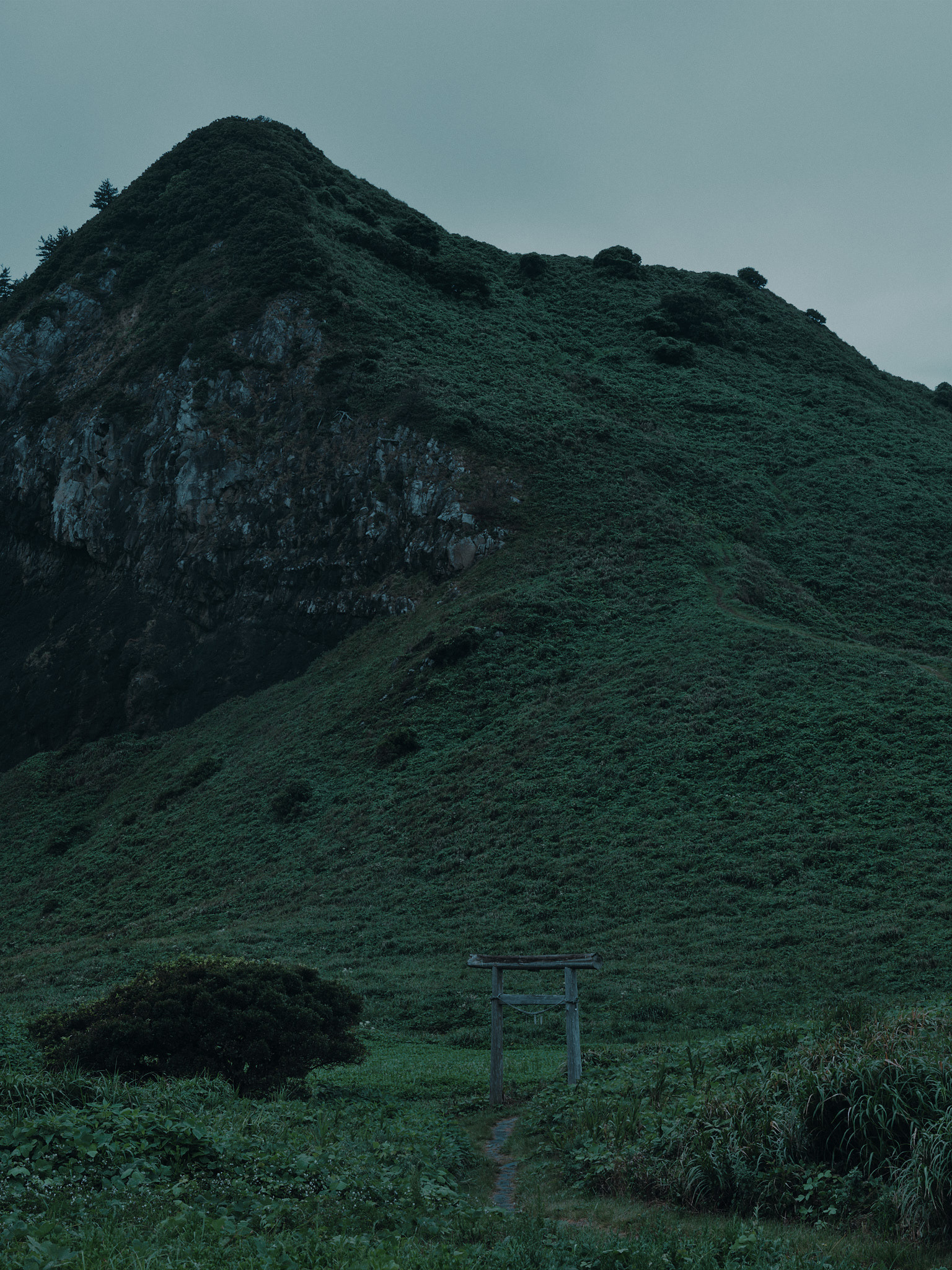
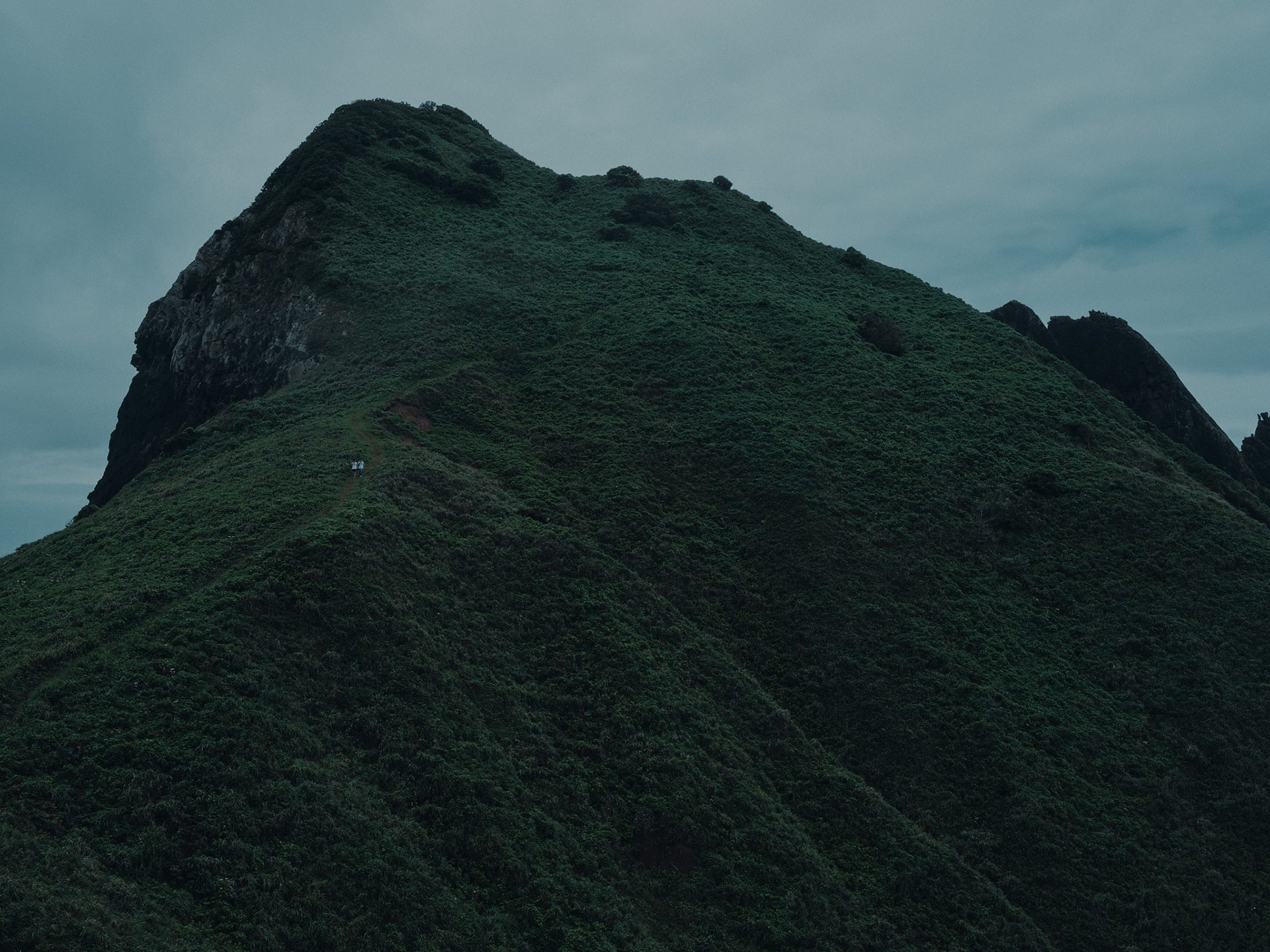
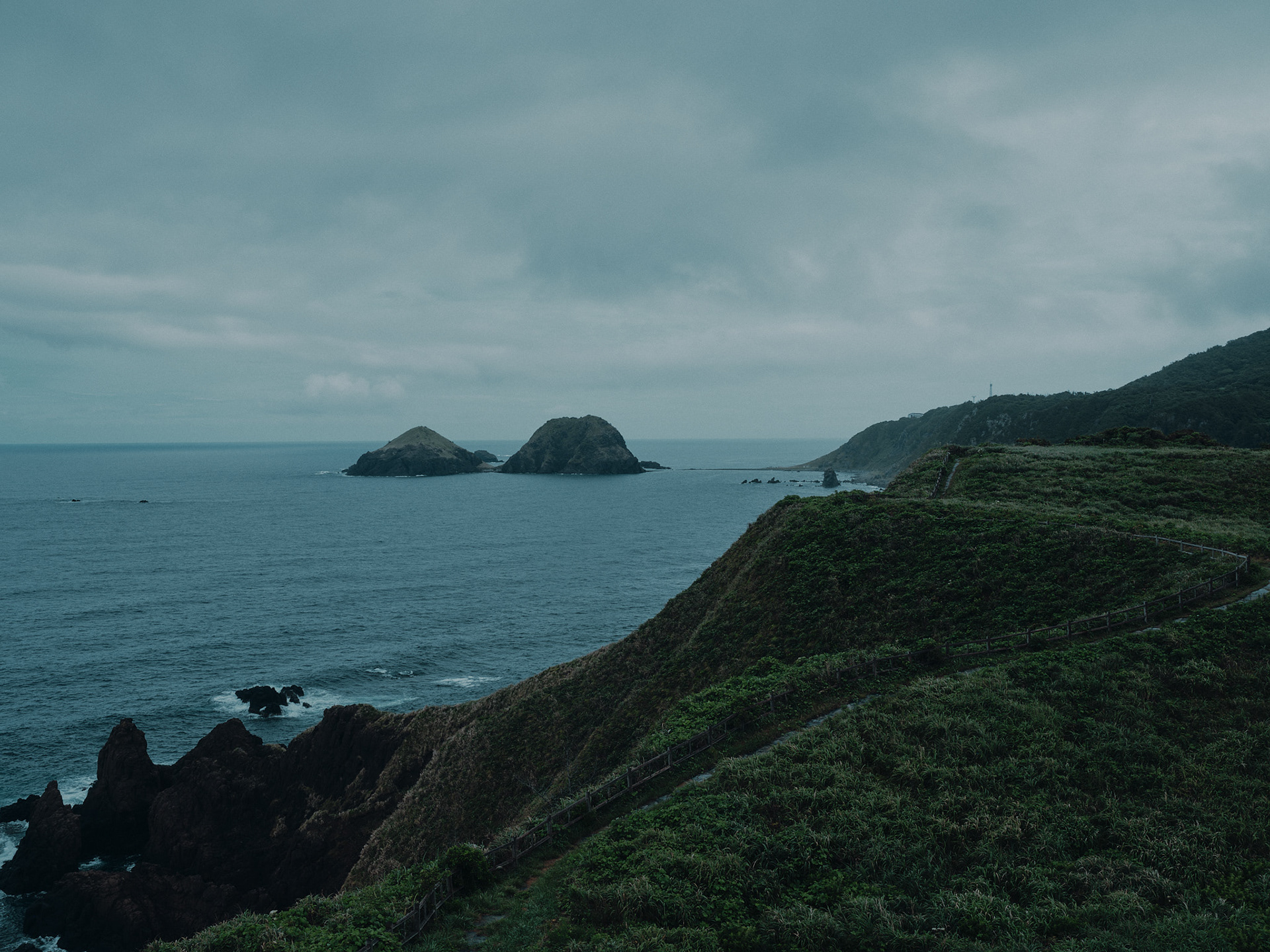
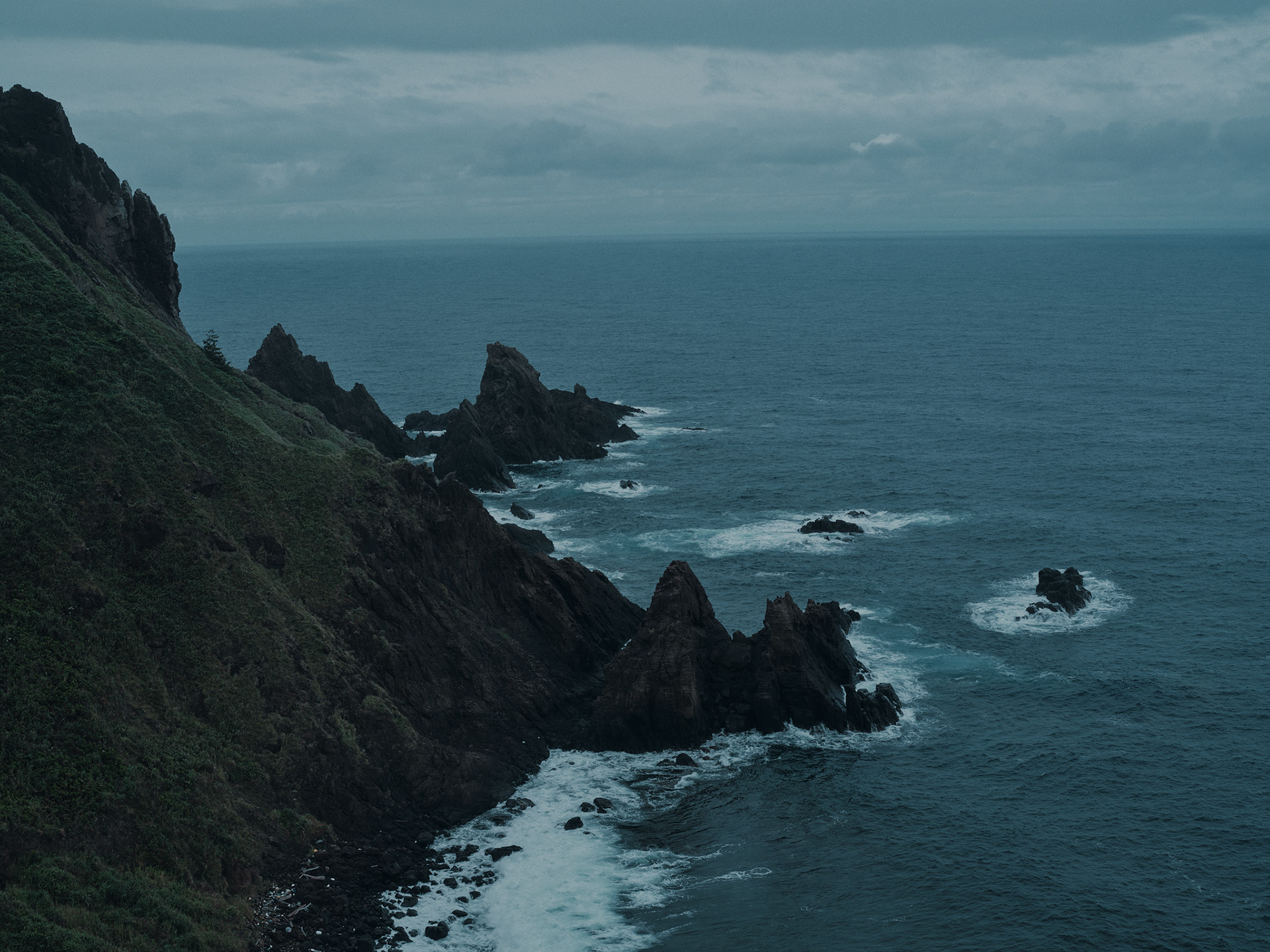
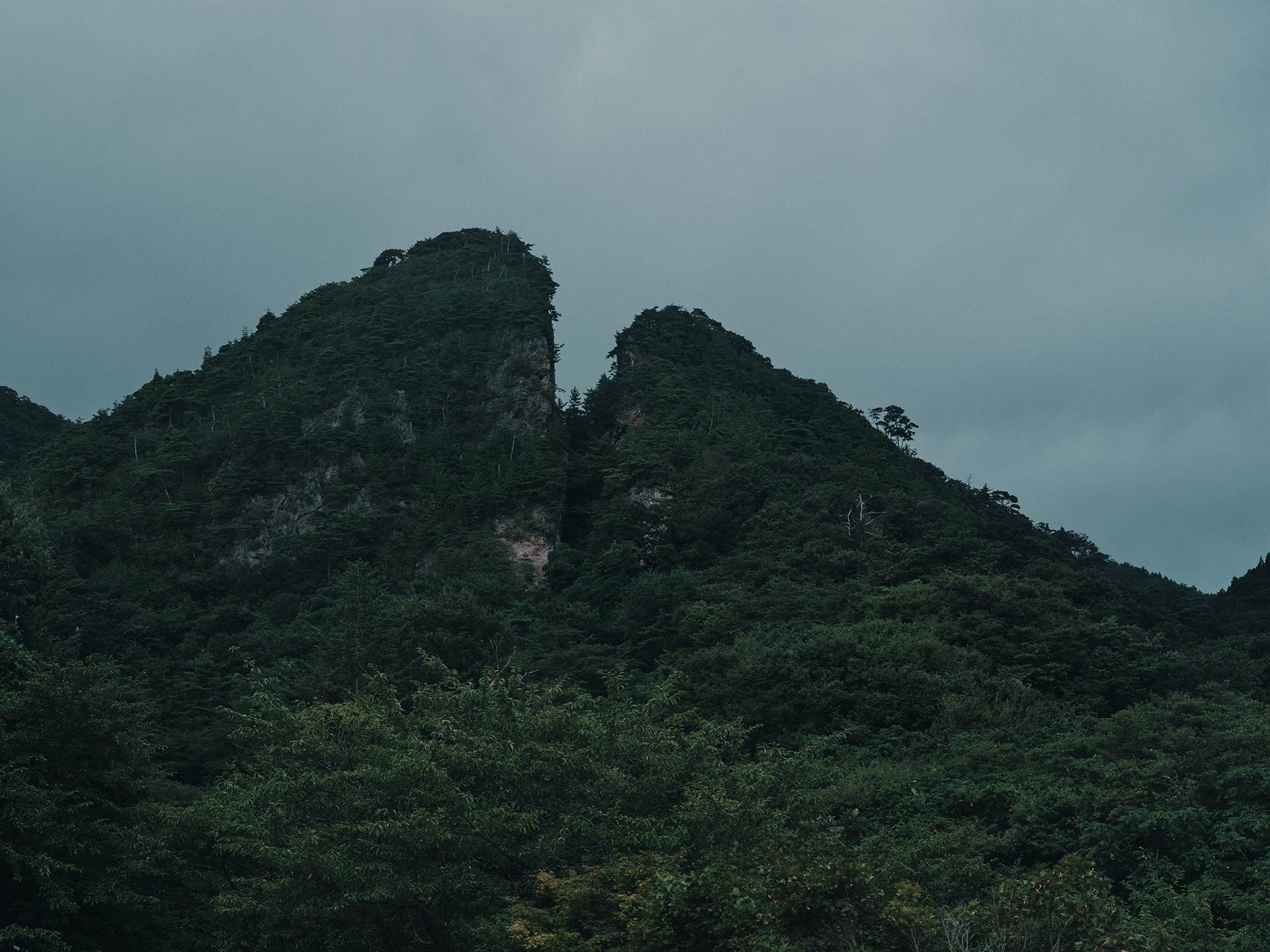
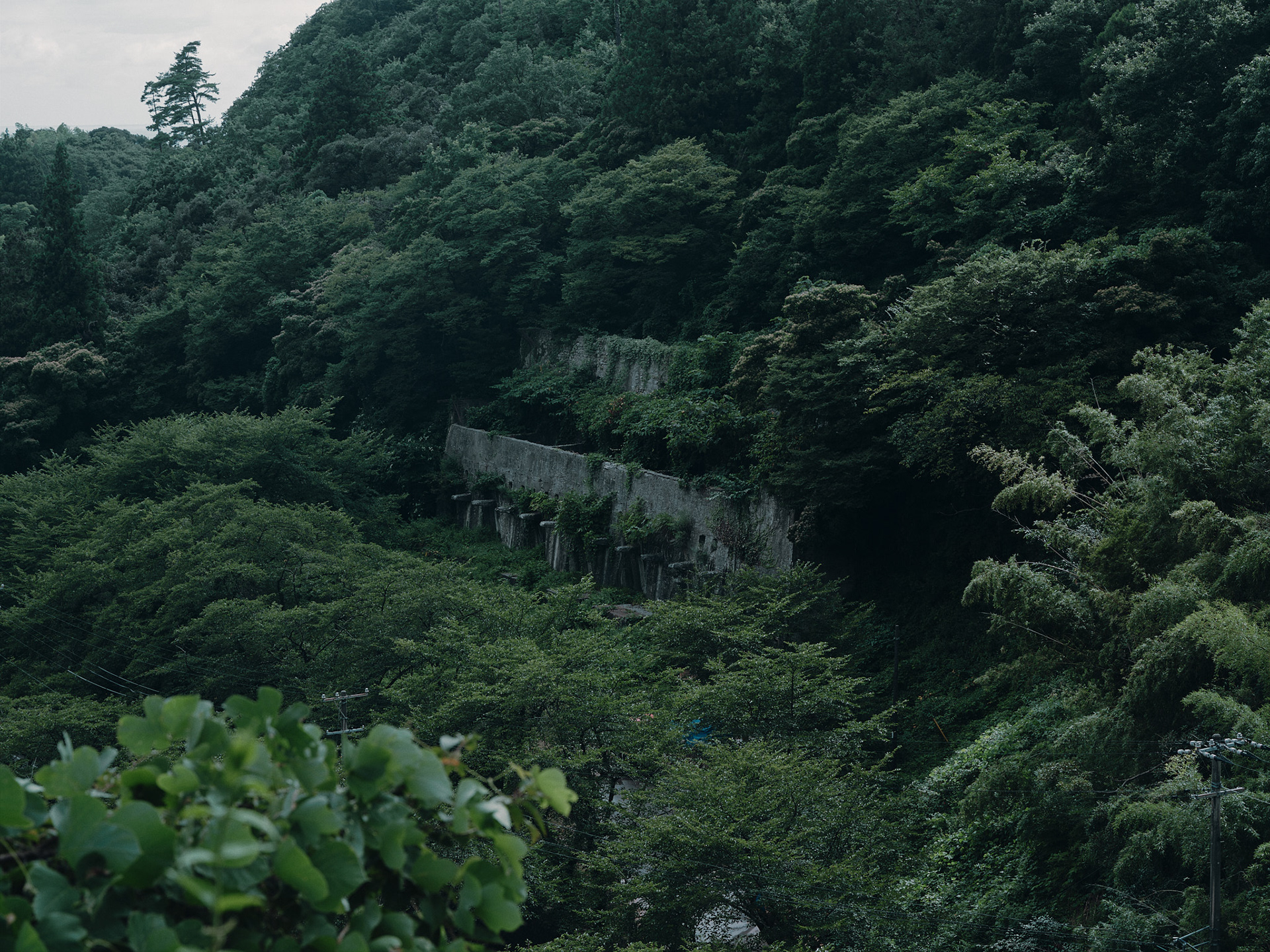
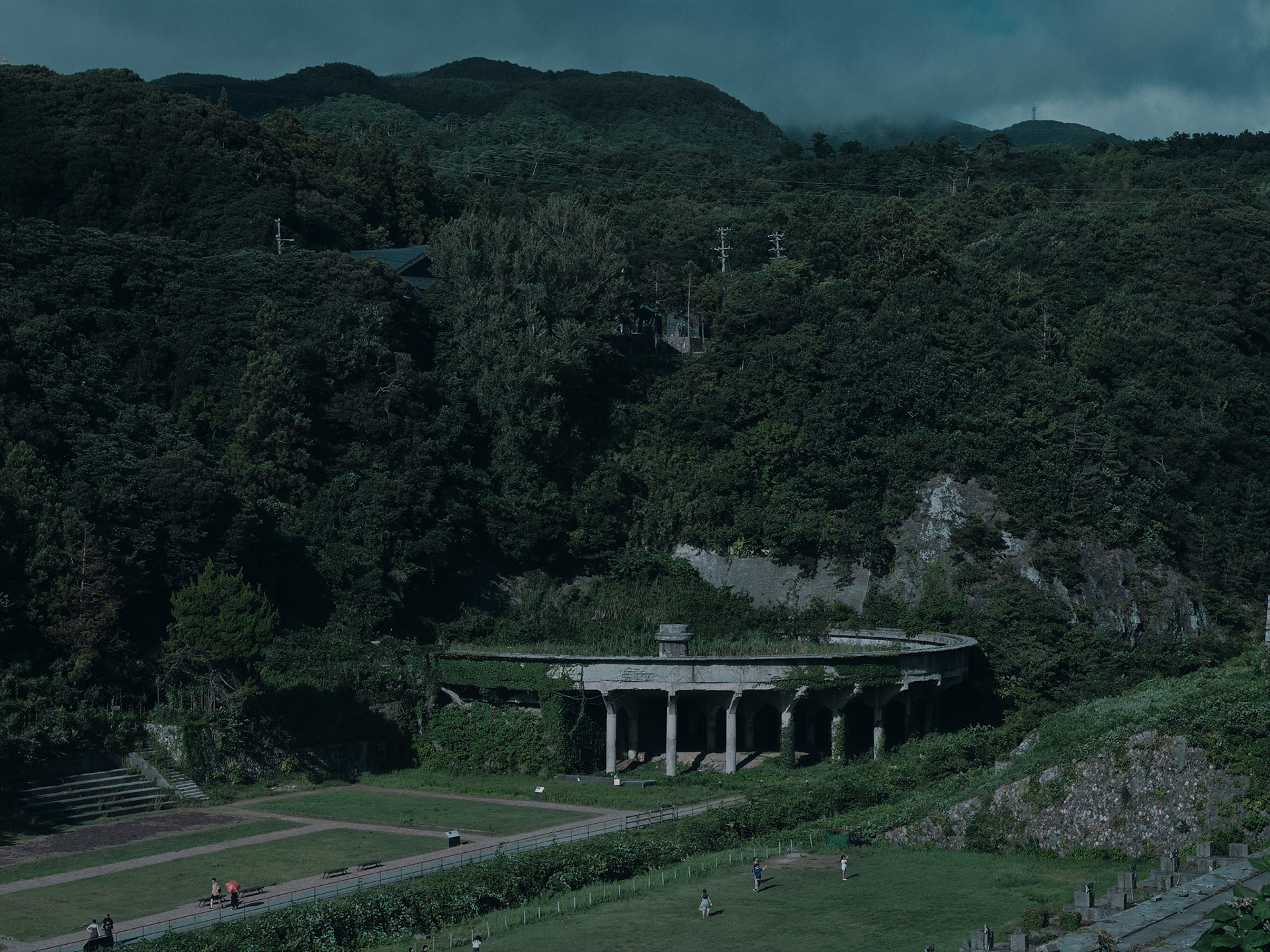
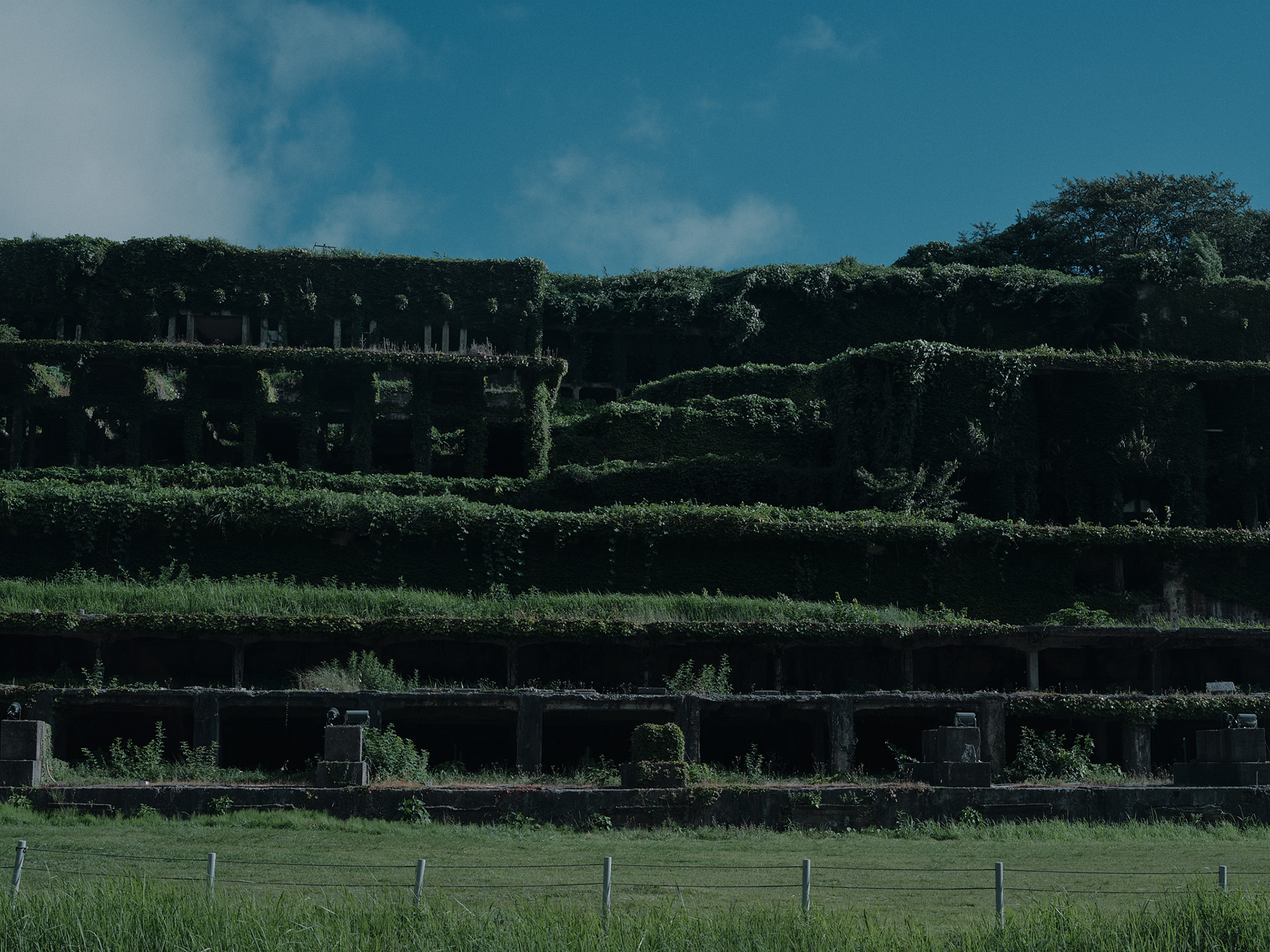
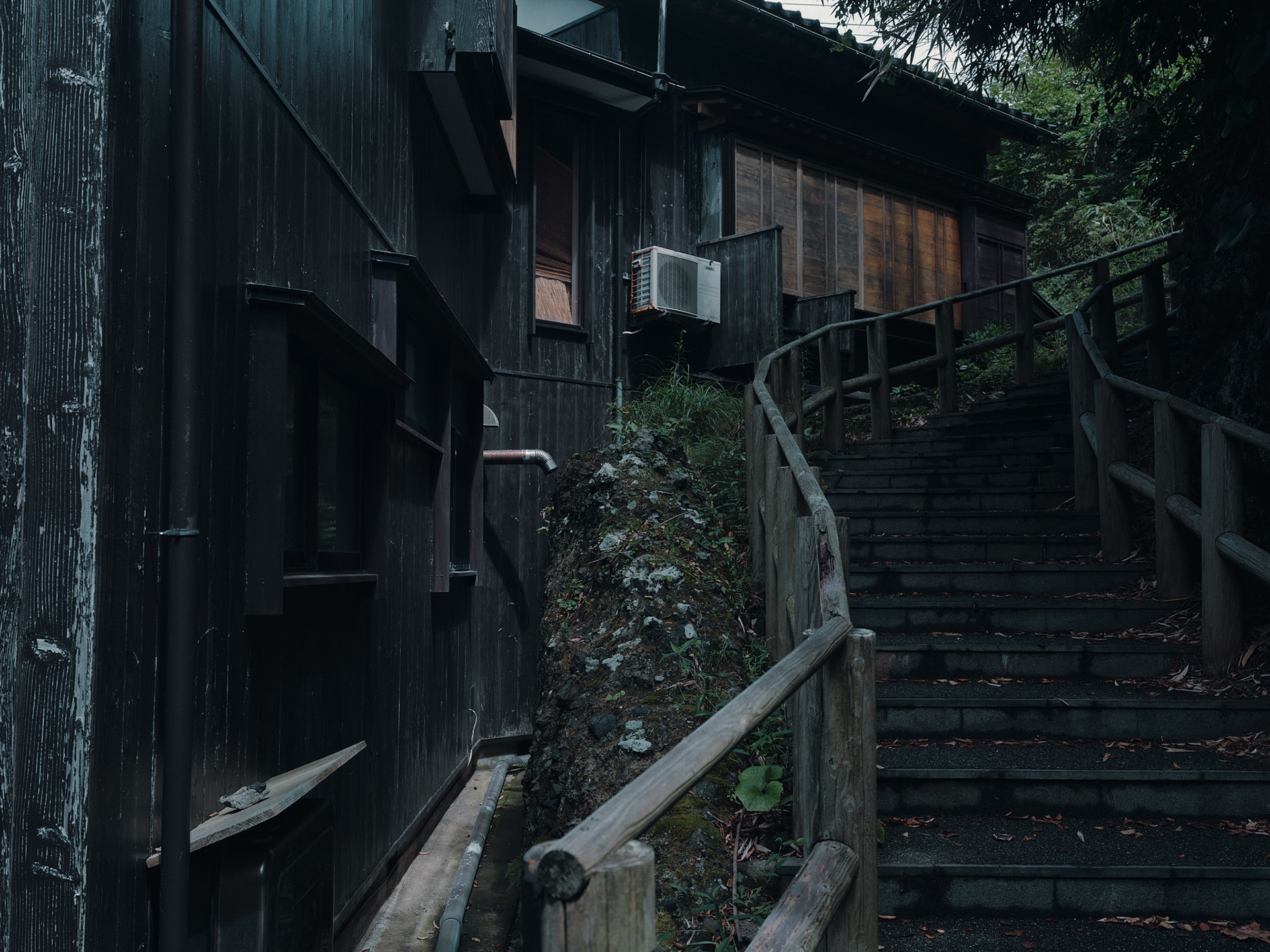
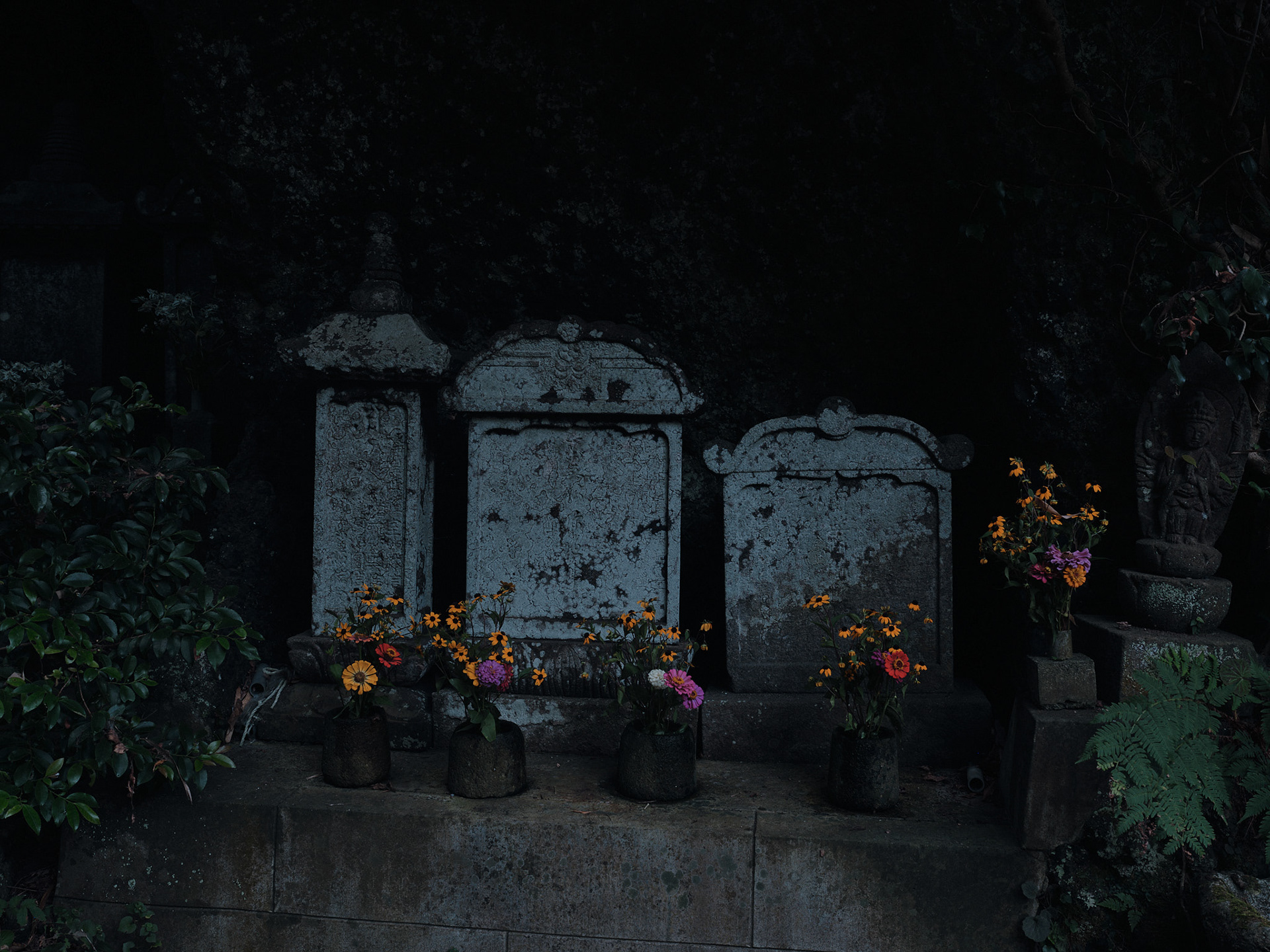
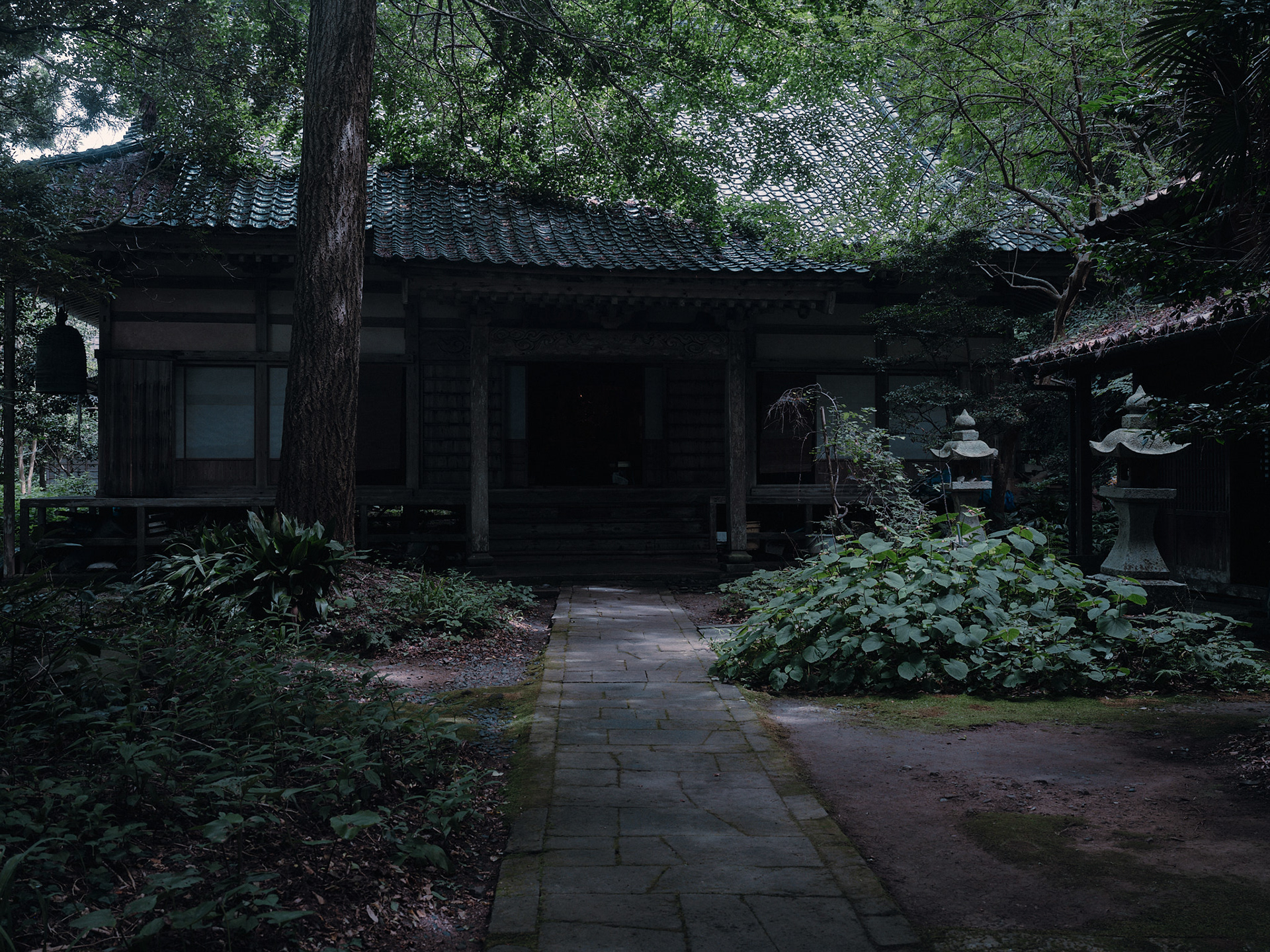
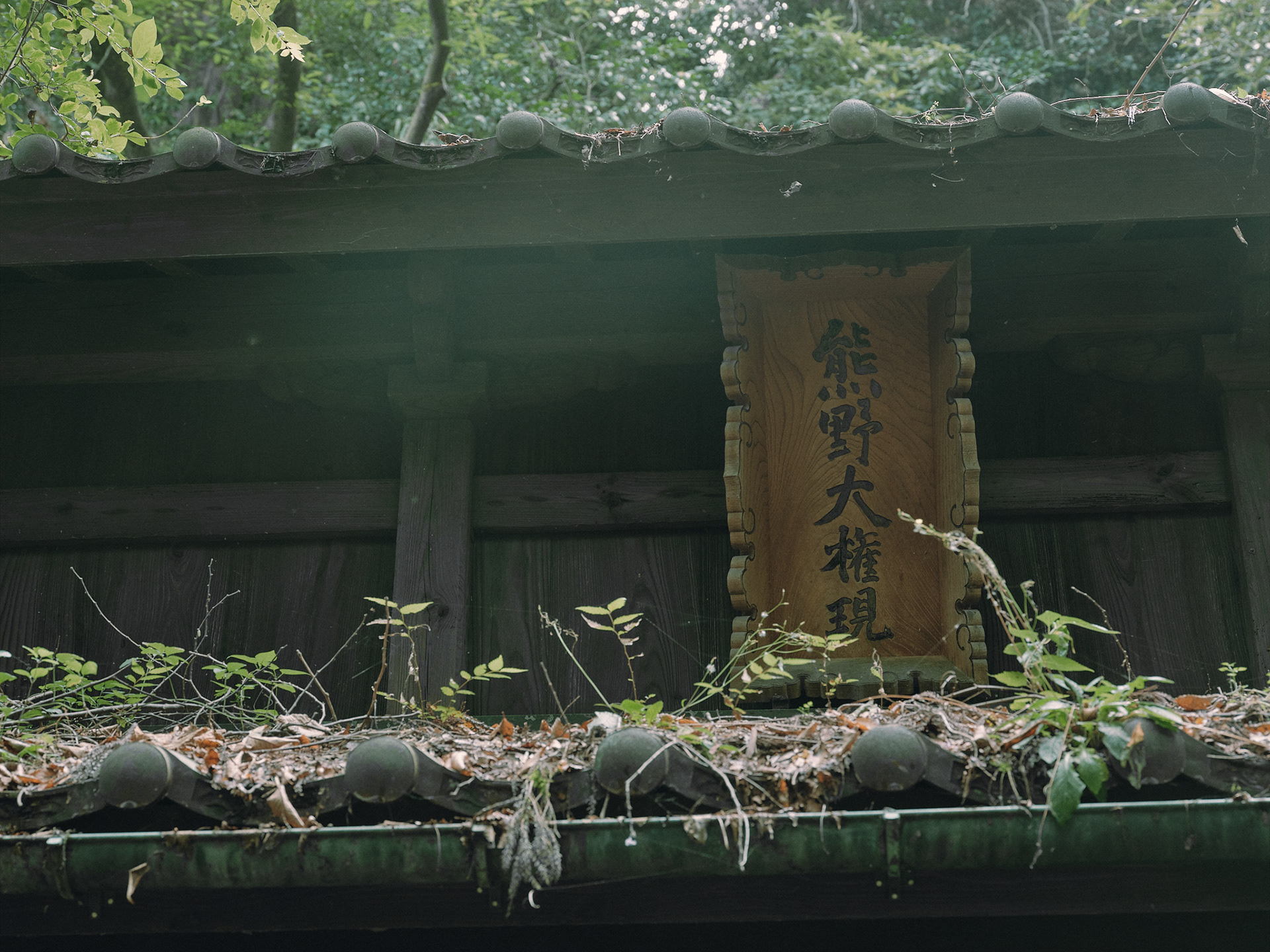
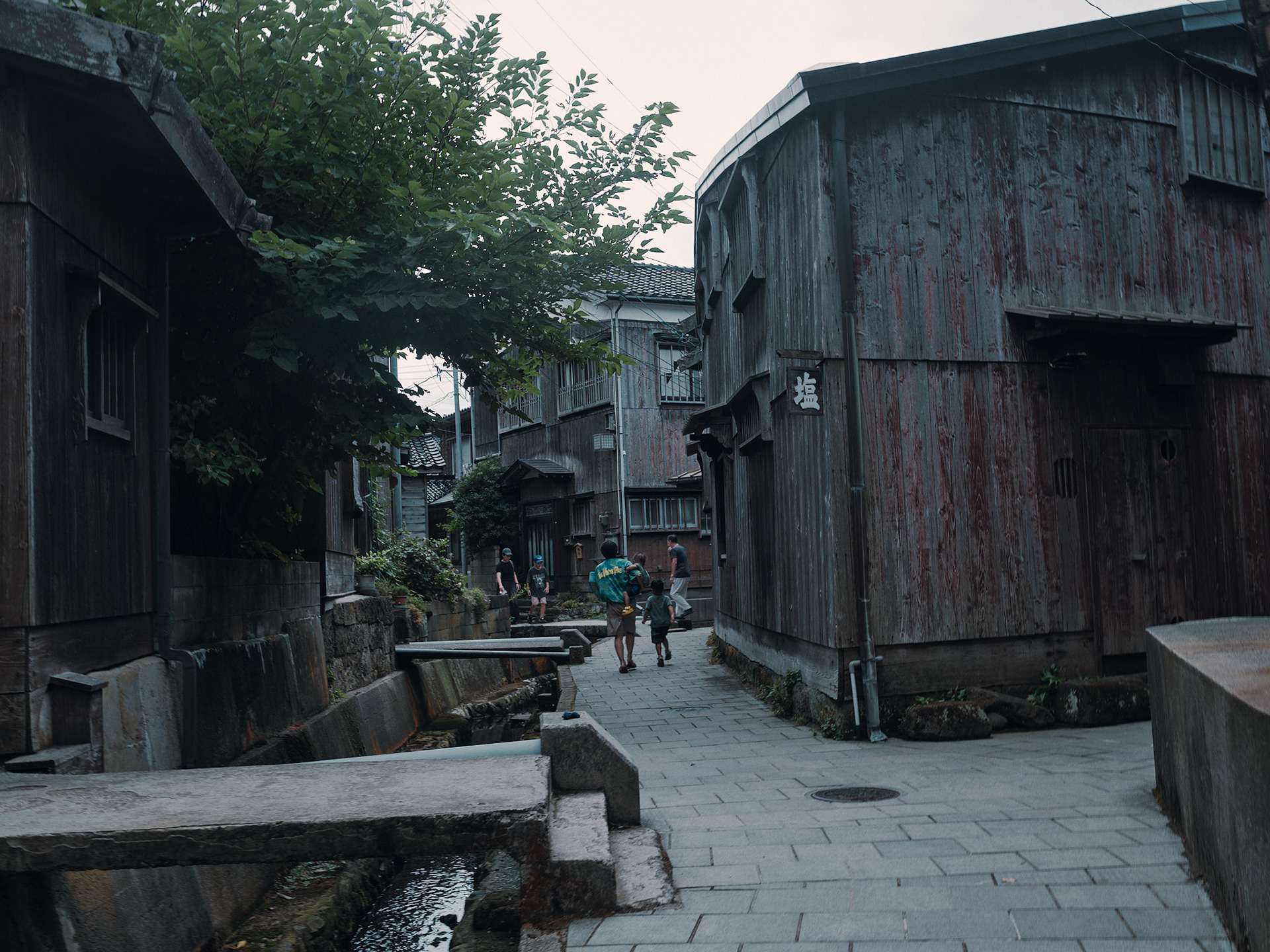
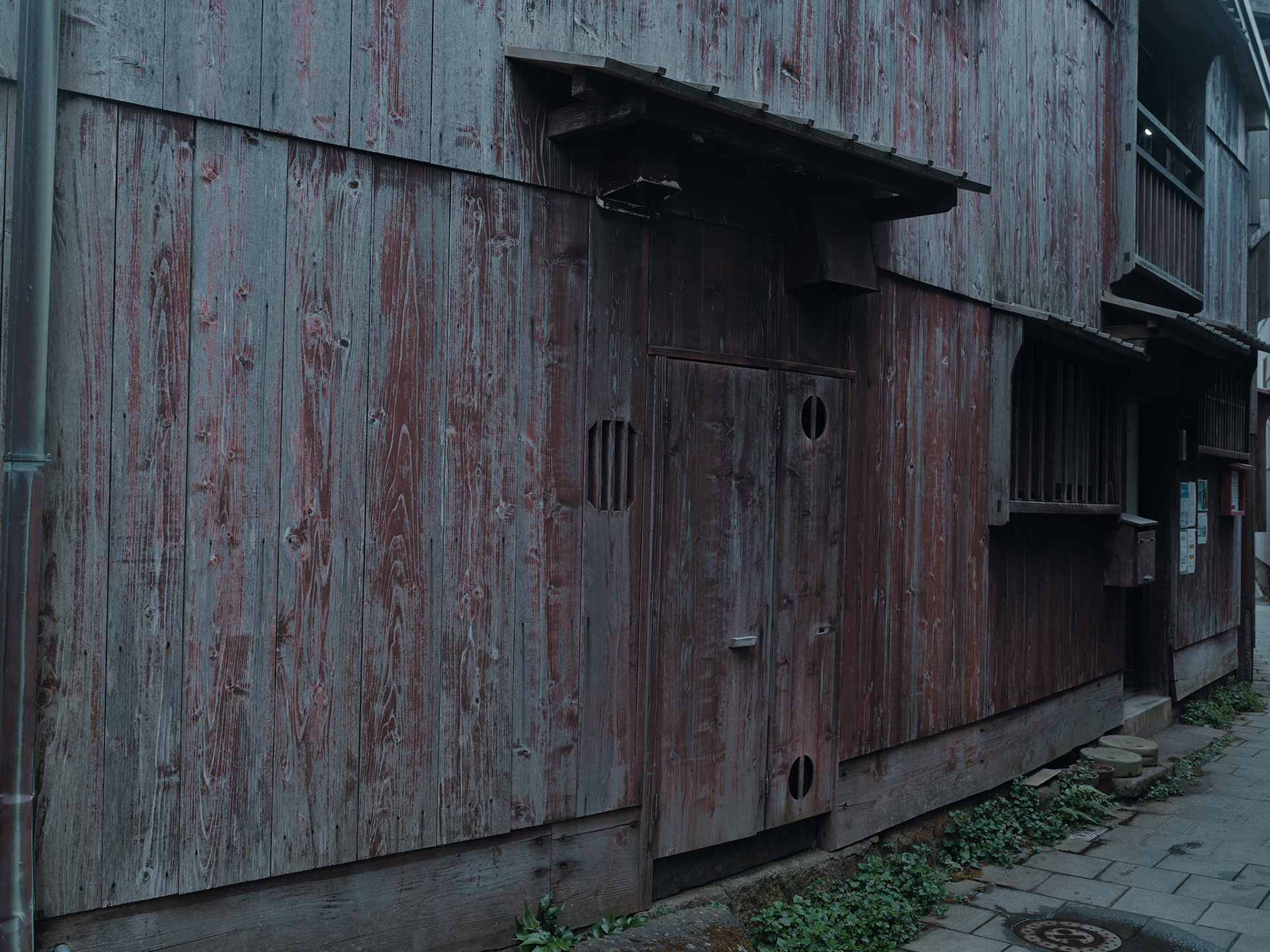
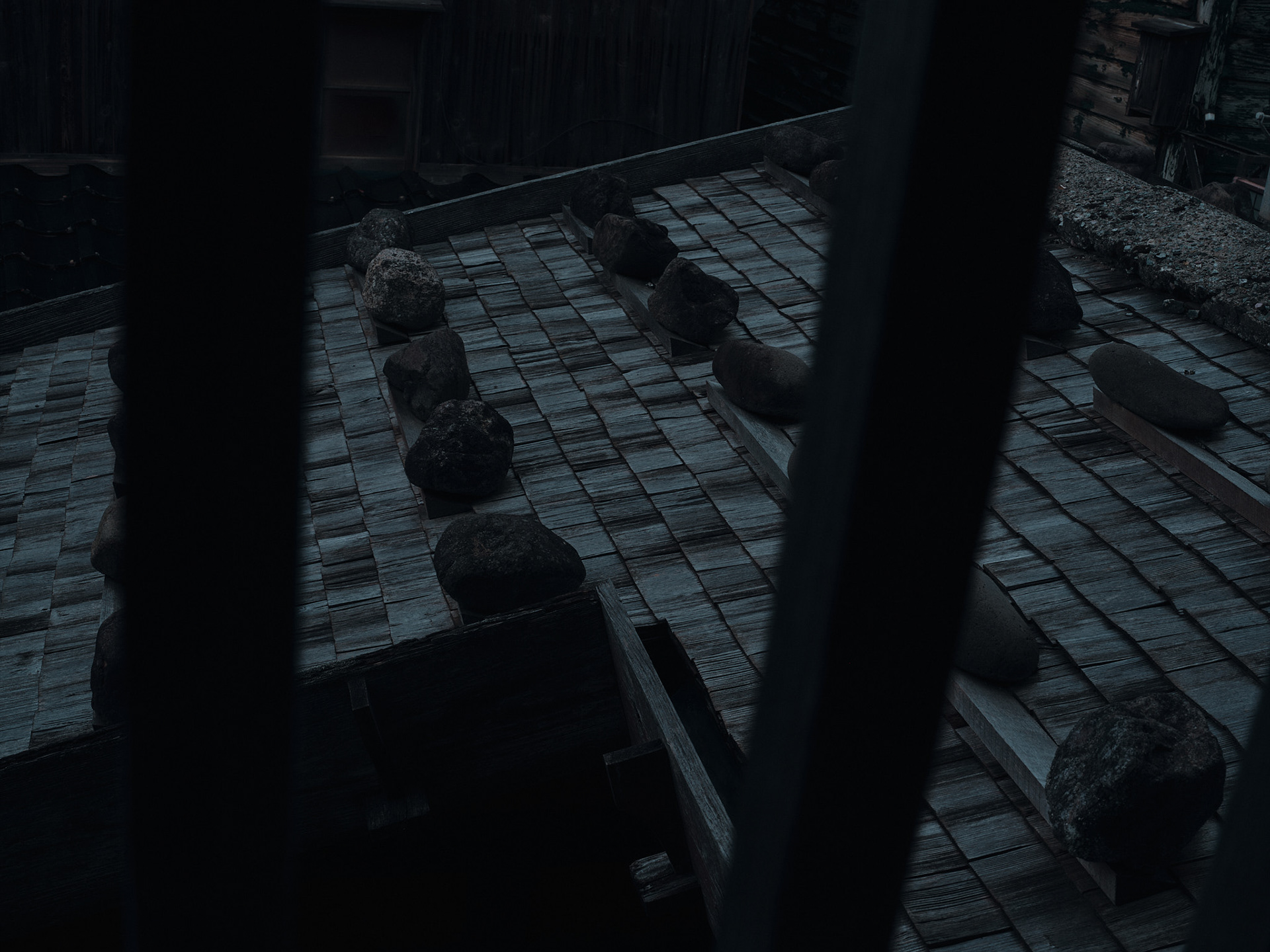
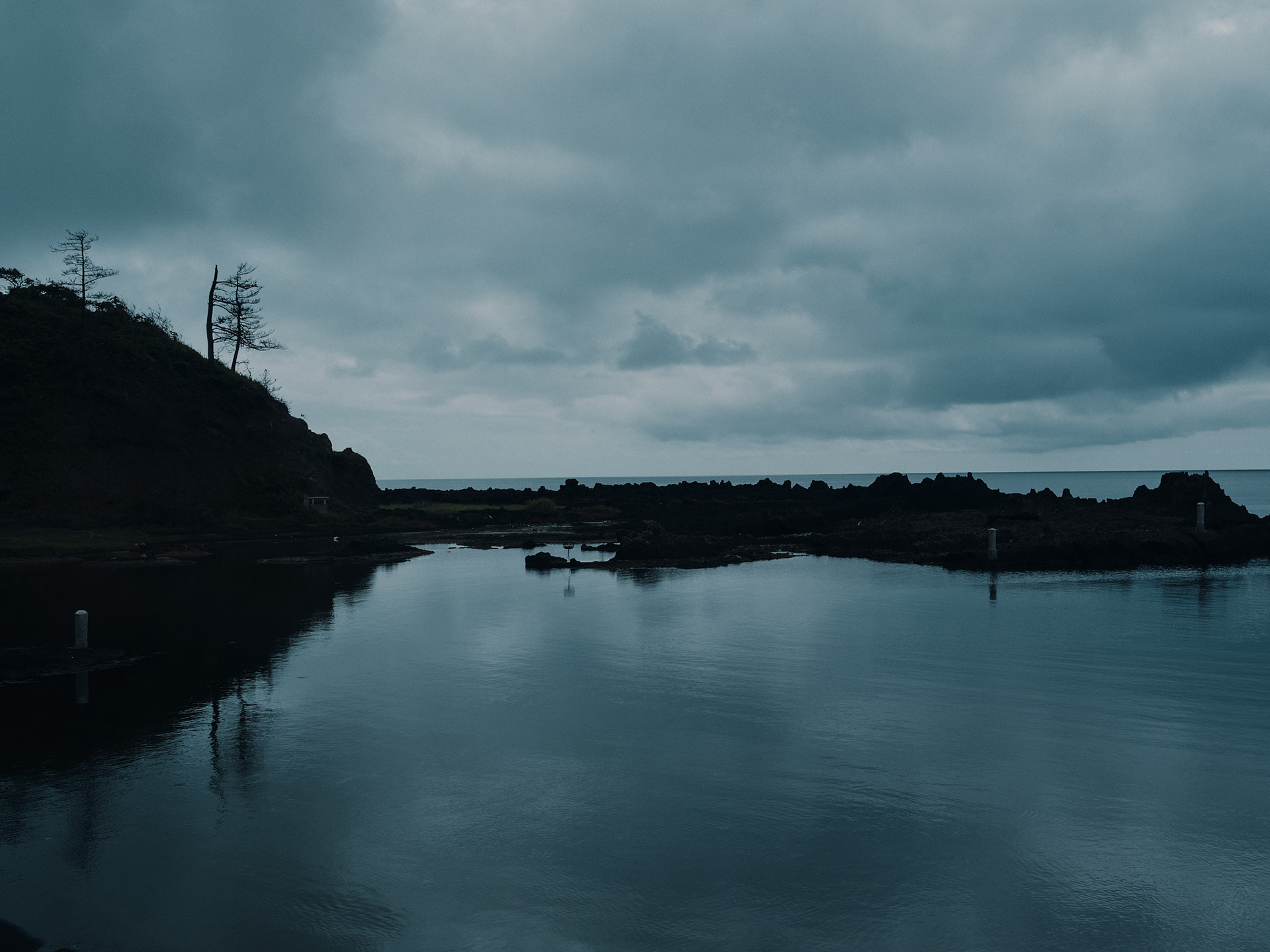
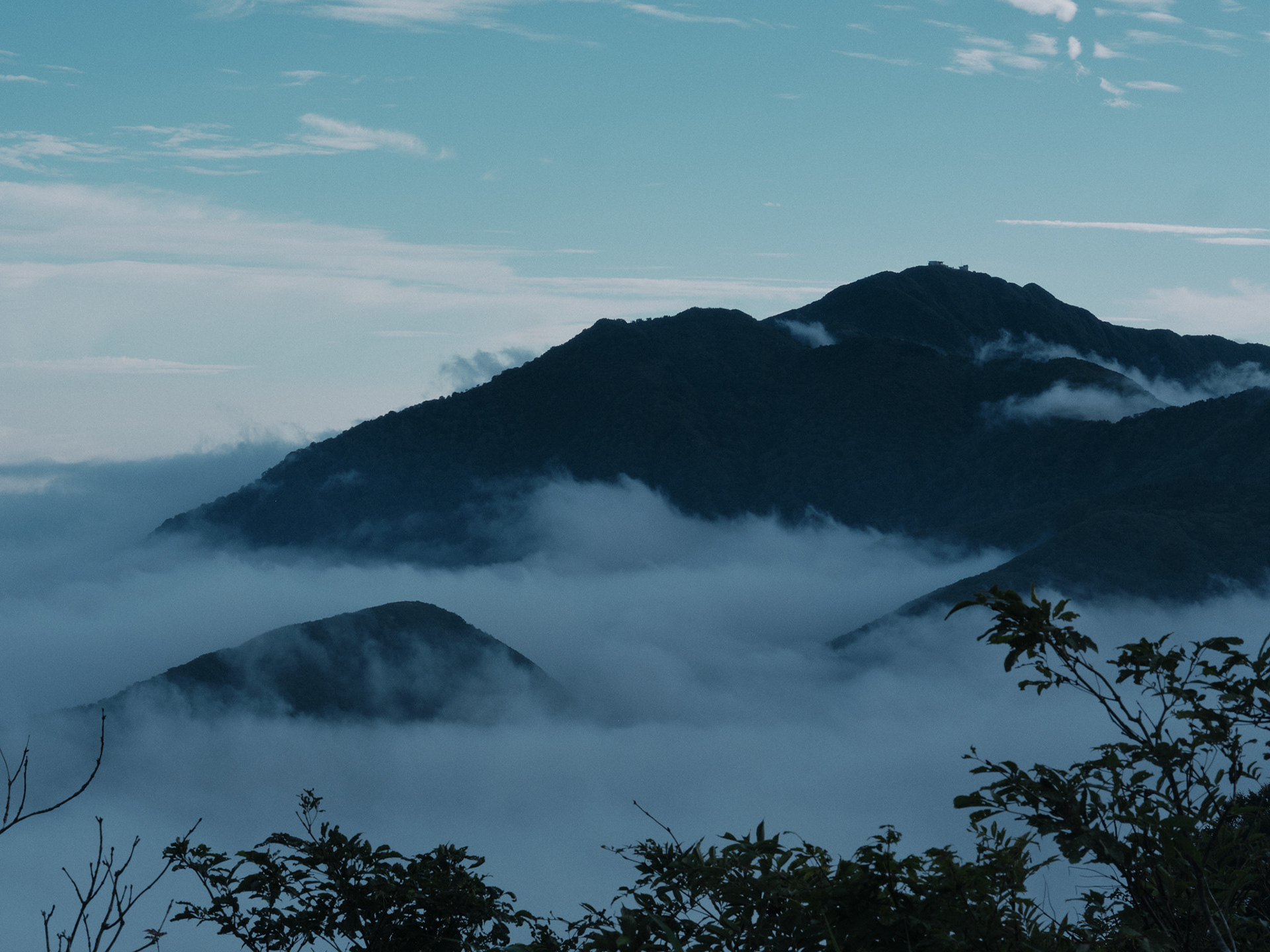
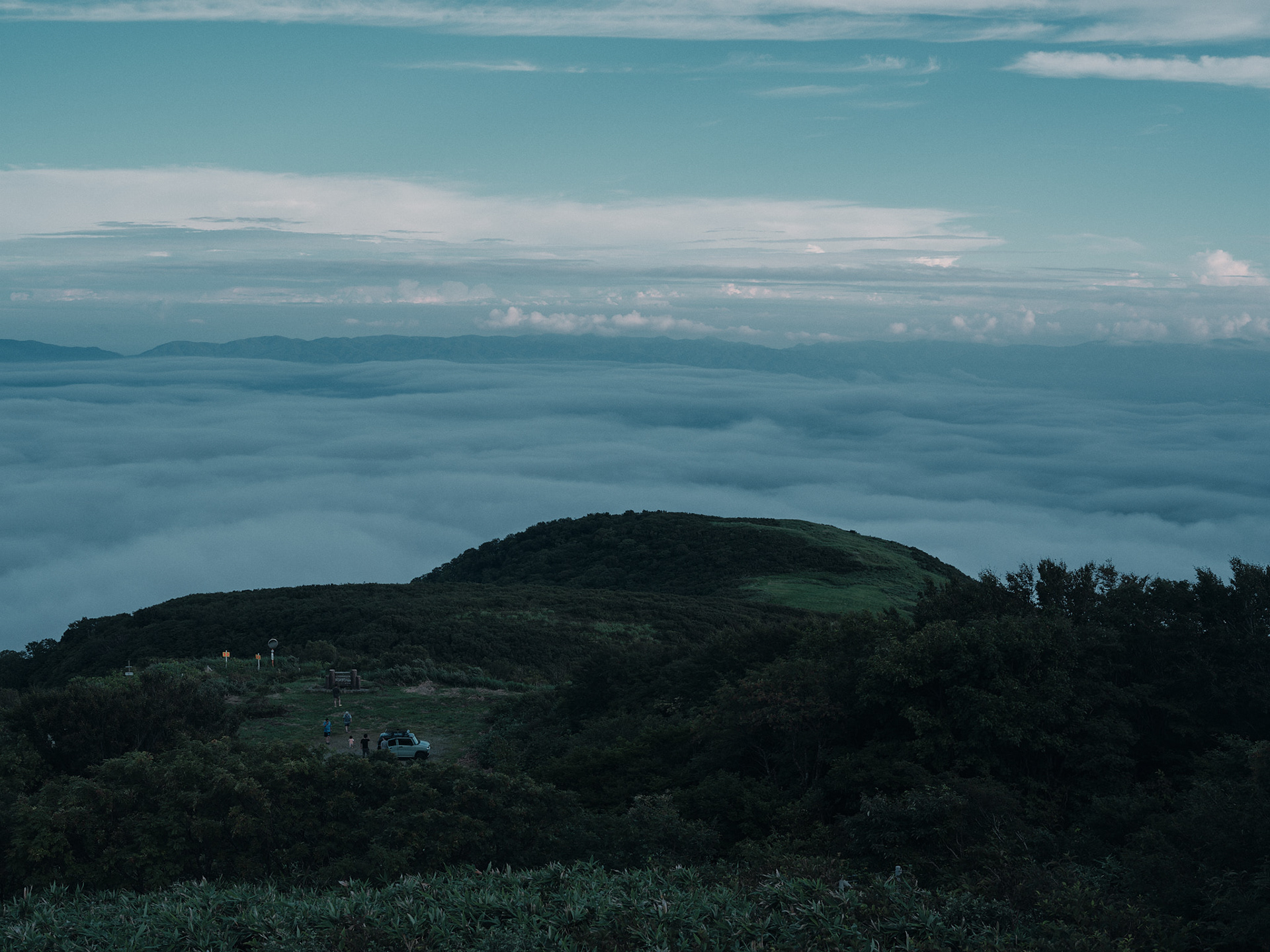
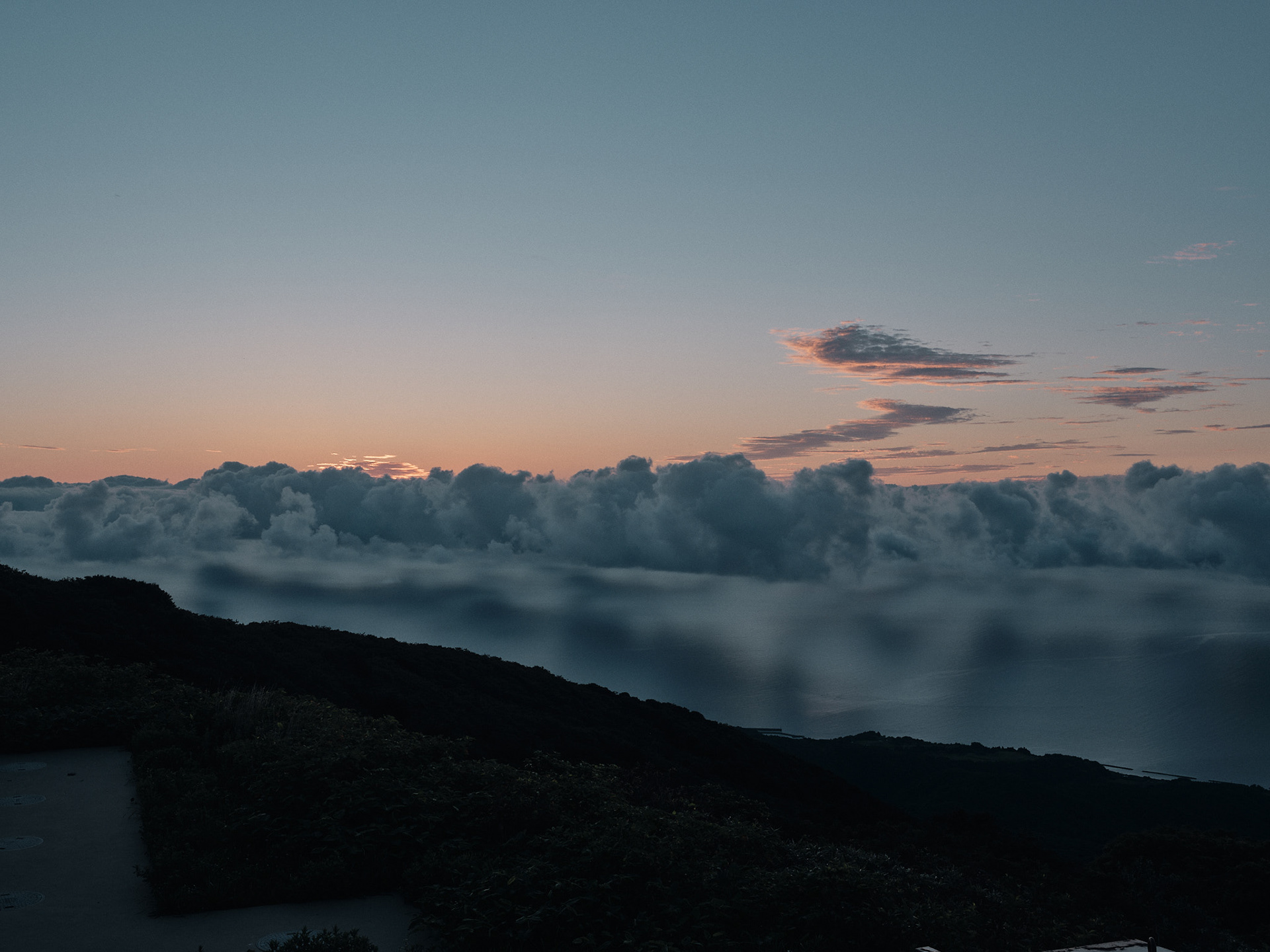
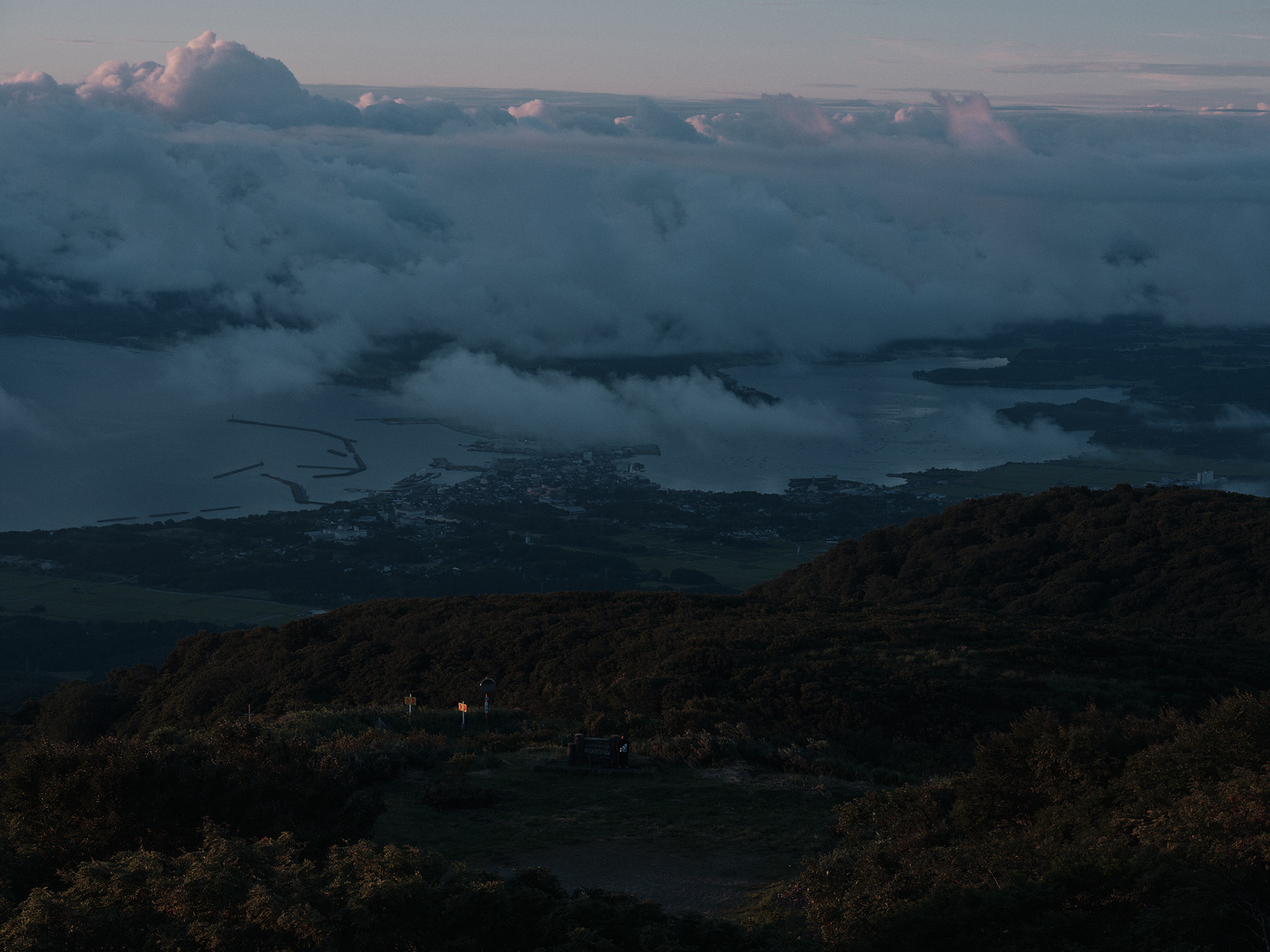
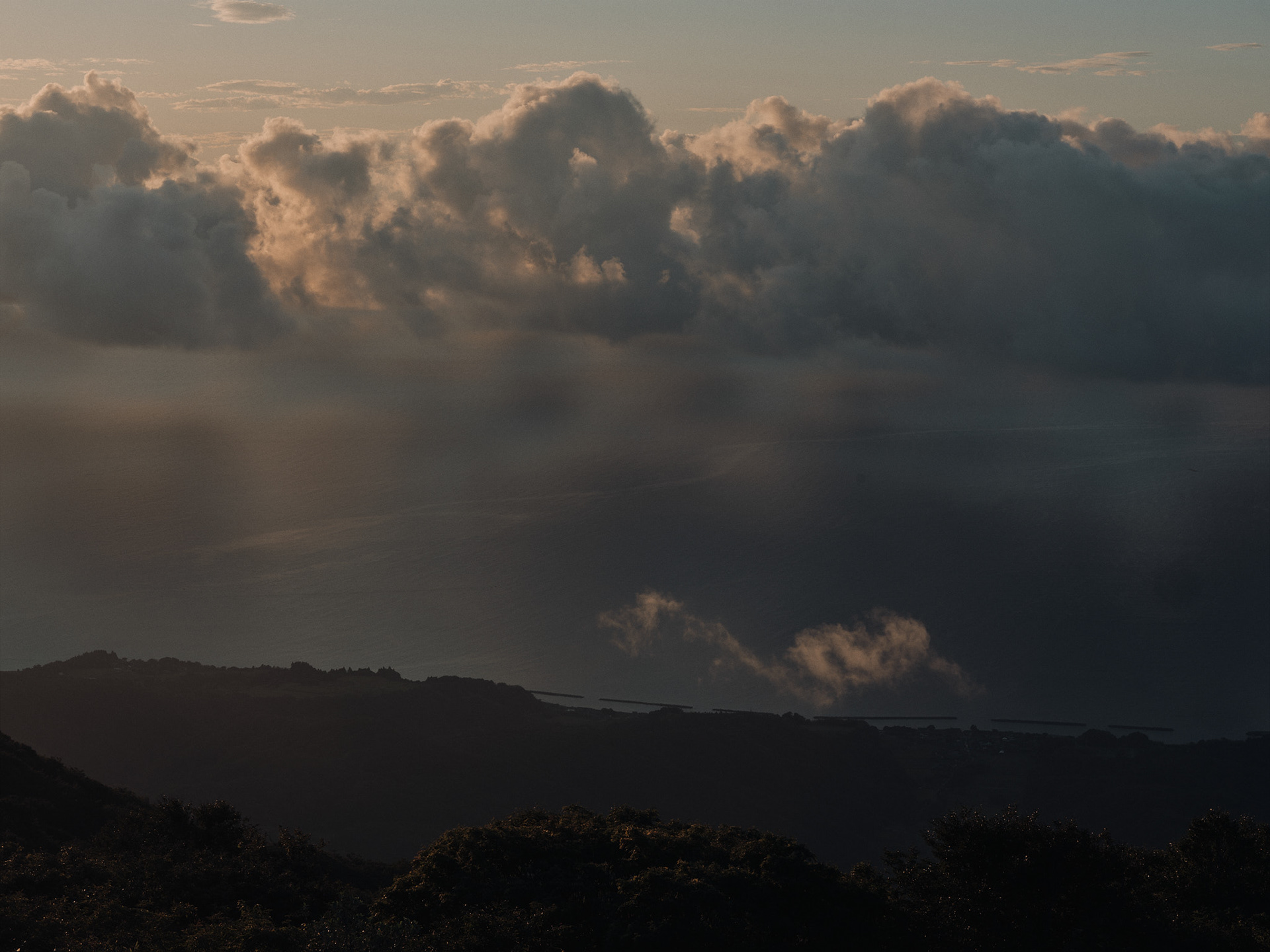
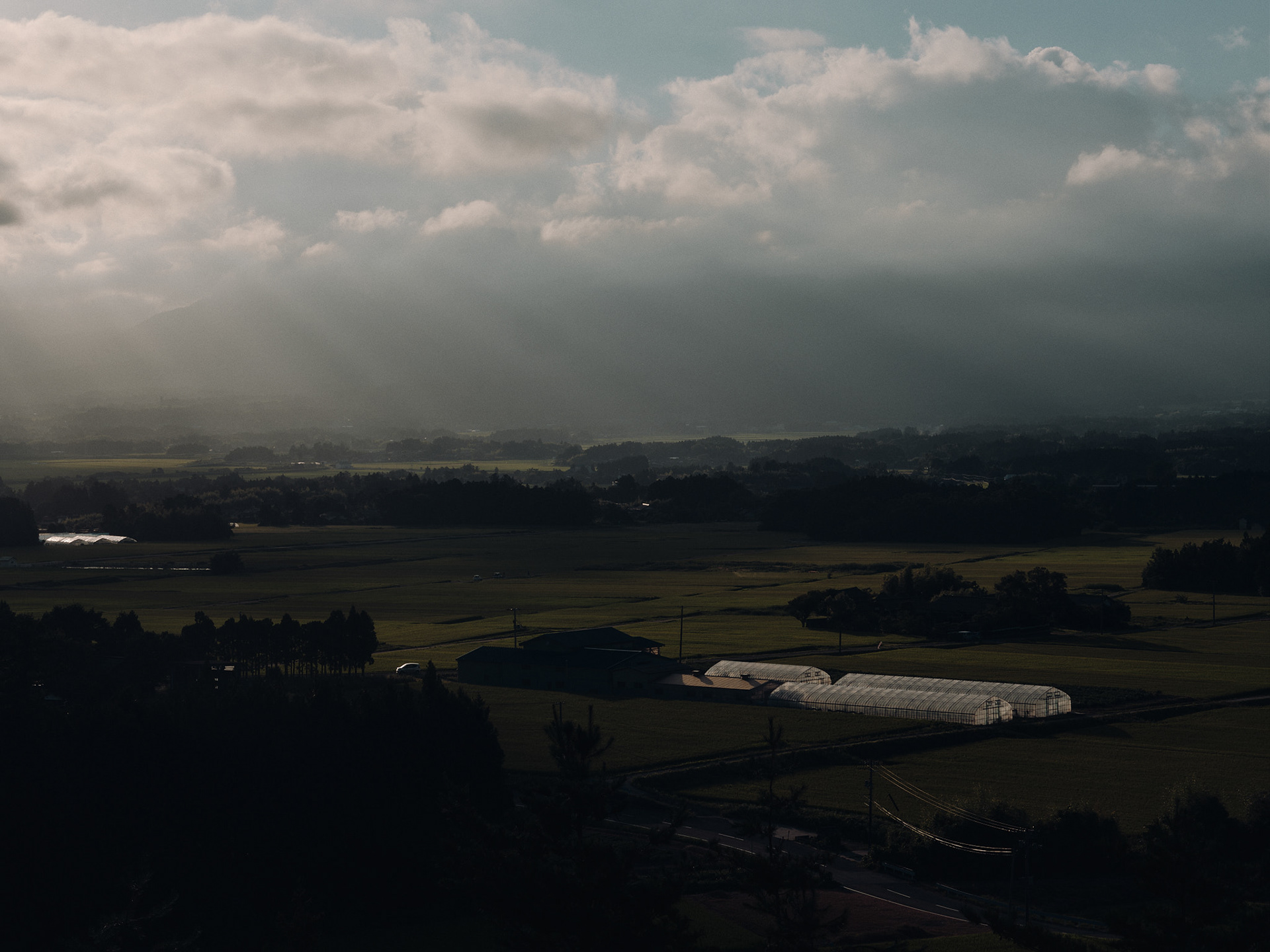
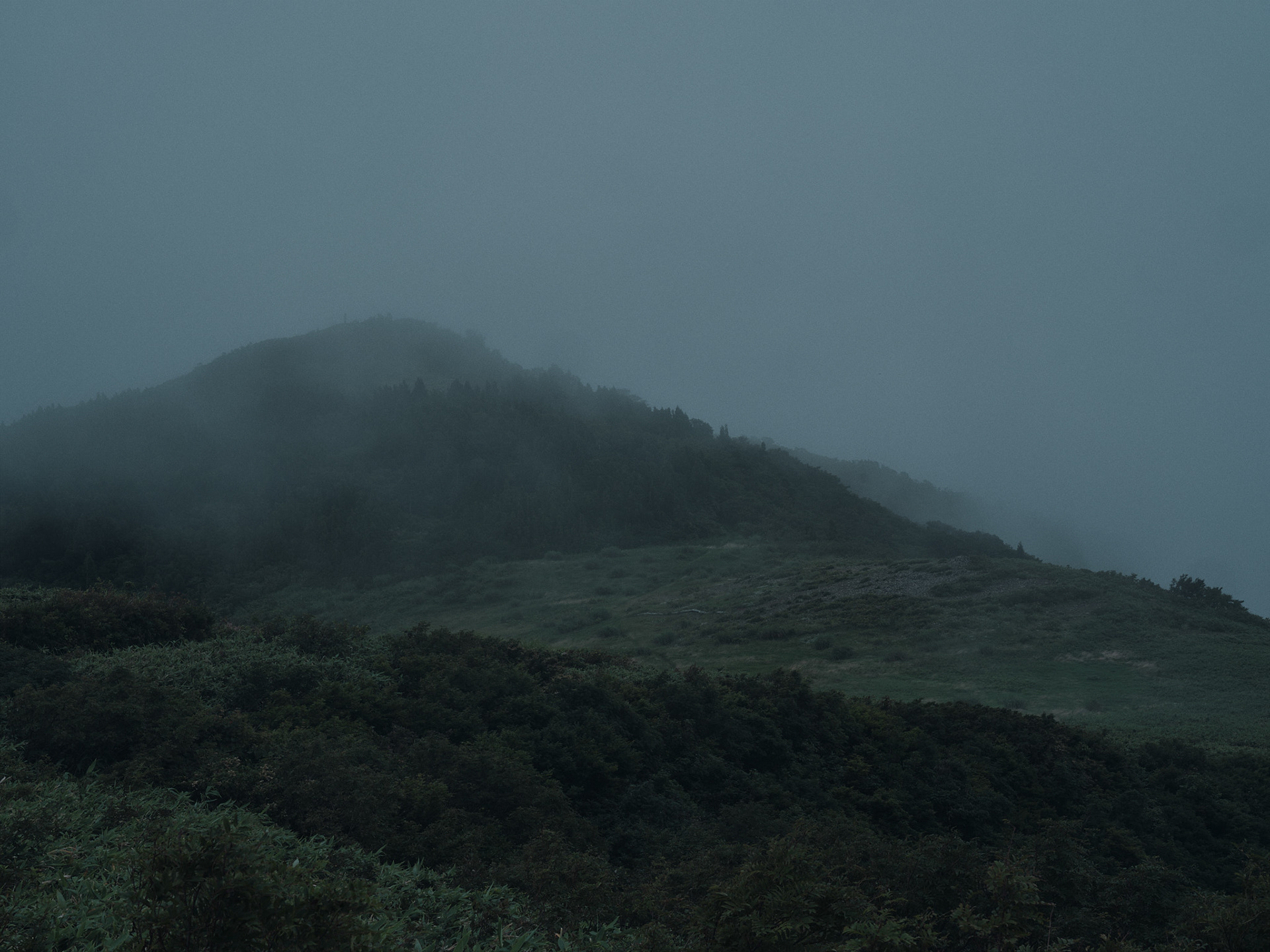
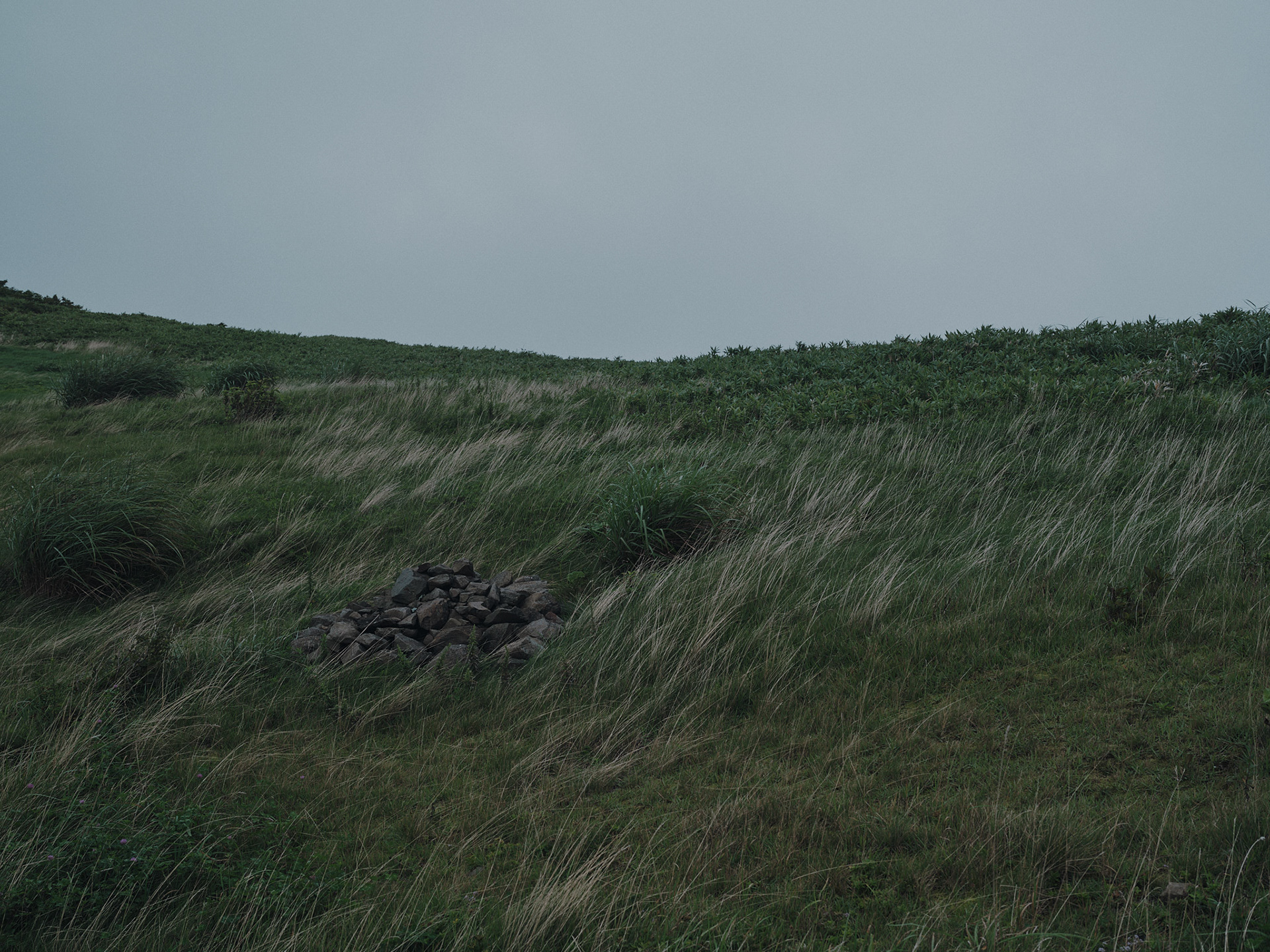
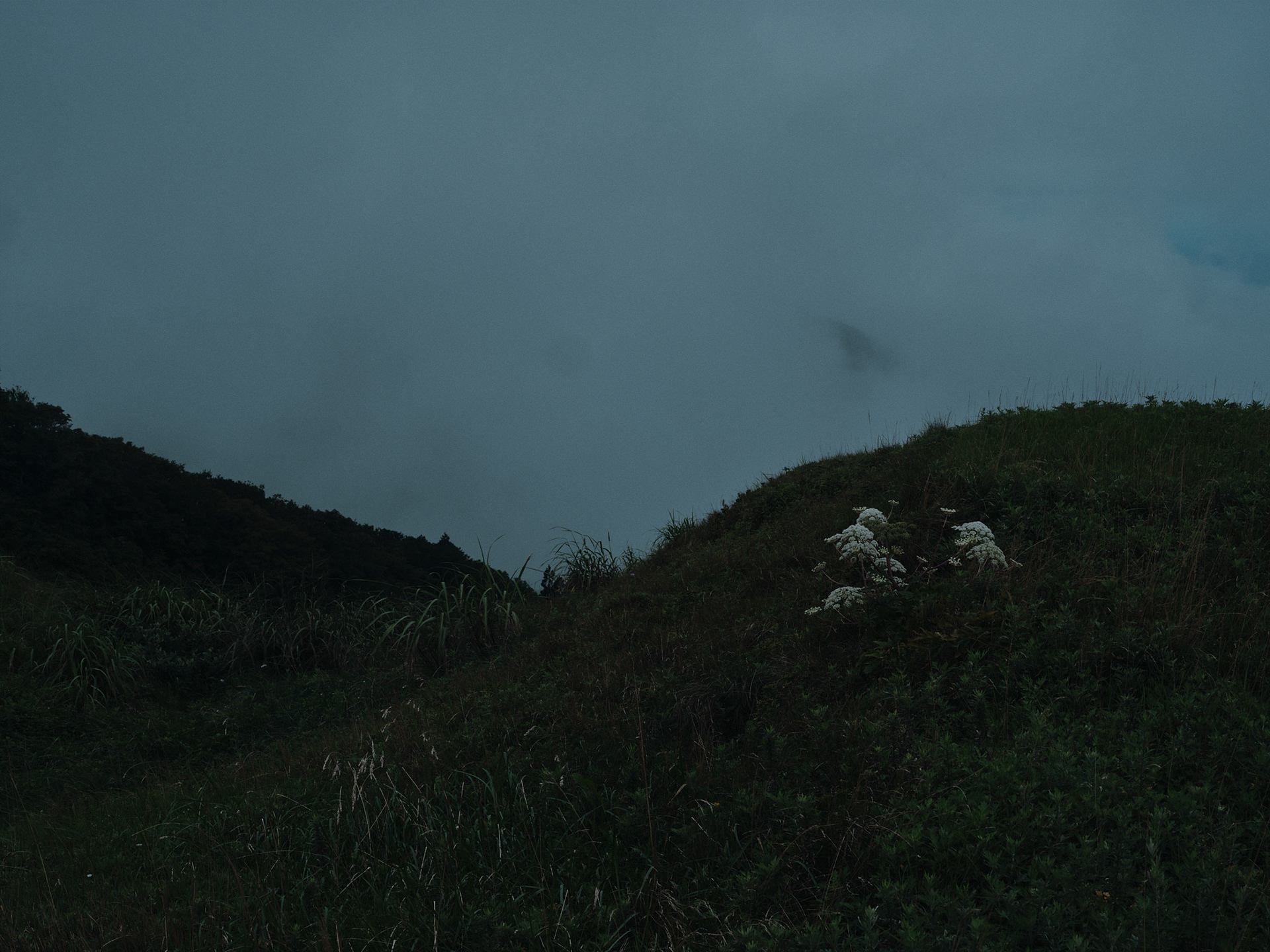
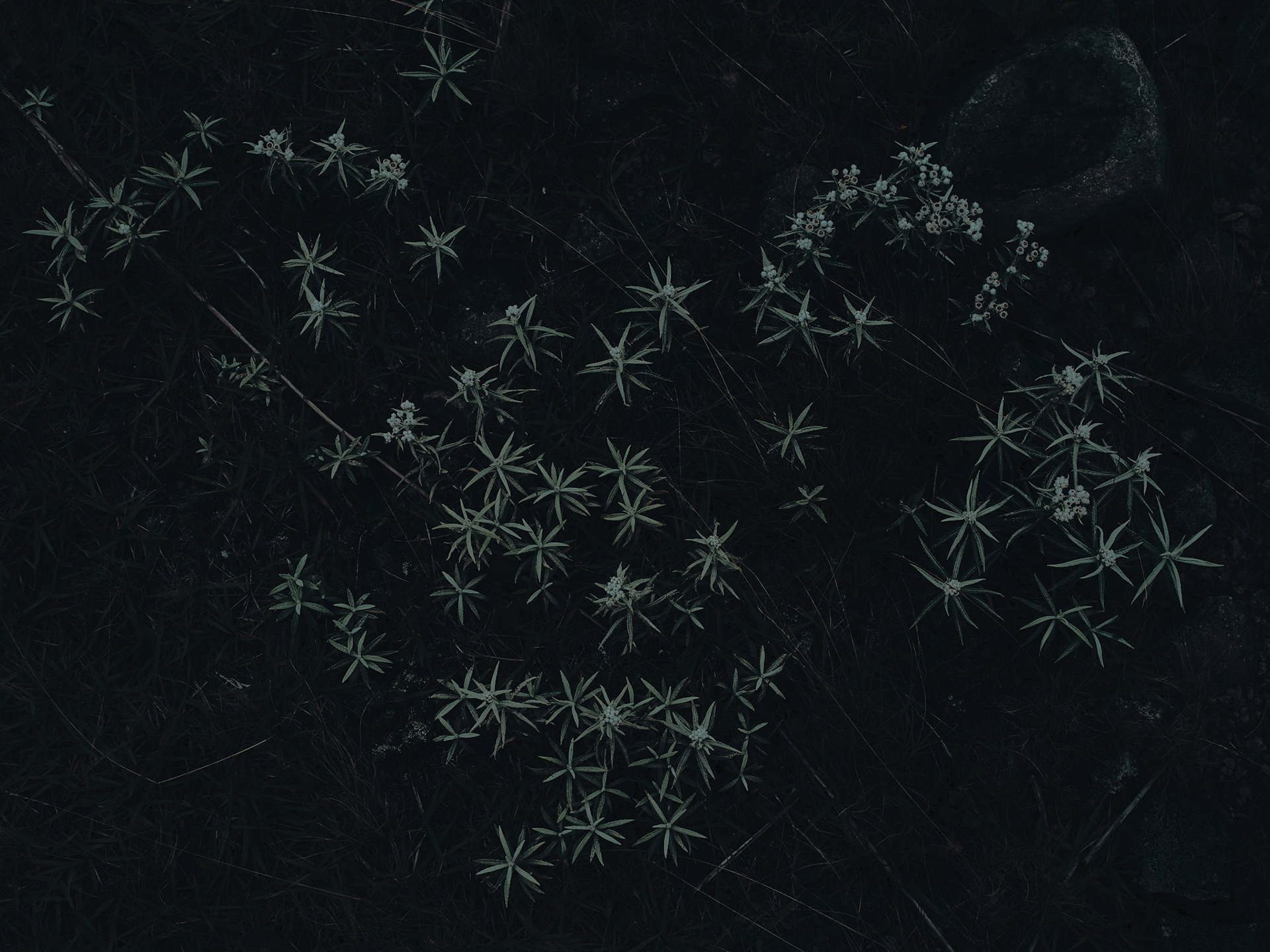
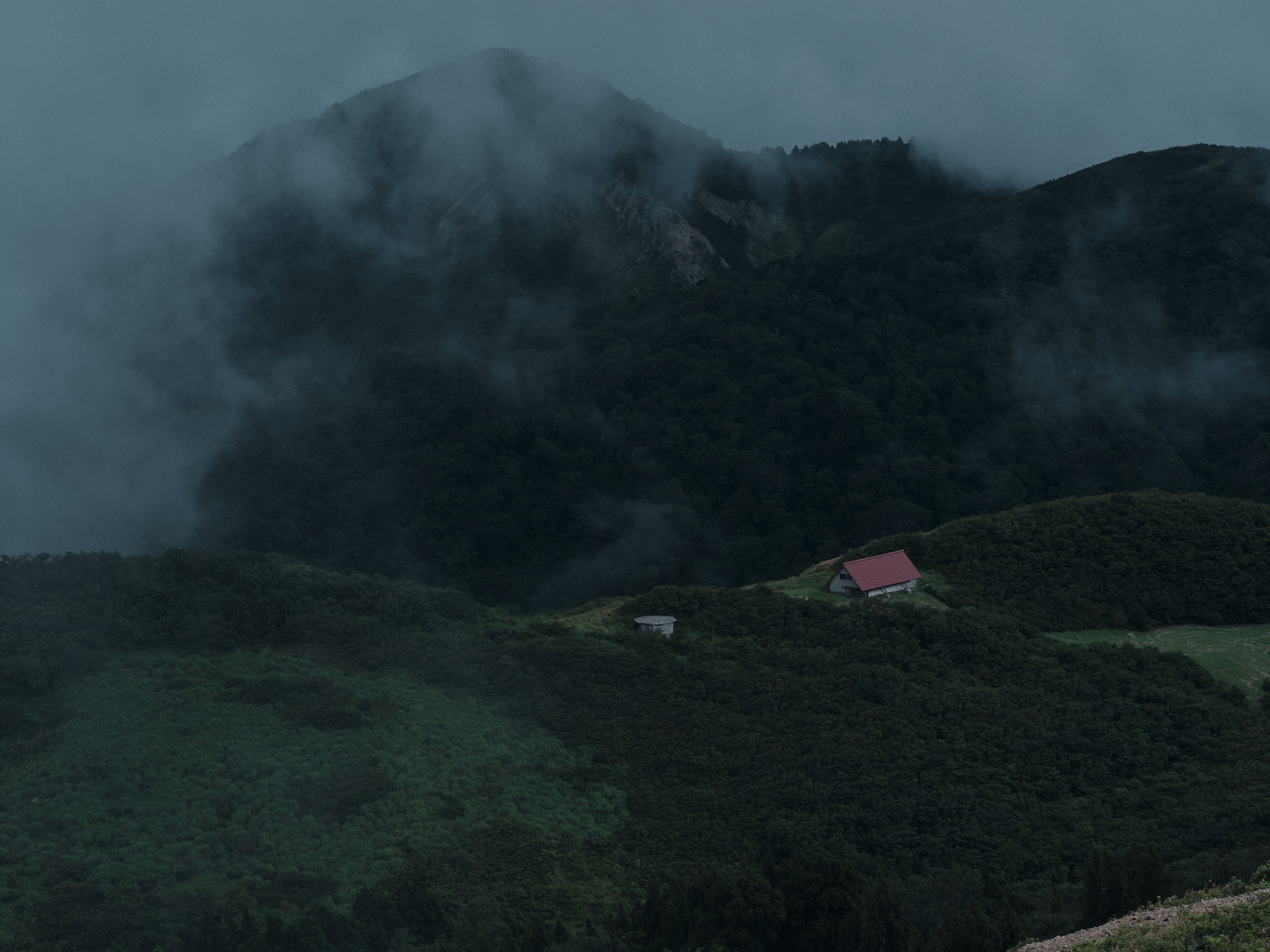
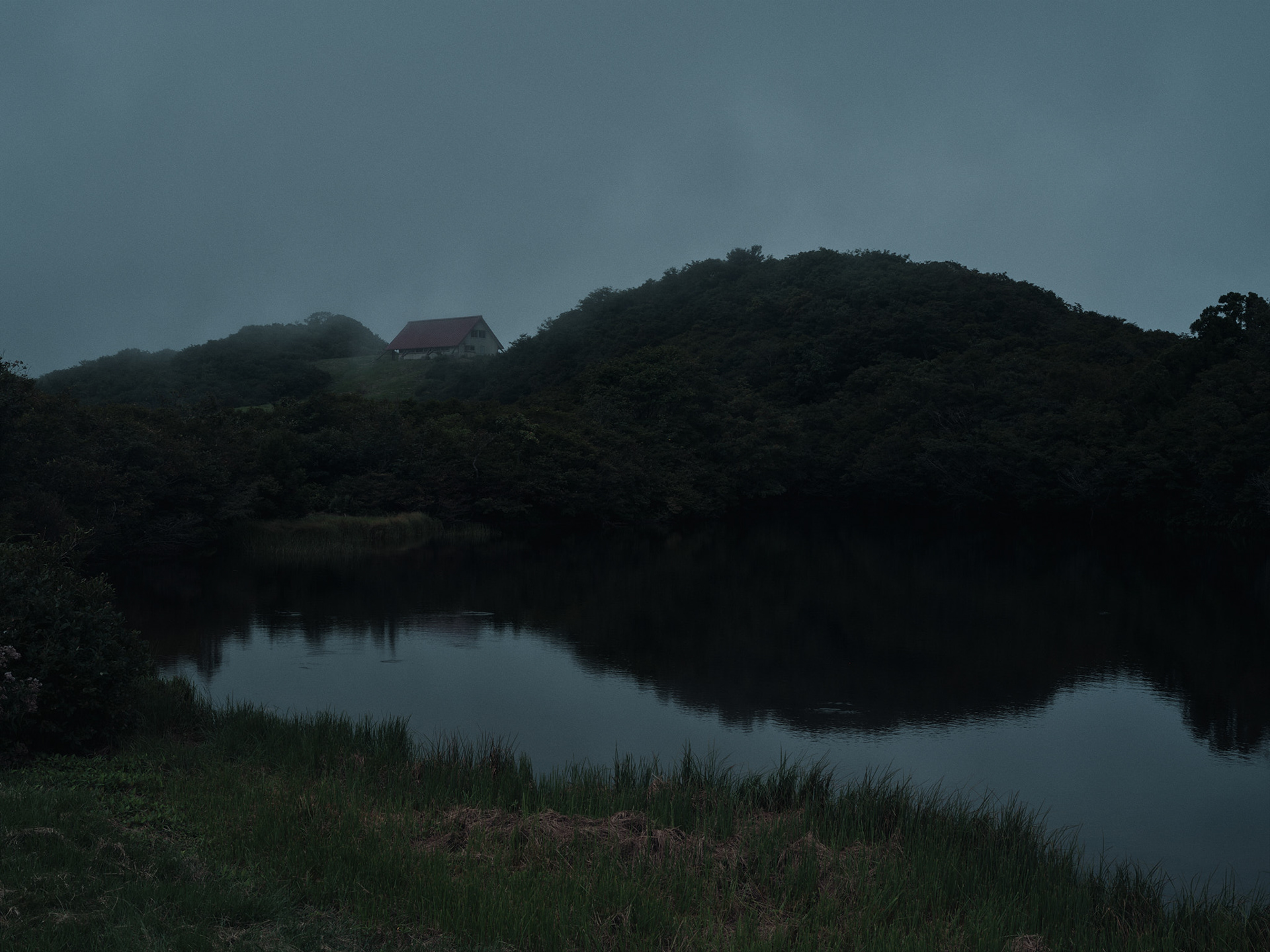
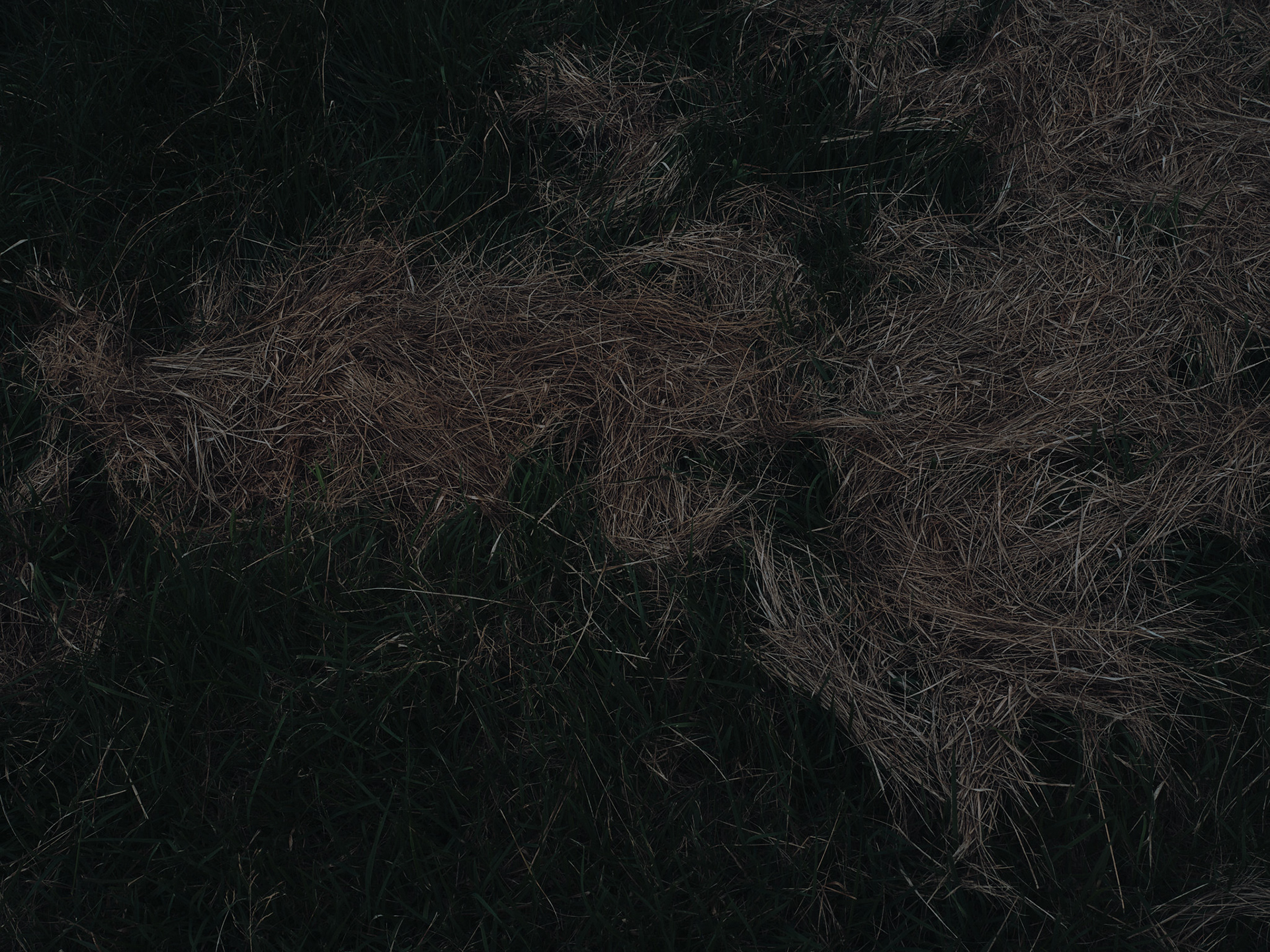
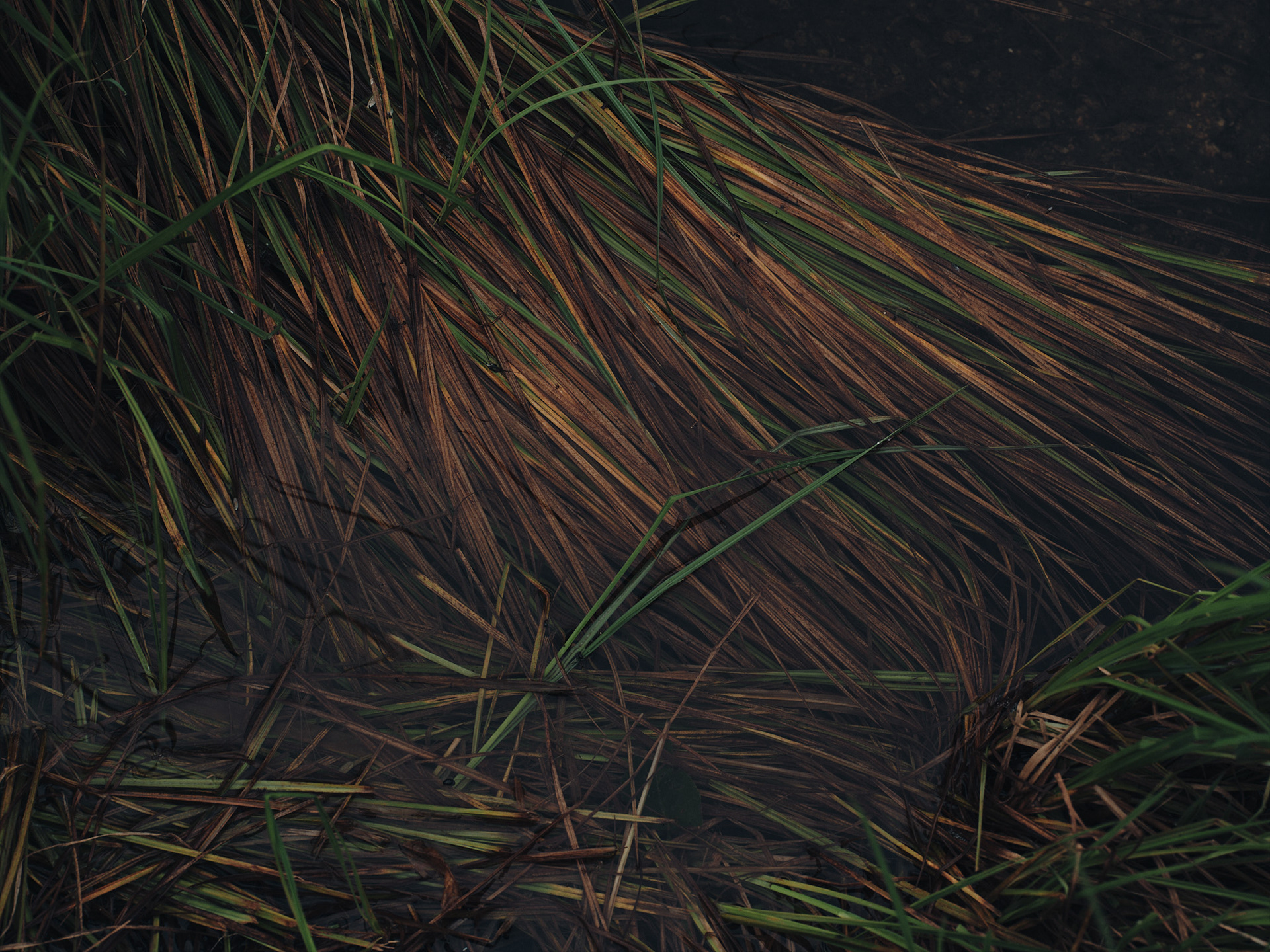
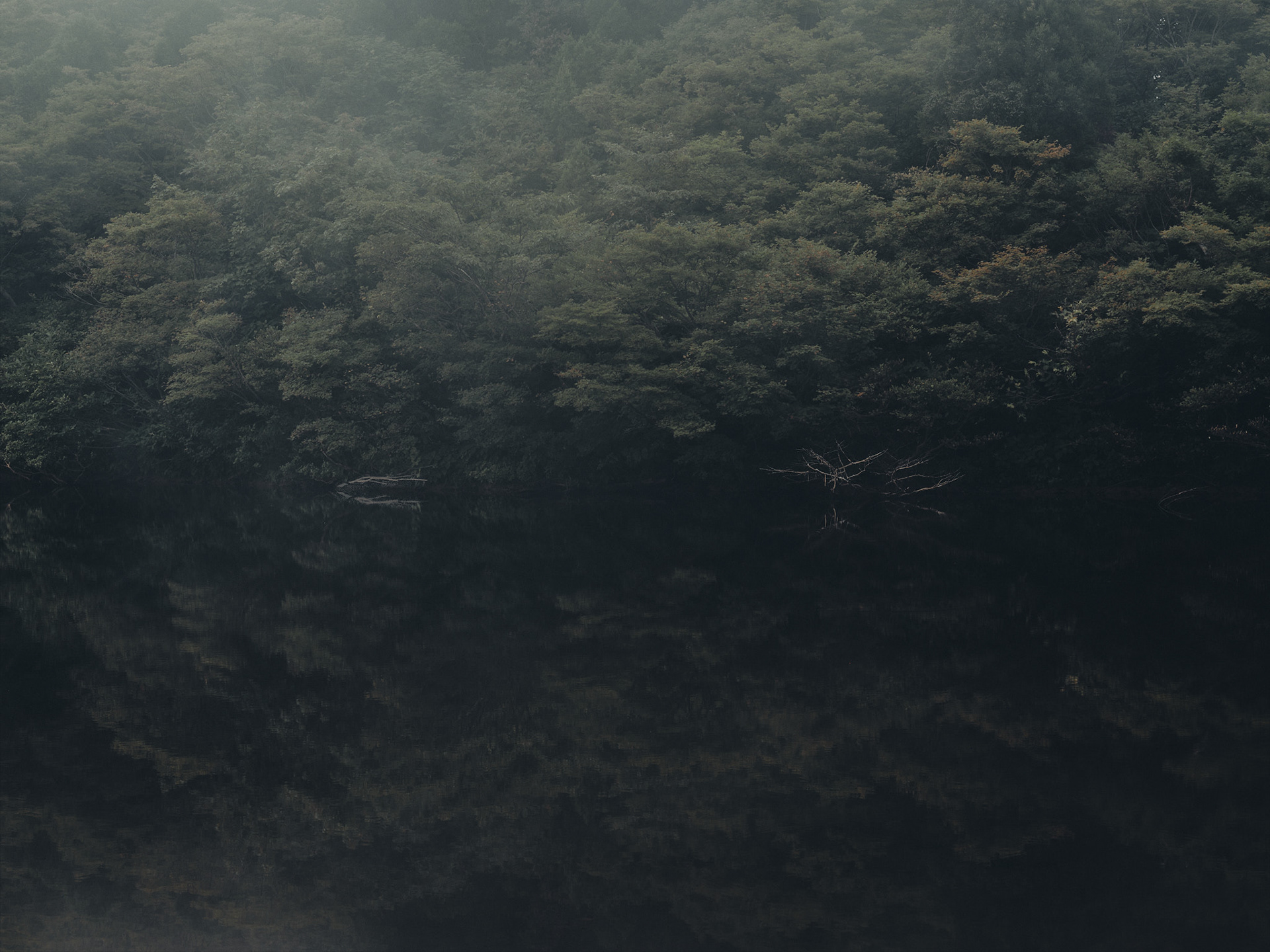
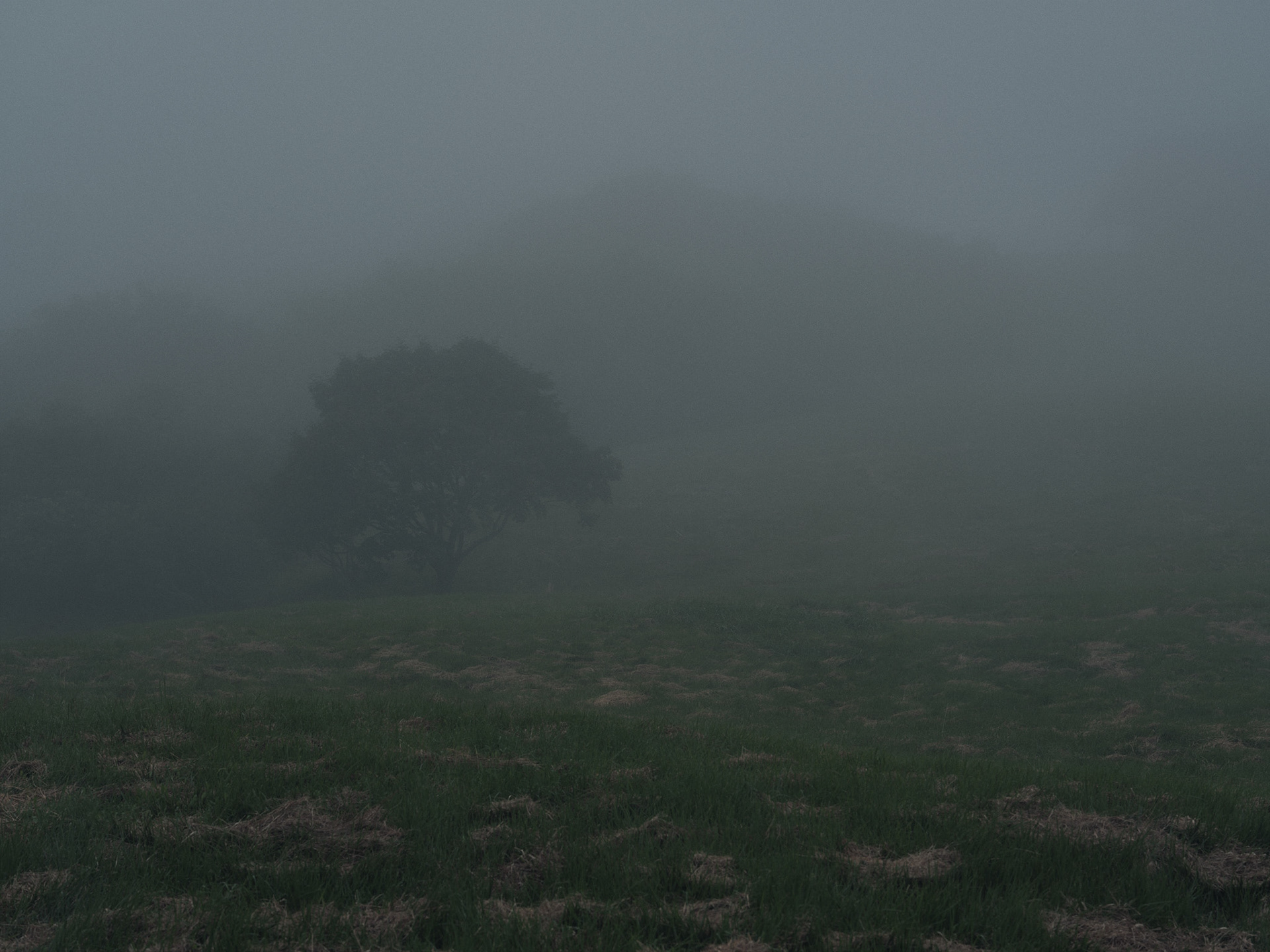
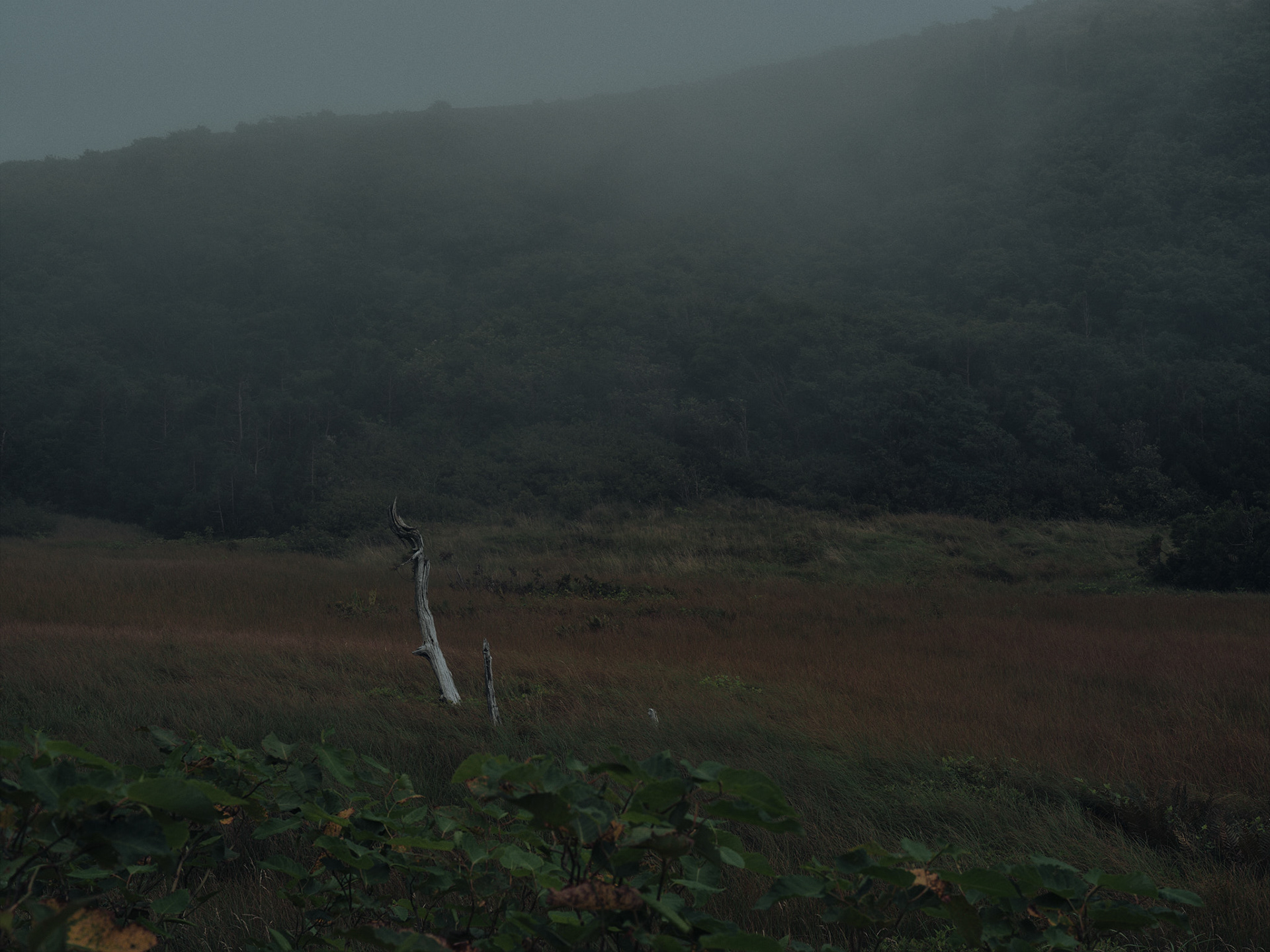
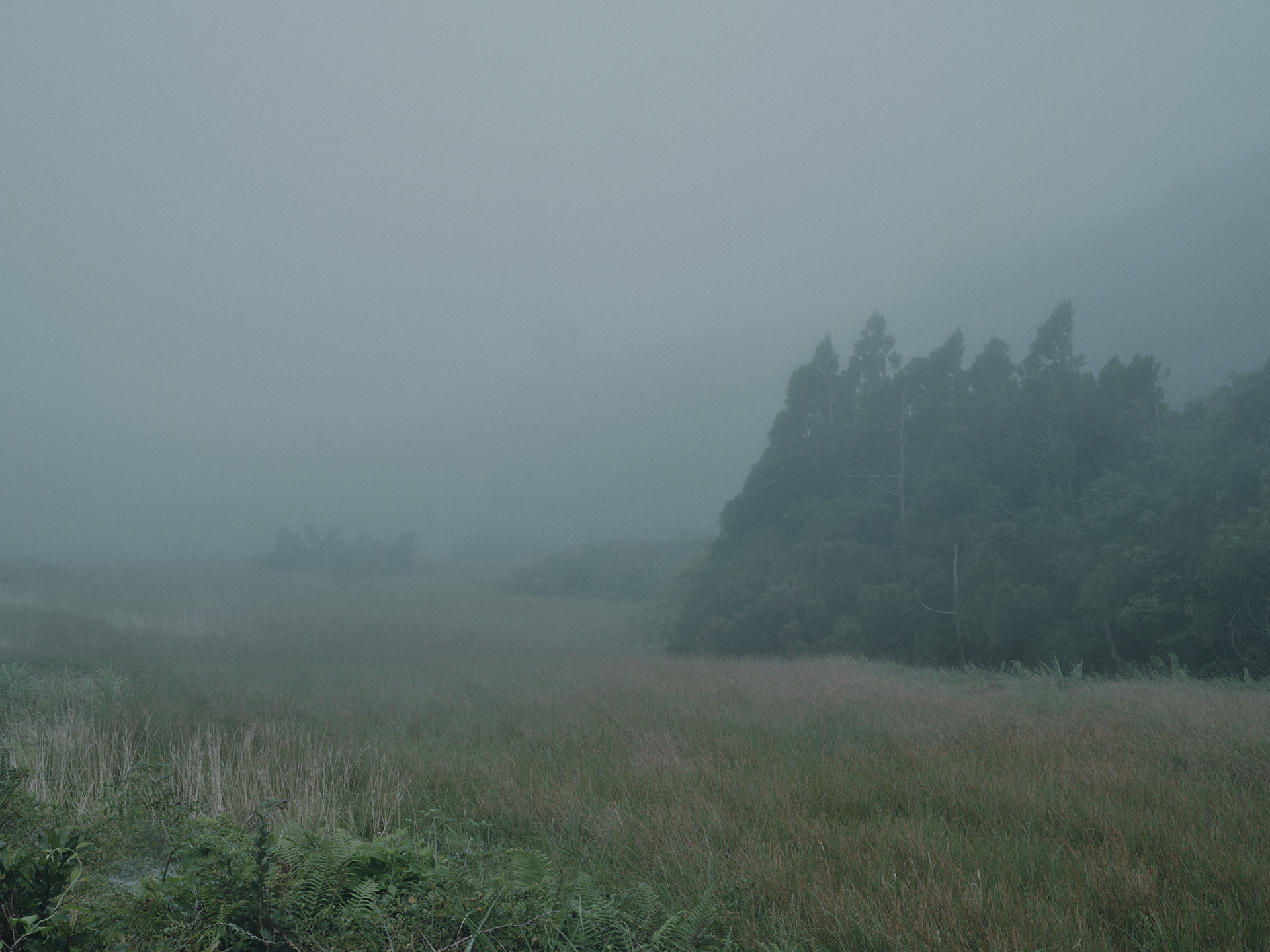
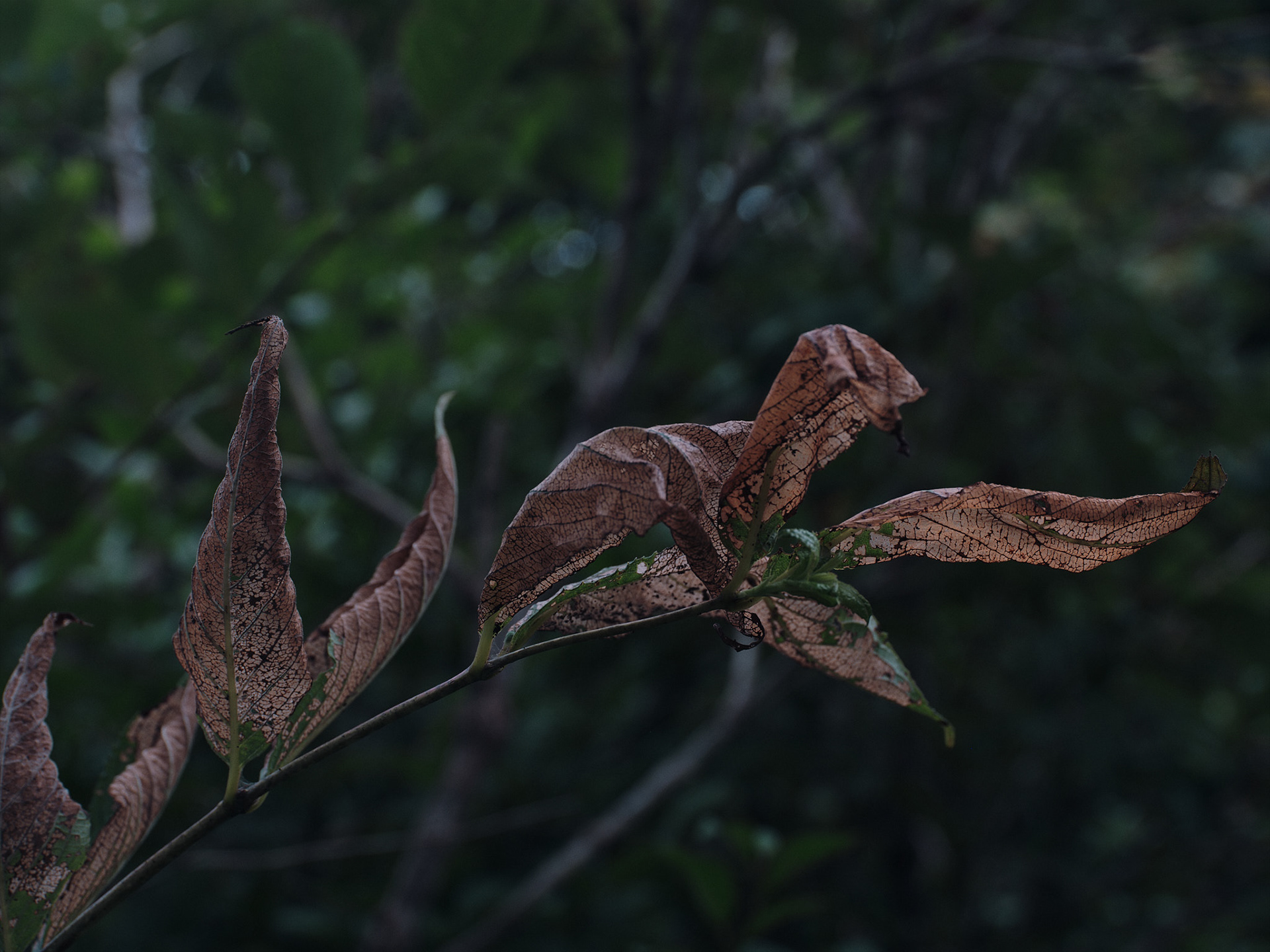
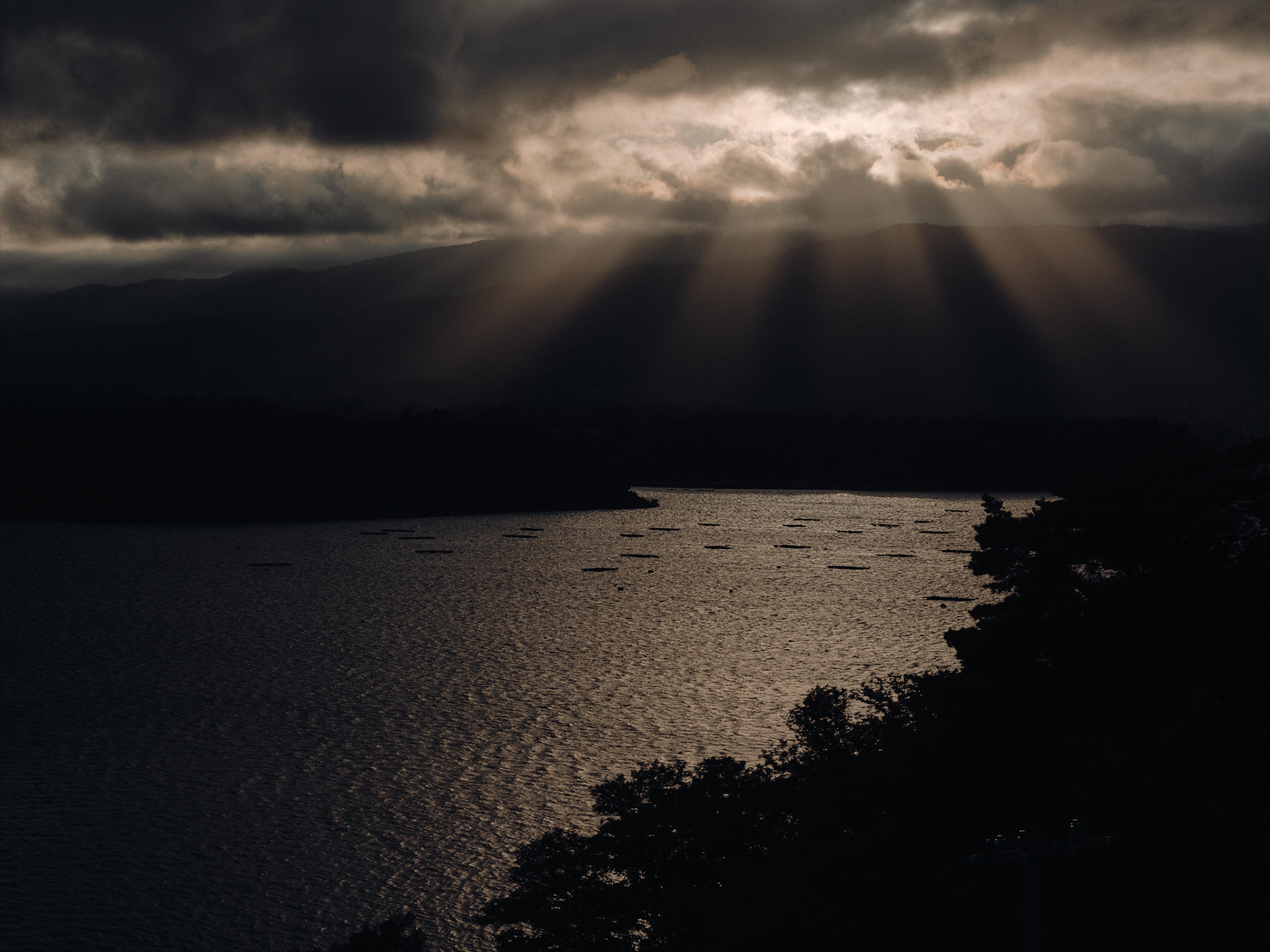
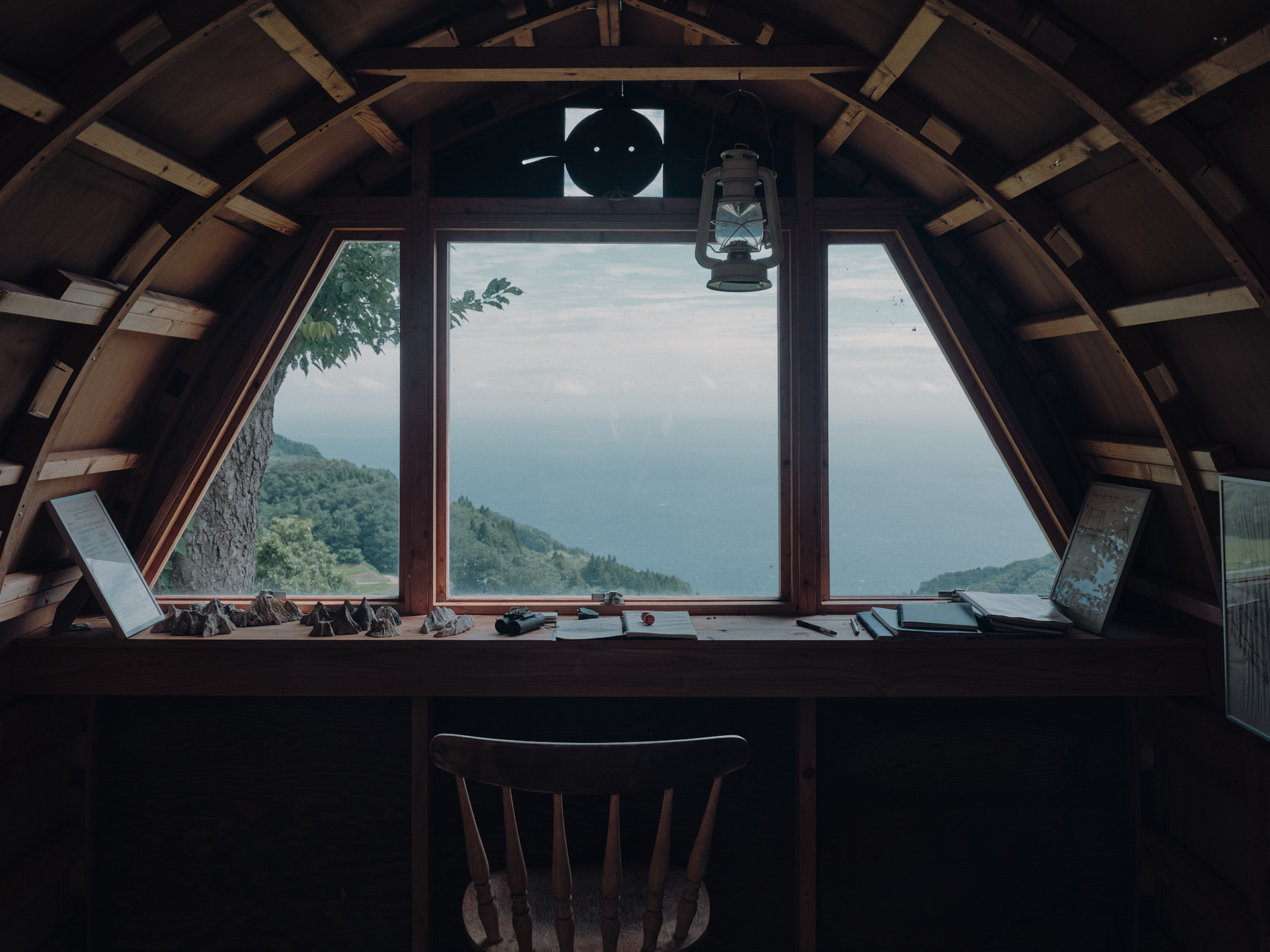
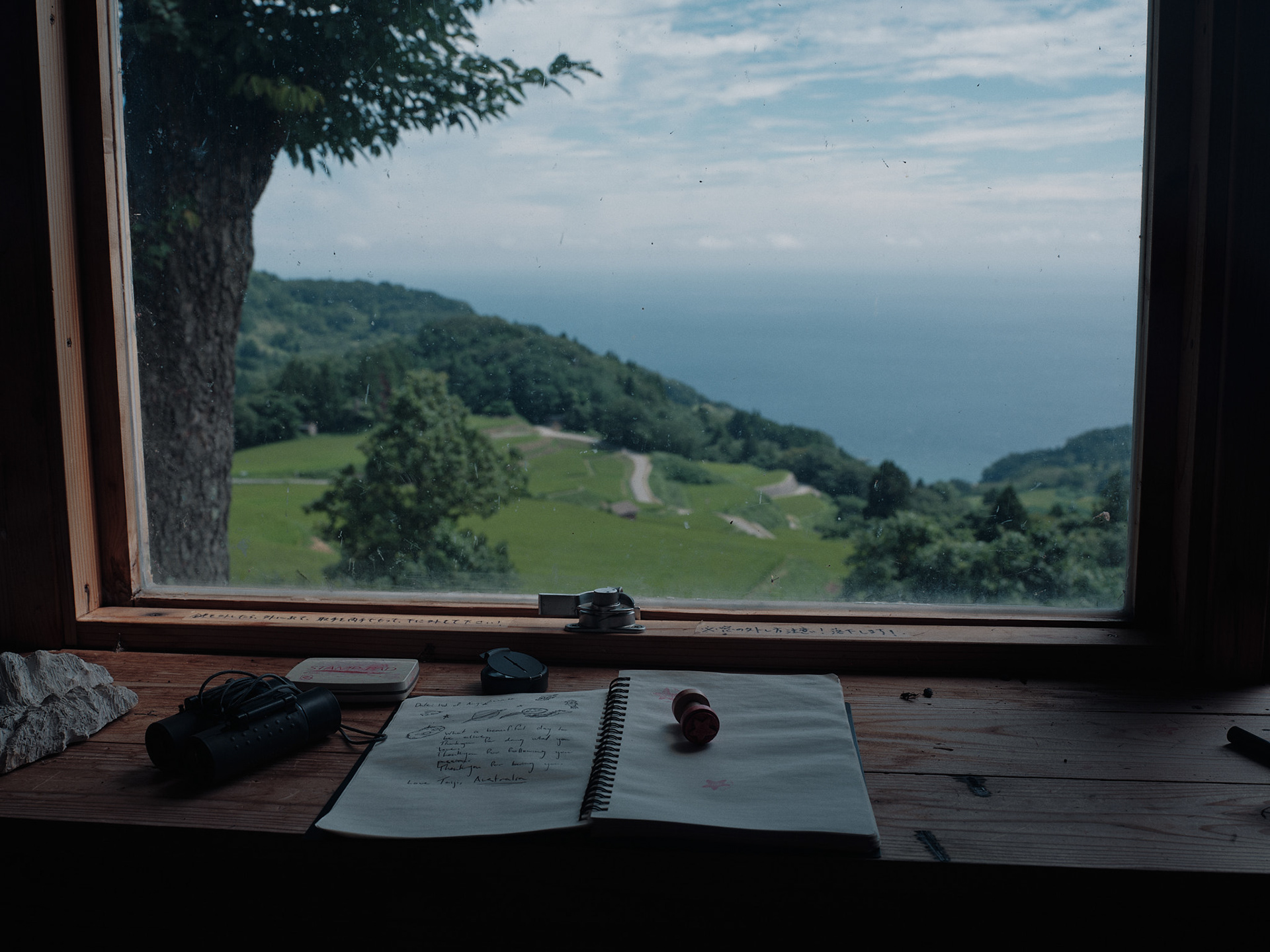
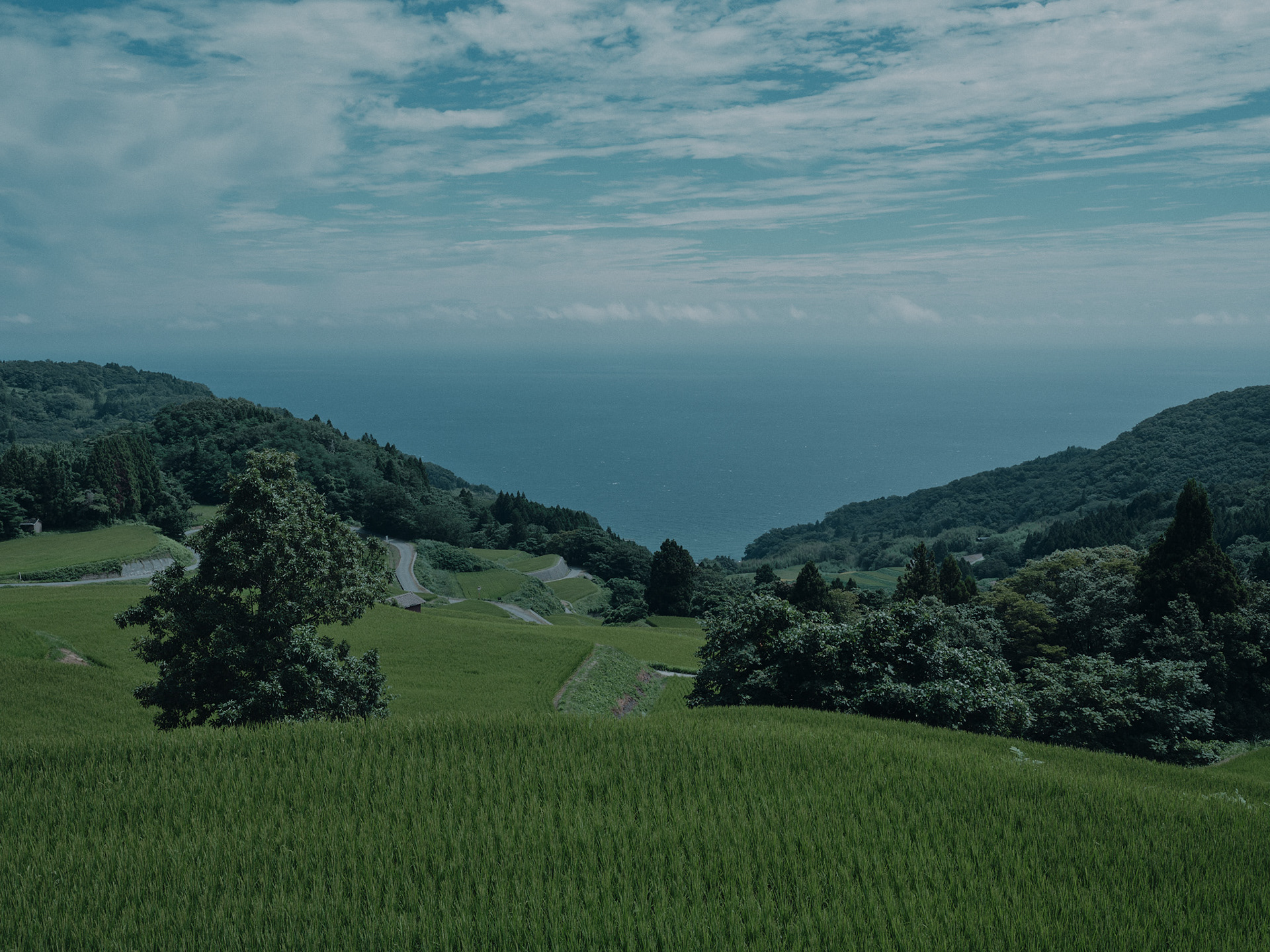
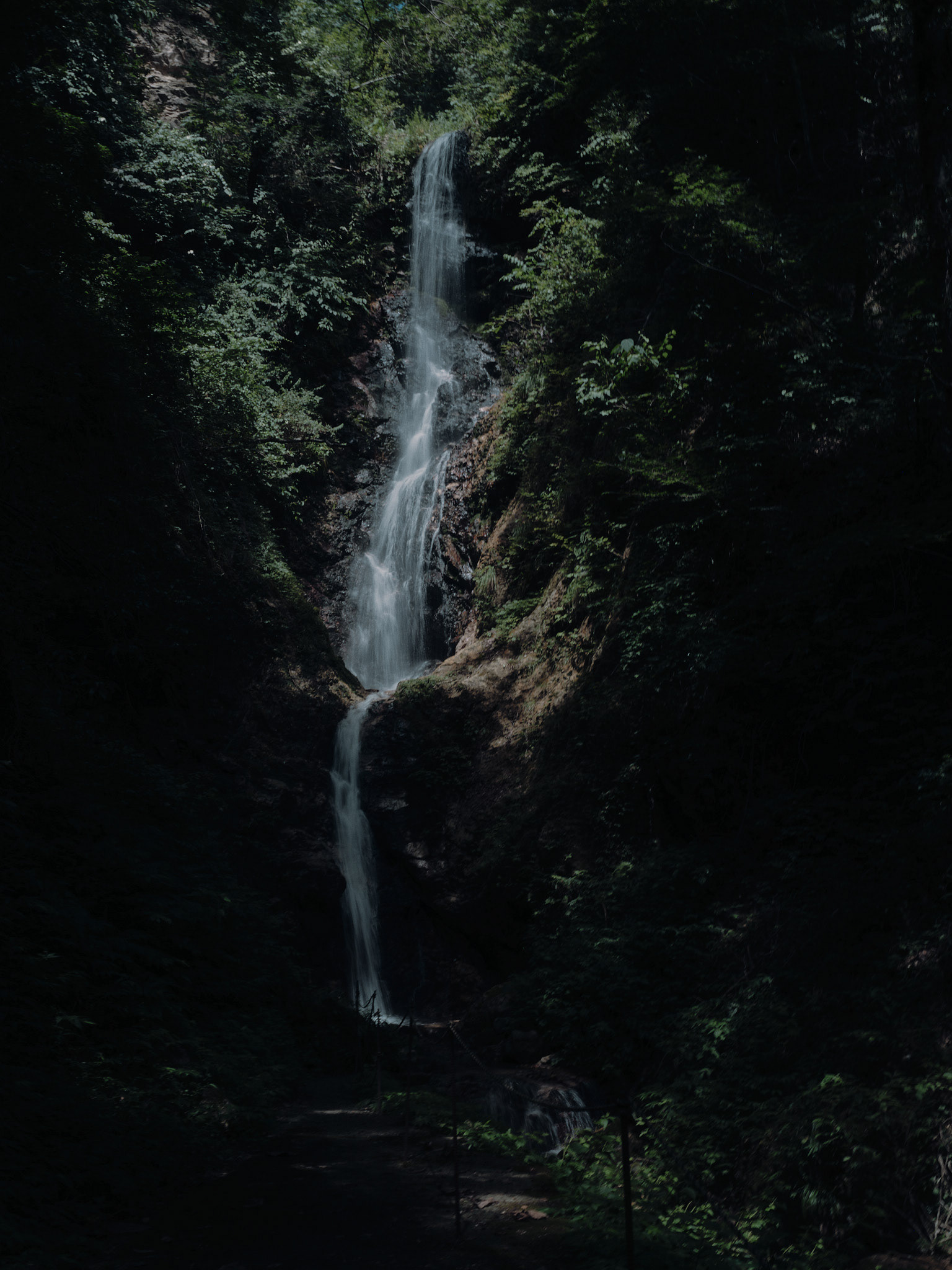
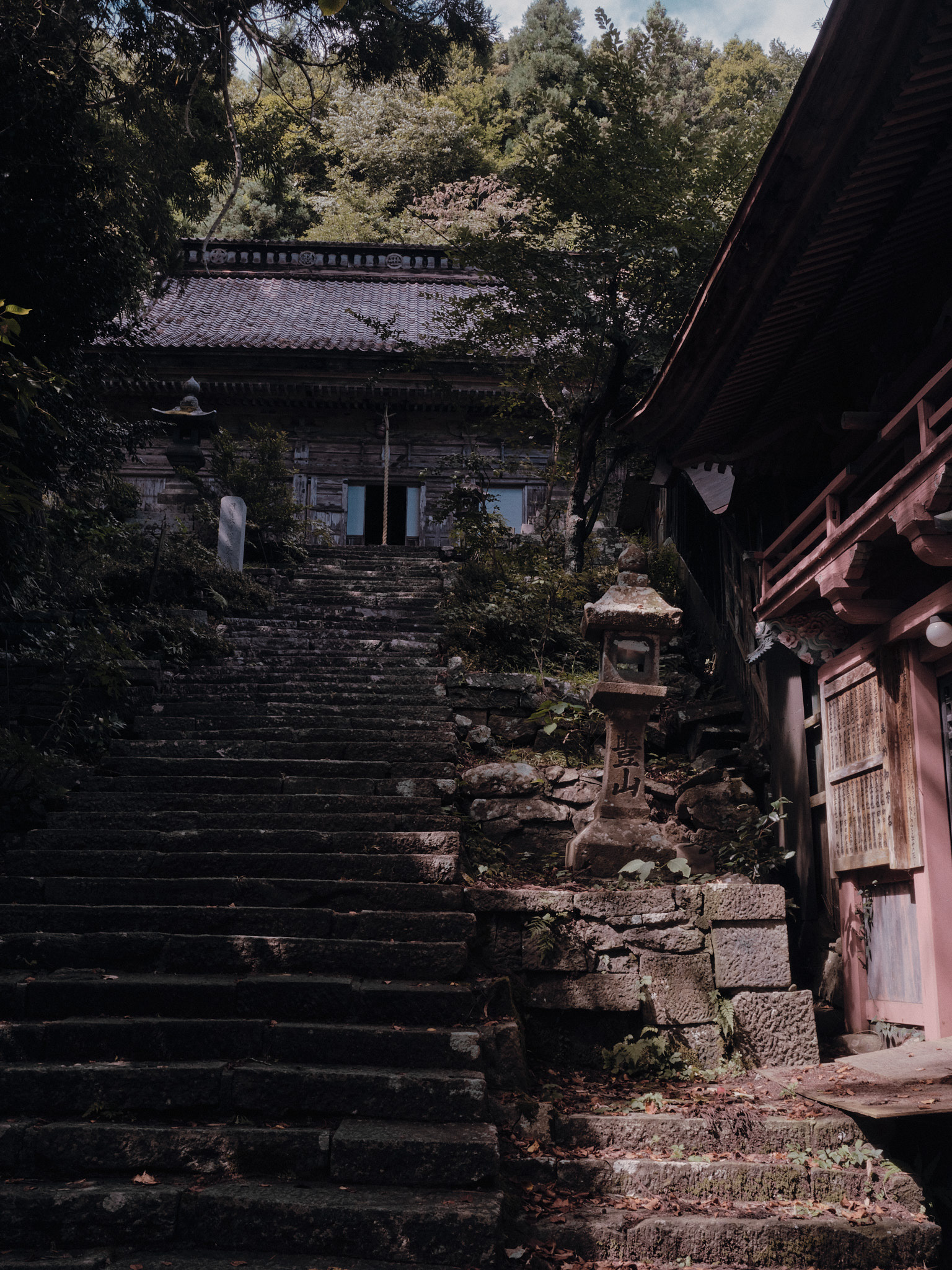
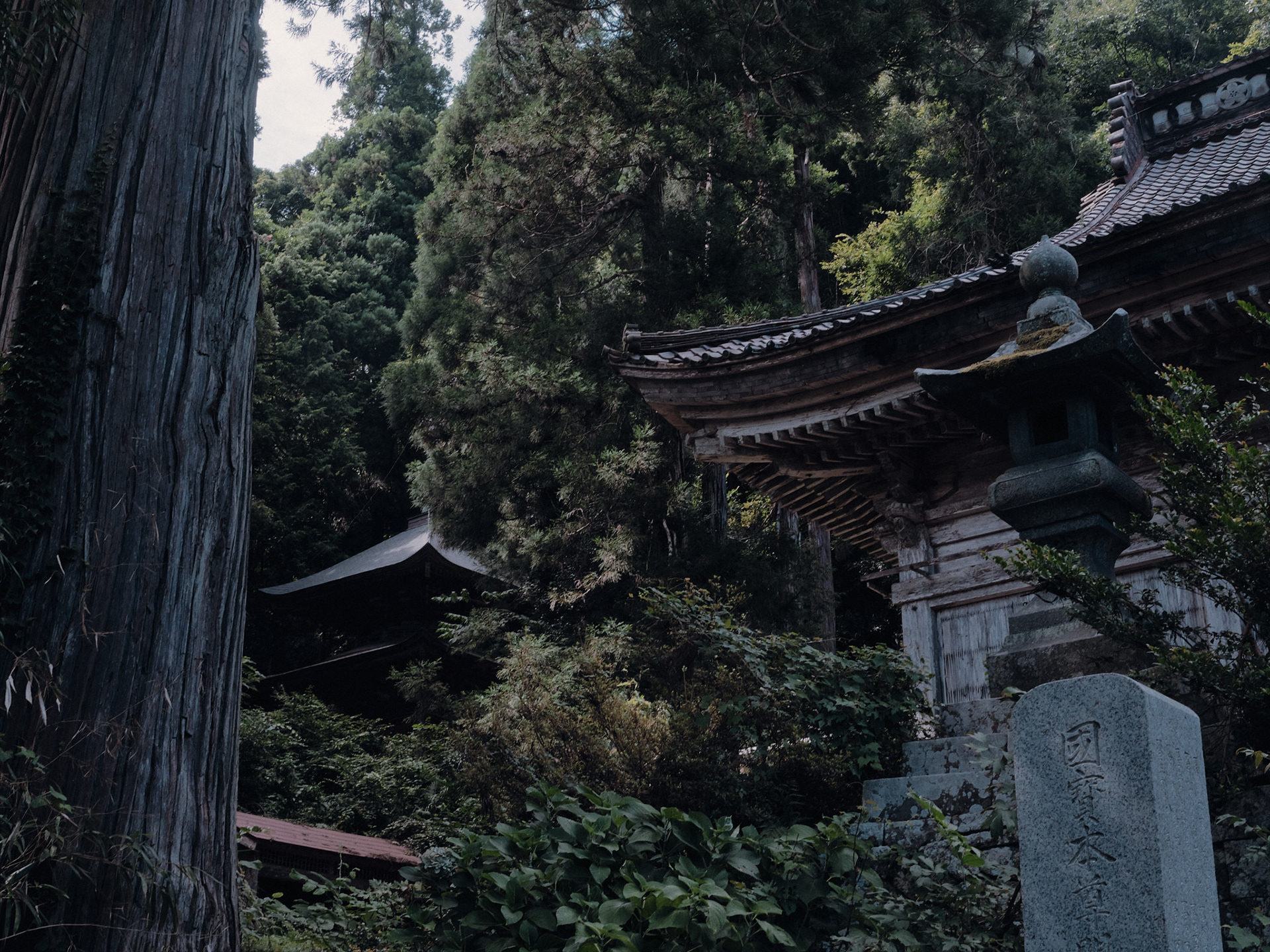
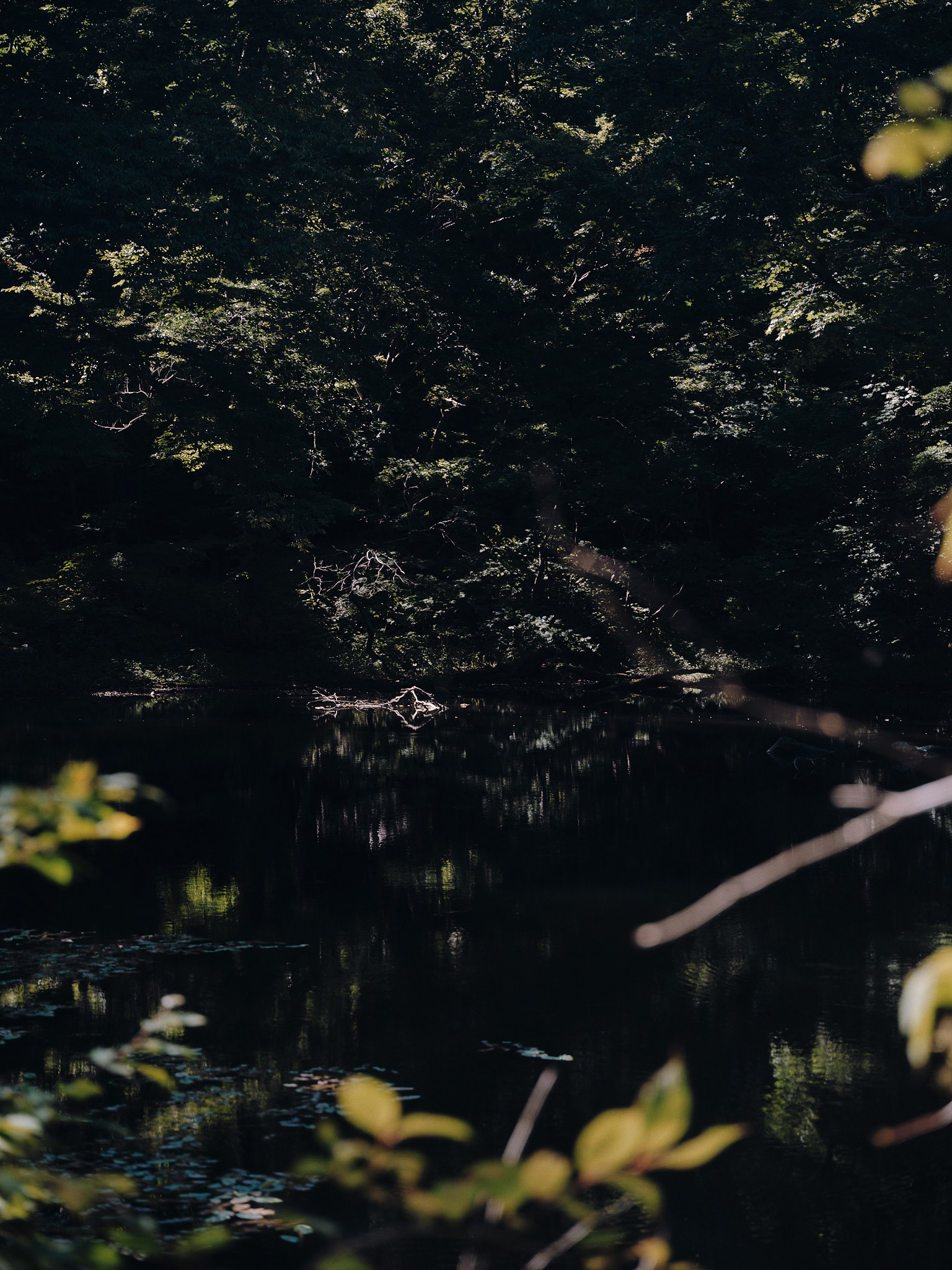
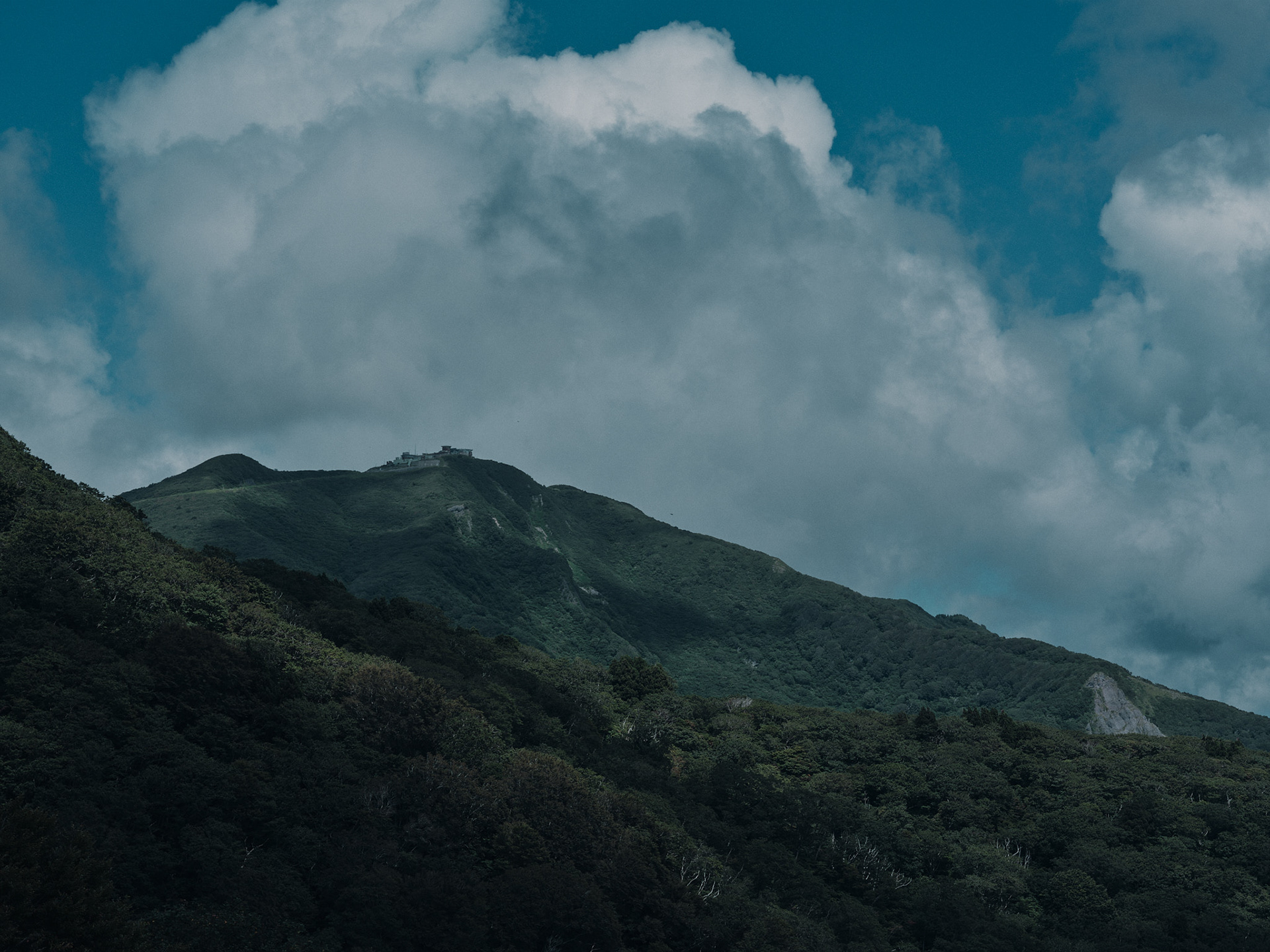
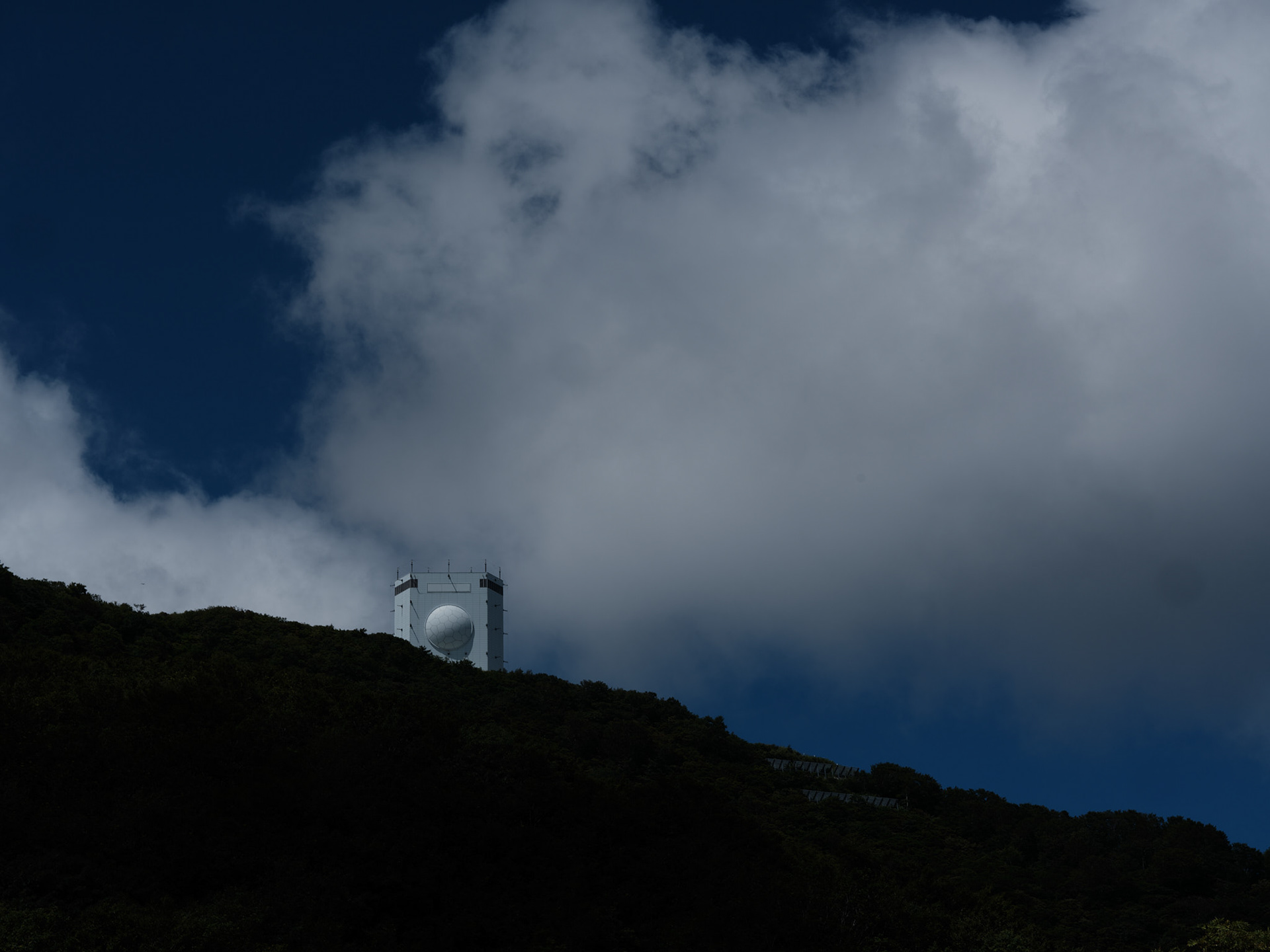
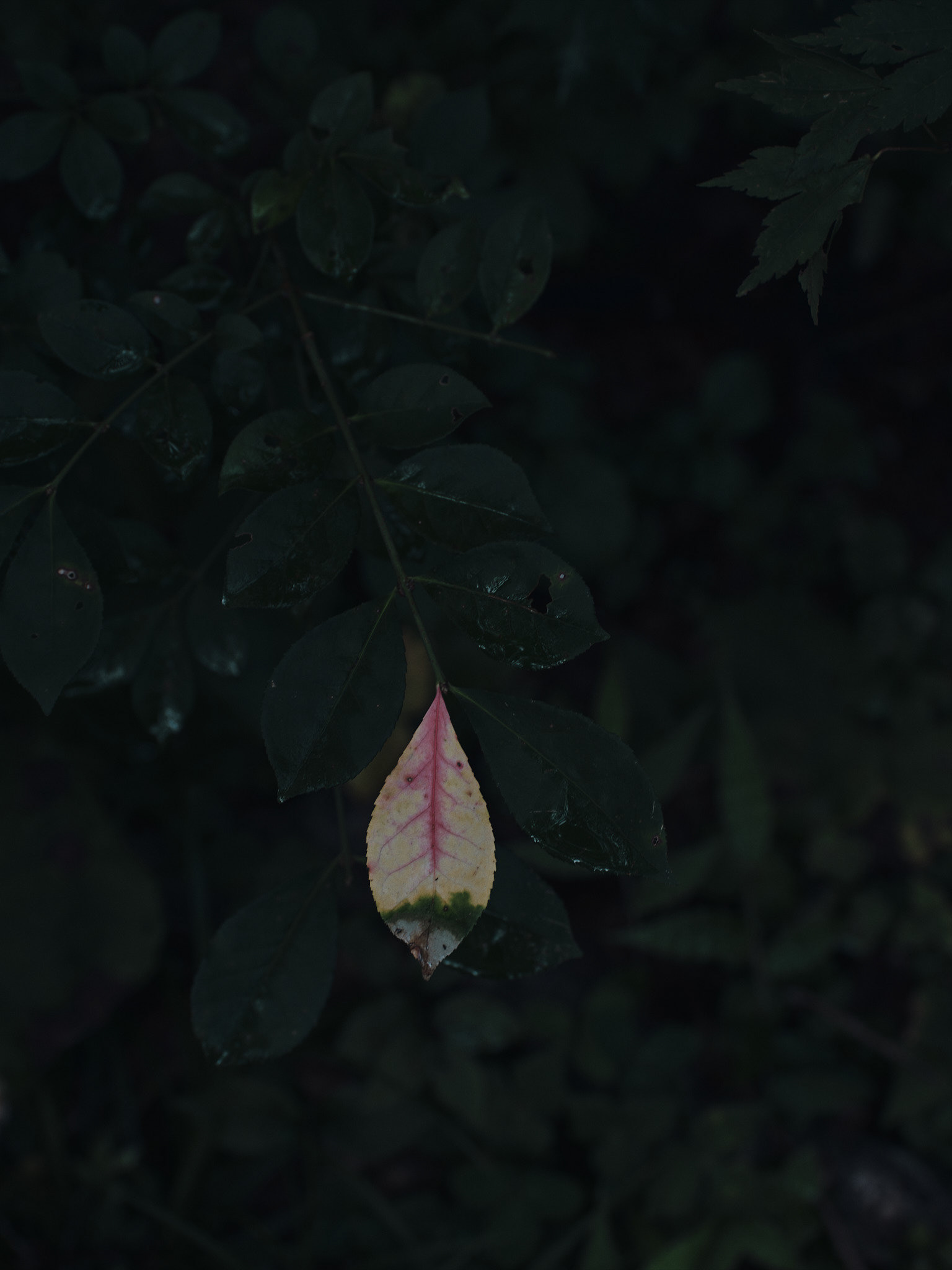
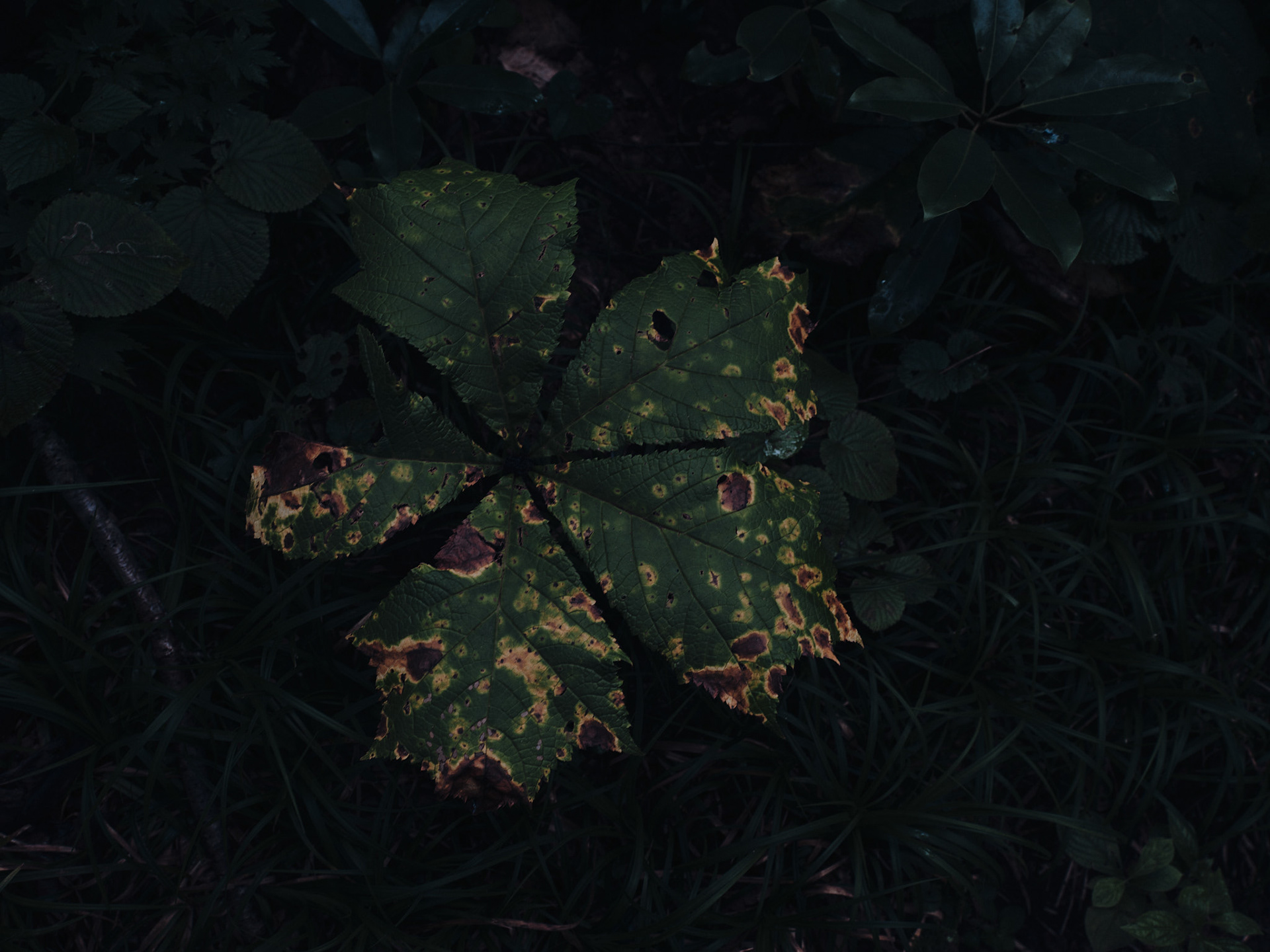
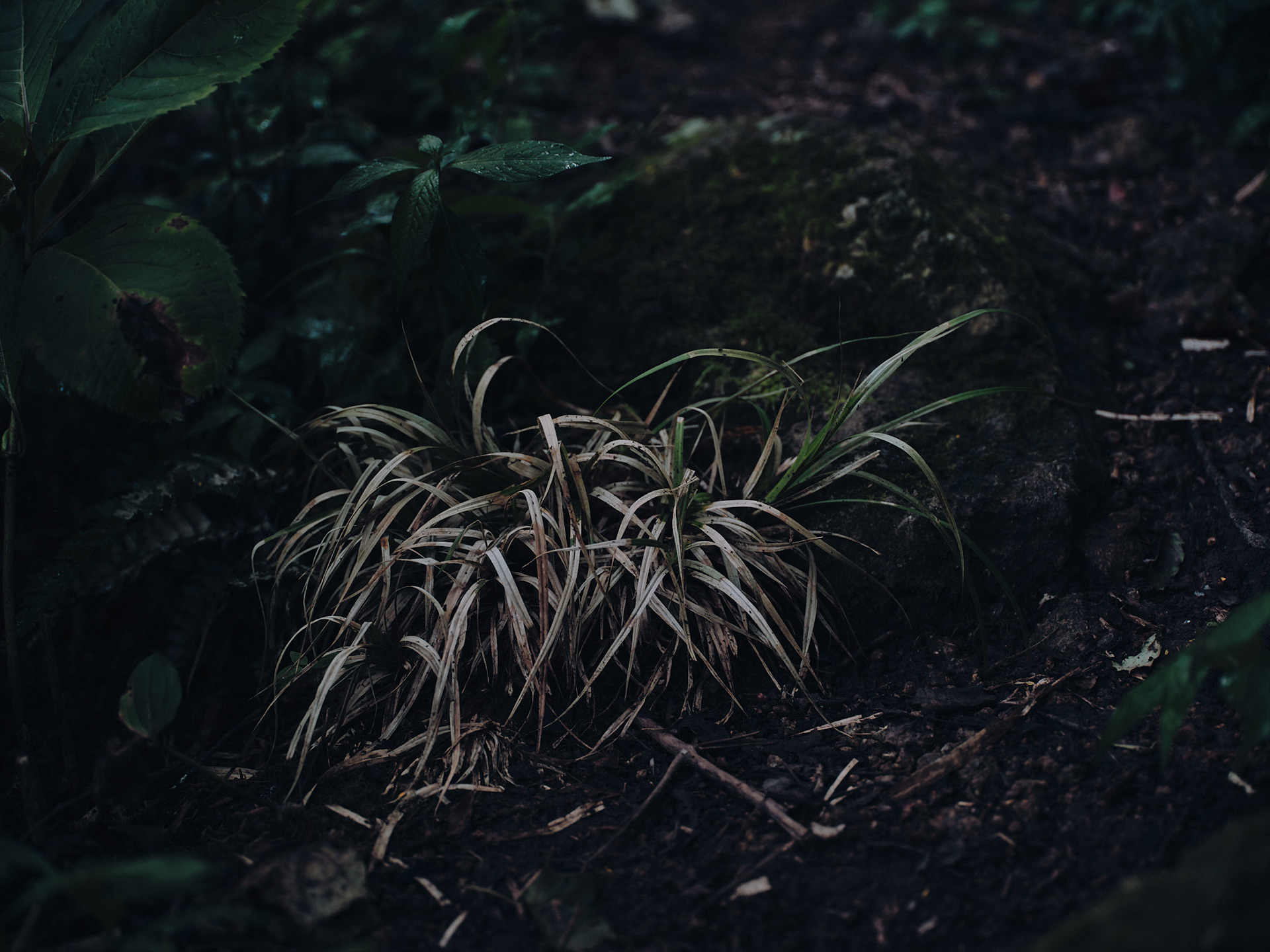
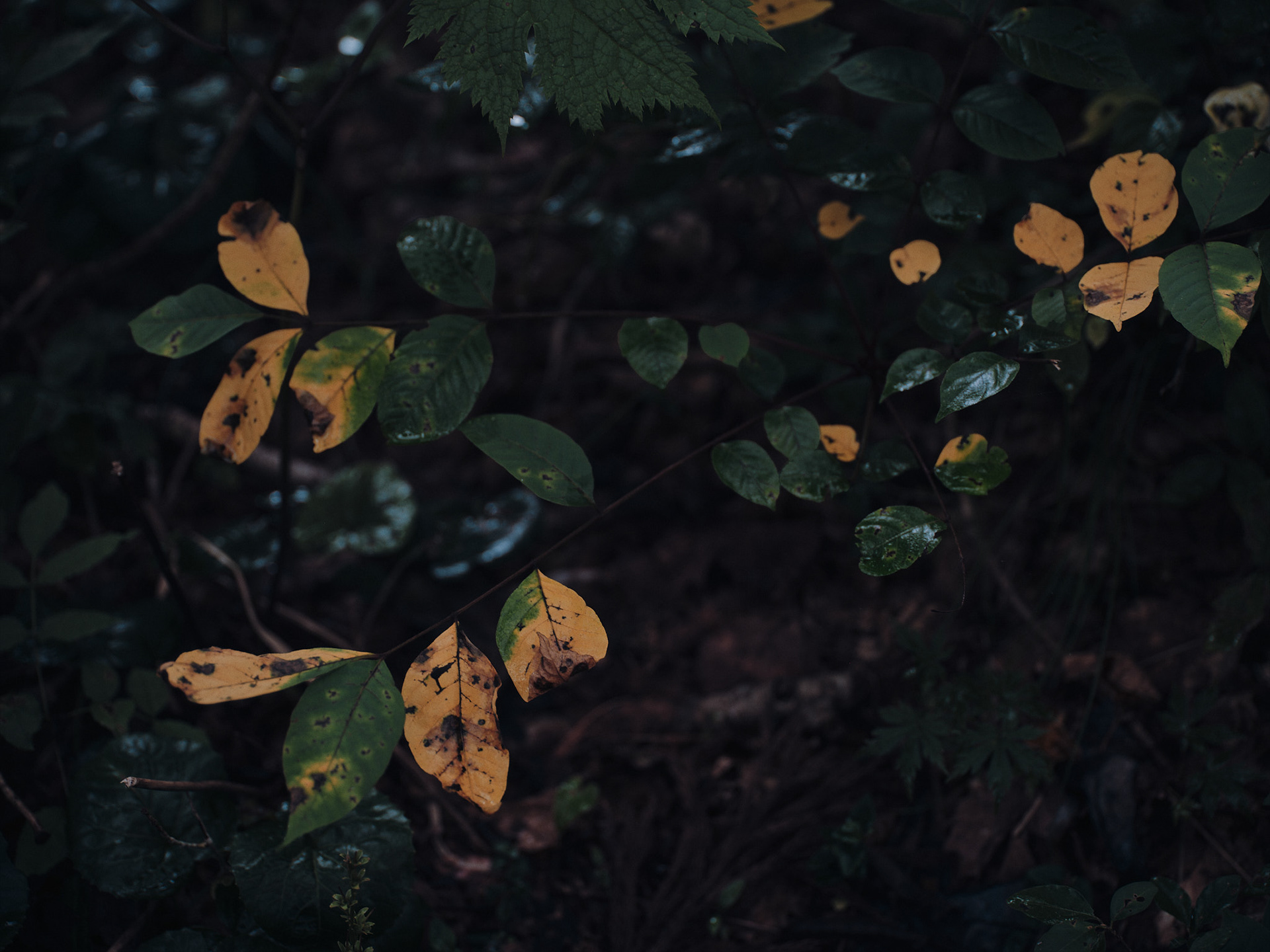
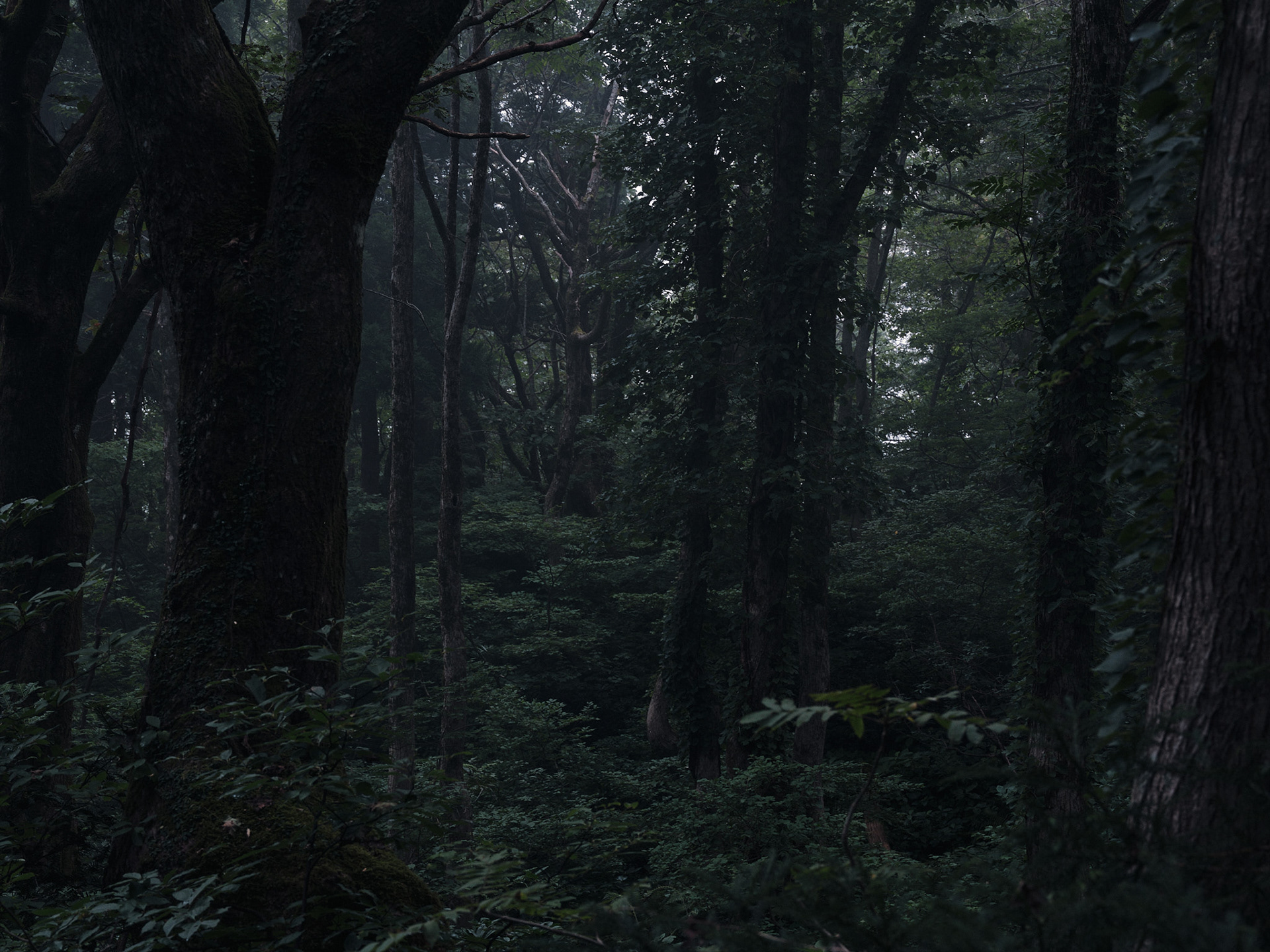
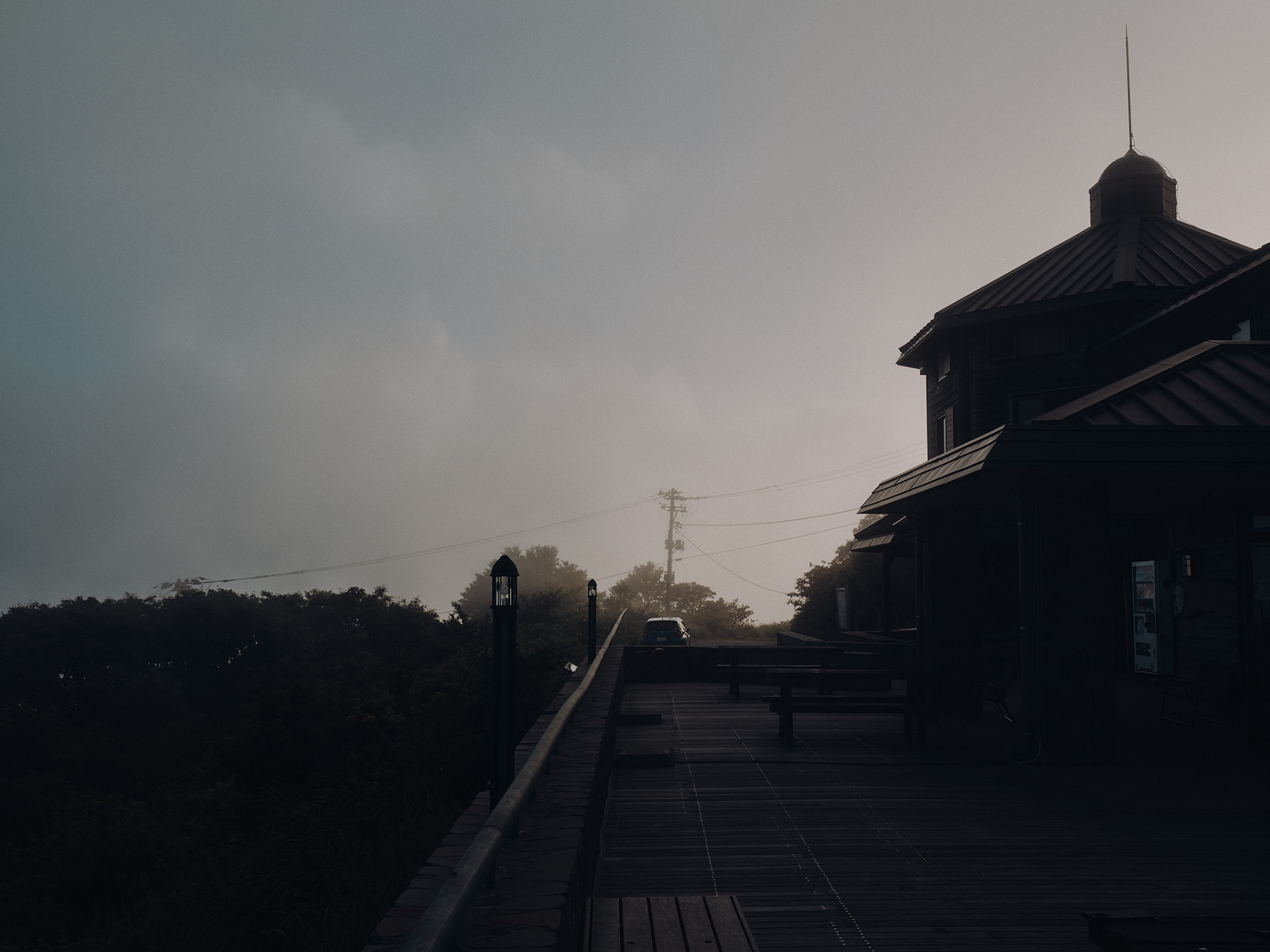
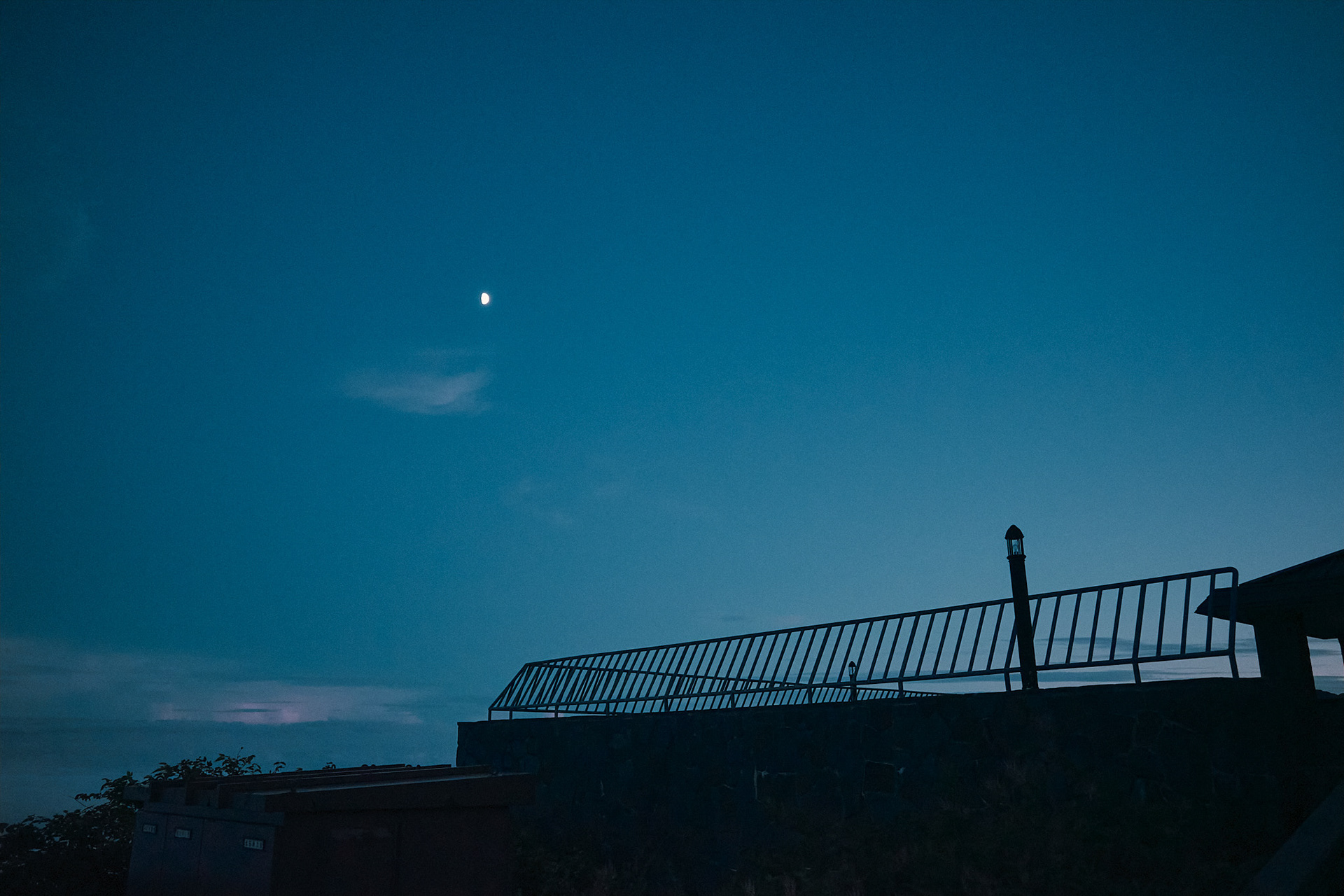
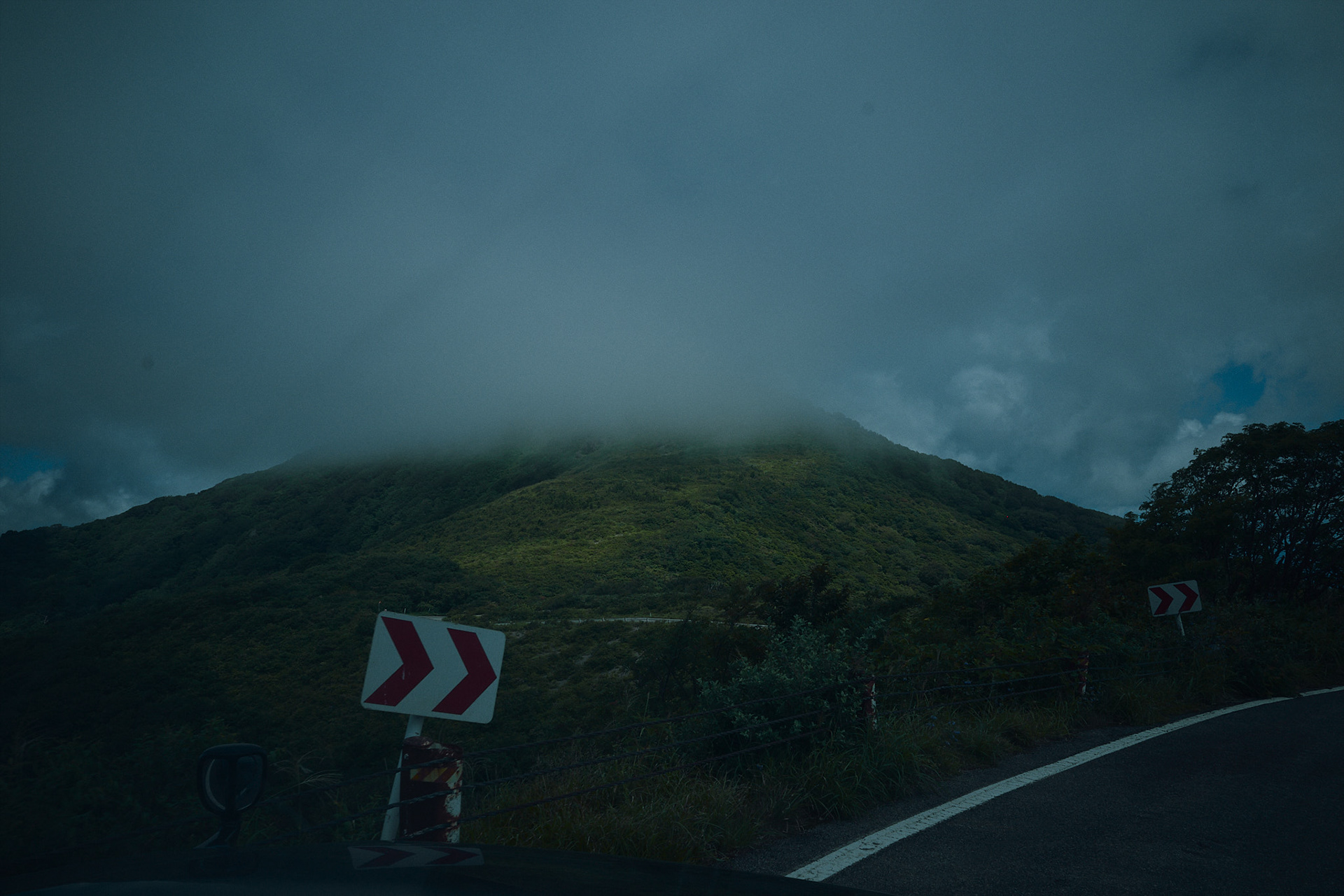
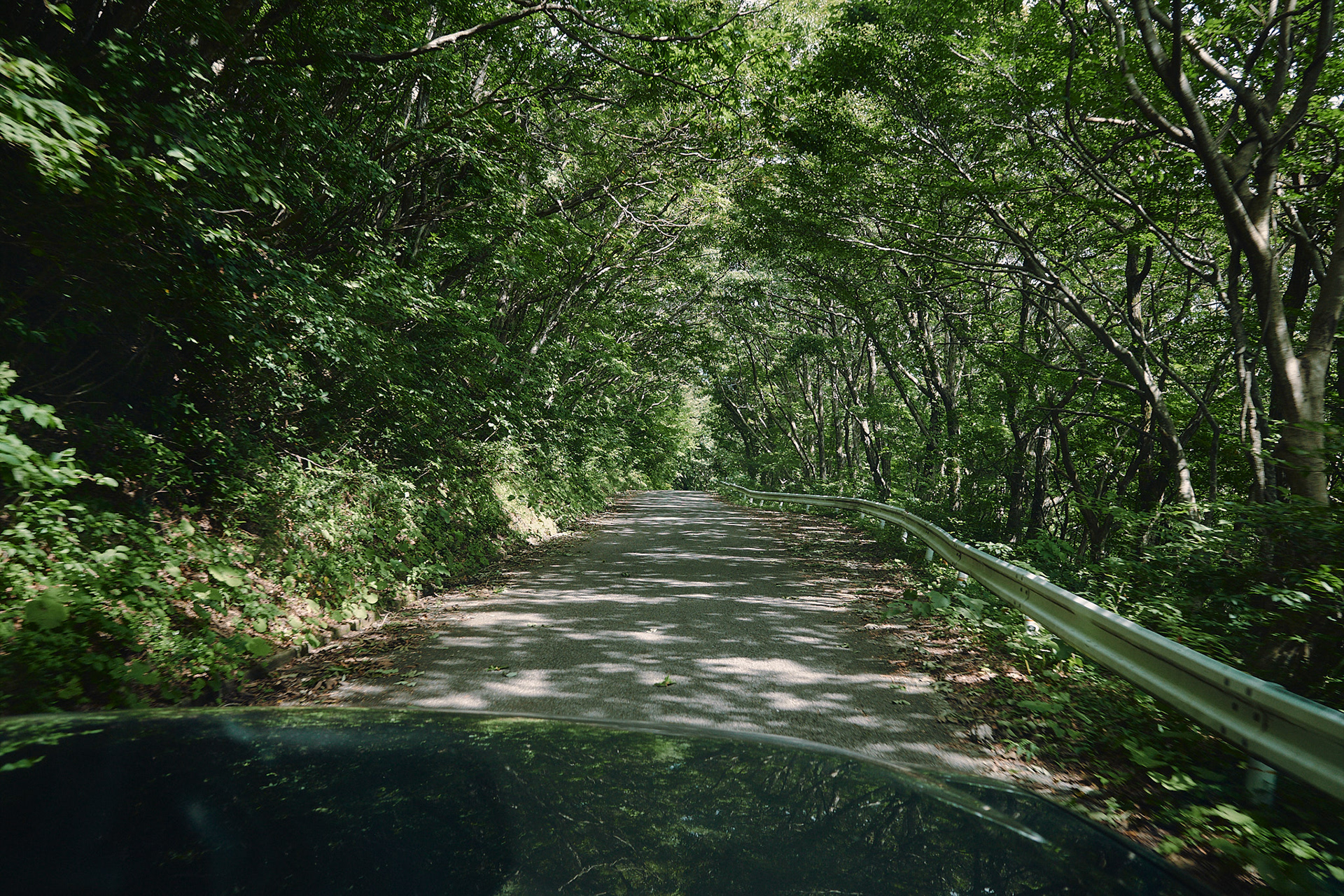
Sado — An island in the Sea of Japan, reached by ferry from Niigata. In summer, the coastline is sharp and green, battered by waves on one side and terraced into rice paddies on the other. The ruins of the Sado Gold Mine sit in the hills, their stone walls now covered in vegetation—structures built to extract from the earth, slowly being reclaimed by it. In the traditional settlements along the coast, wooden houses darken with age, their boards warped by salt wind and humidity. Temples stand in dense groves. On the mountain ridges, clouds settle below the peaks, and the island's interior opens into grassland and mist. What the photographs record is an island where human presence and natural process have had centuries to accumulate, overlap, and absorb each other.
日本海に浮かぶ島、佐渡。新潟からフェリーで渡る。夏の海岸線は鋭く、緑が濃い。波に削られる断崖の反対側には棚田が広がる。山中には佐渡金山の遺構が残り、石積みの壁は植物に覆われている。大地から資源を取り出すために築かれた構造物が、少しずつ大地に還りつつある。海沿いの集落では、板壁の家屋が塩風と湿気で黒ずみ、反り、古びている。寺院は深い木立の中に立つ。山の稜線に雲が降り、島の内側は草原と霧に開ける。この写真が記録しているのは、人の営みと自然の作用が何世紀もかけて重なり、互いを吸収してきた島の姿である。