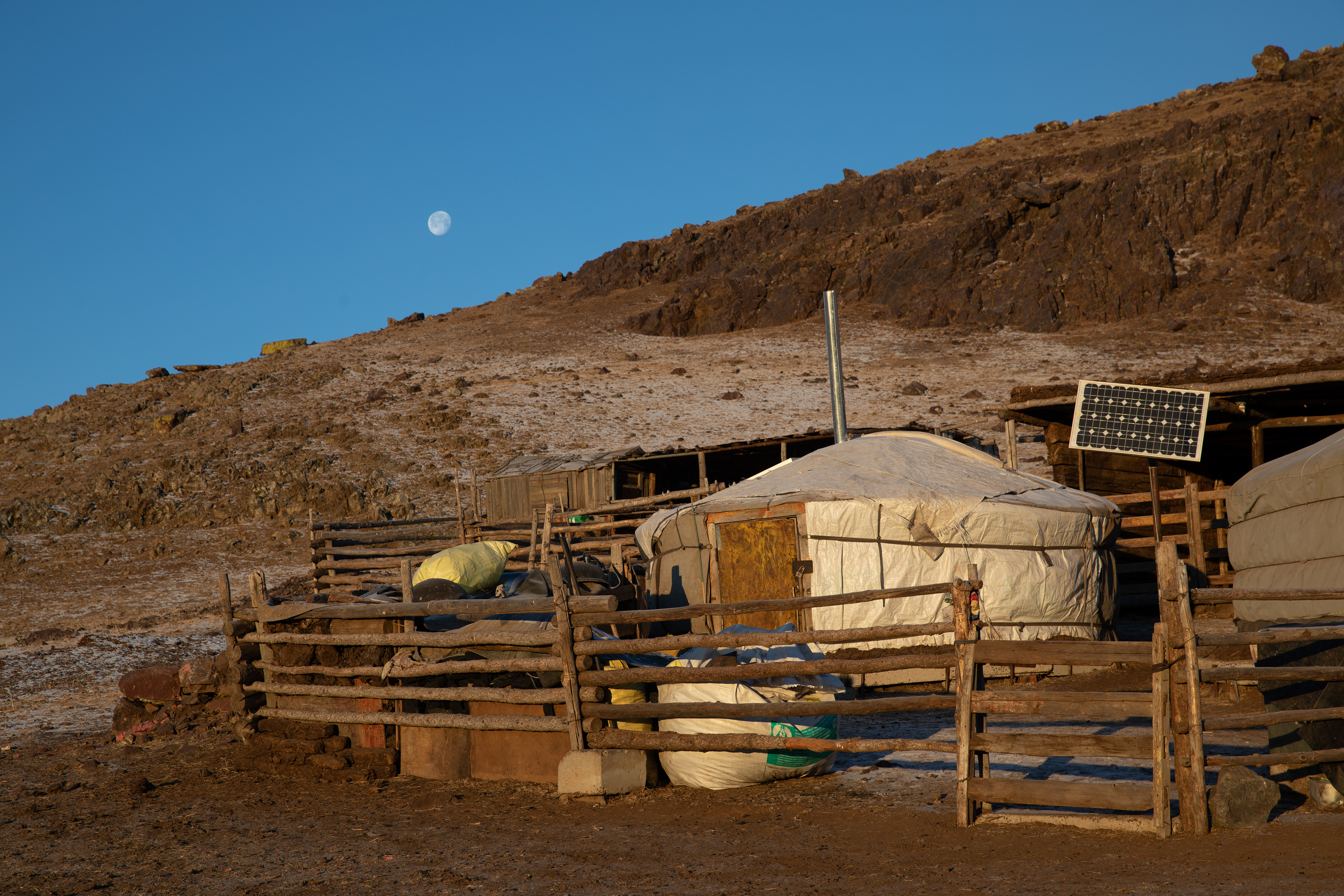
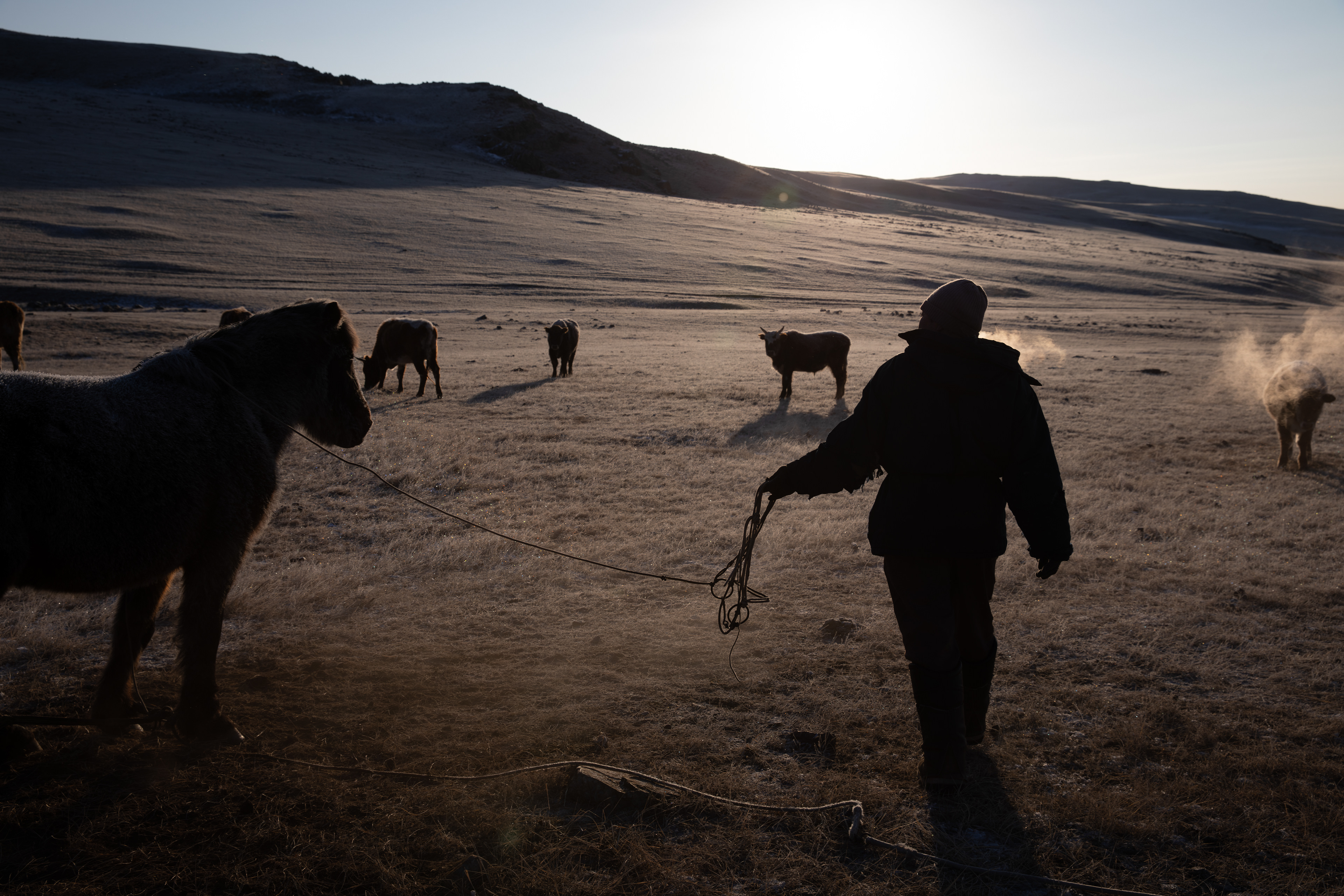
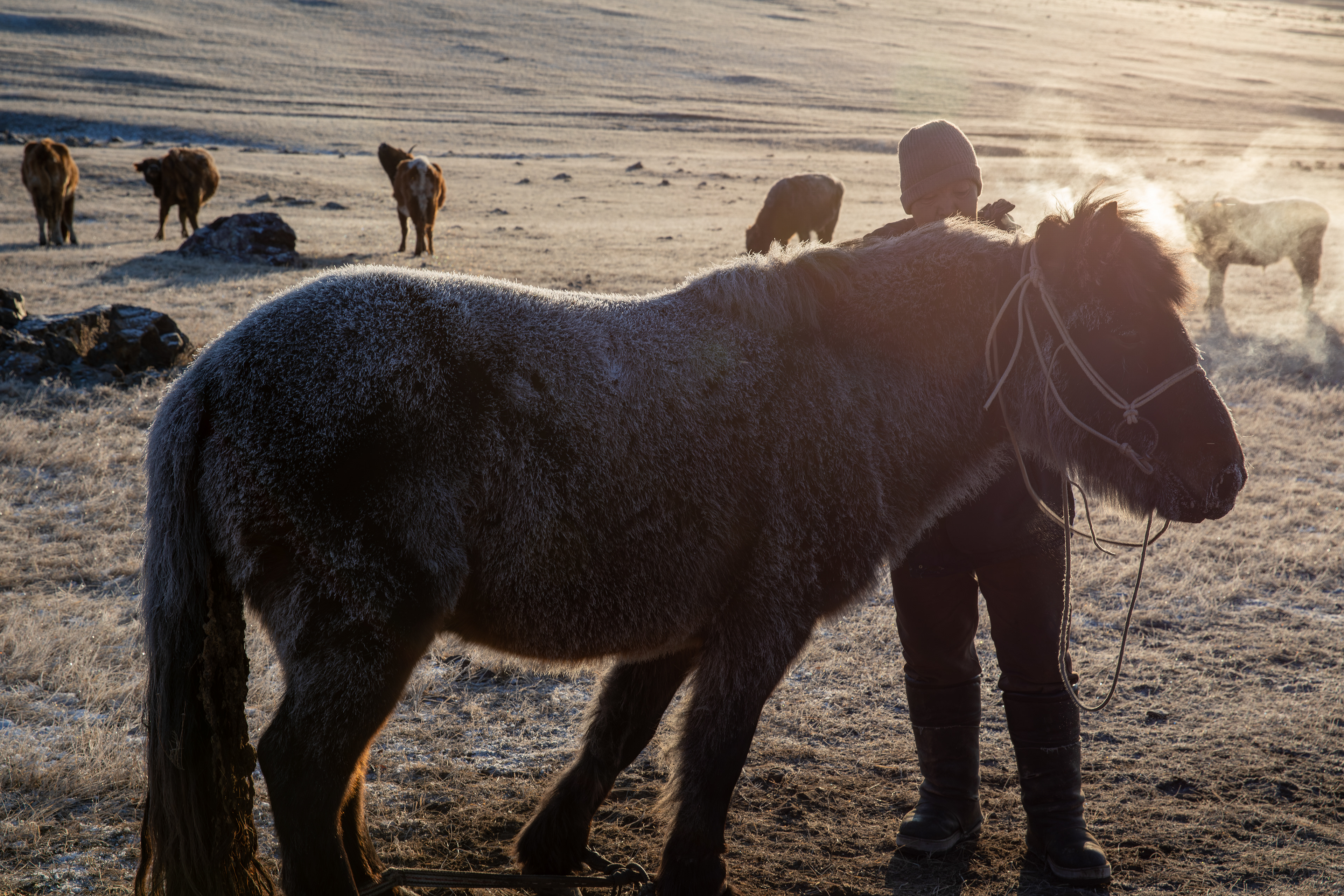
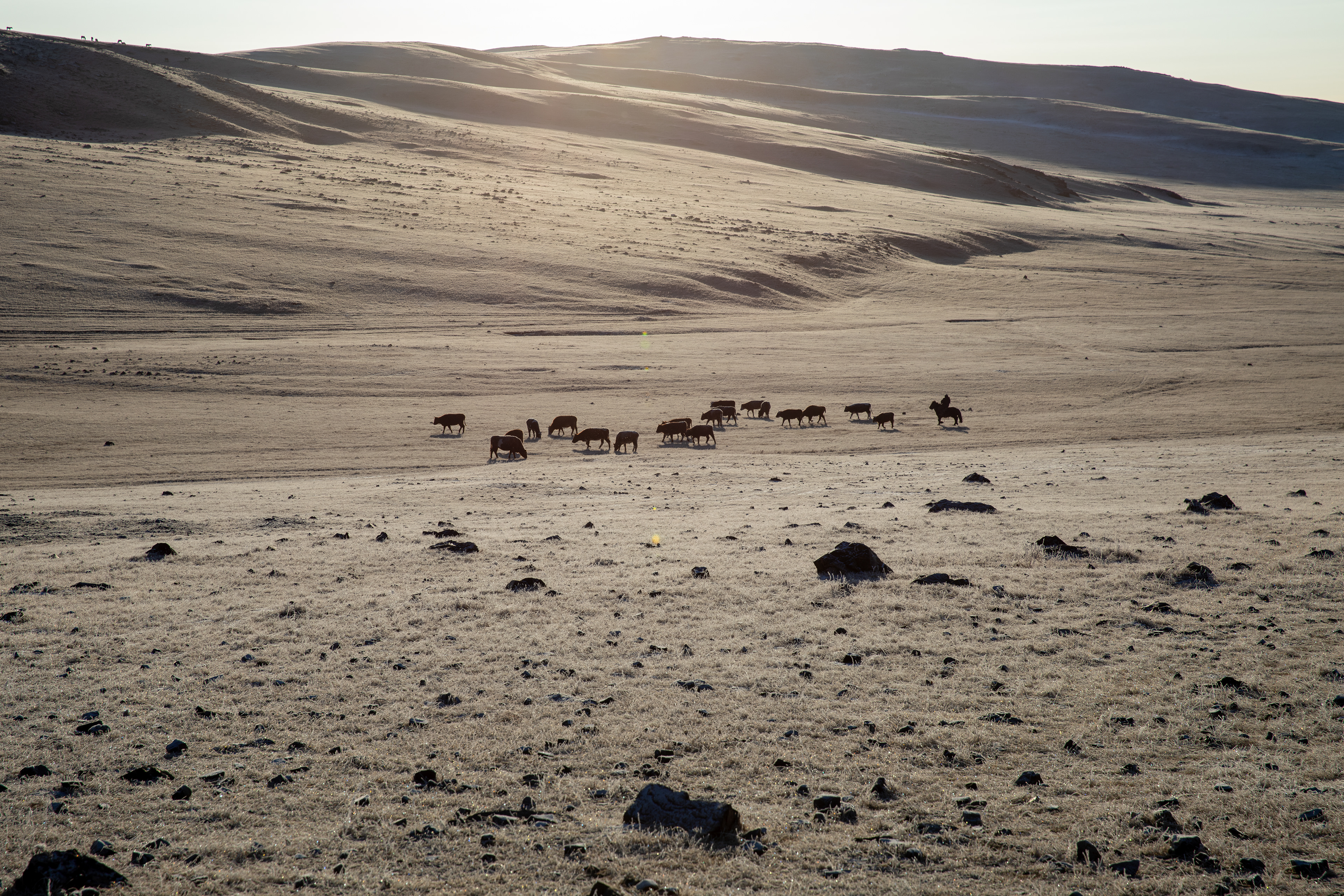
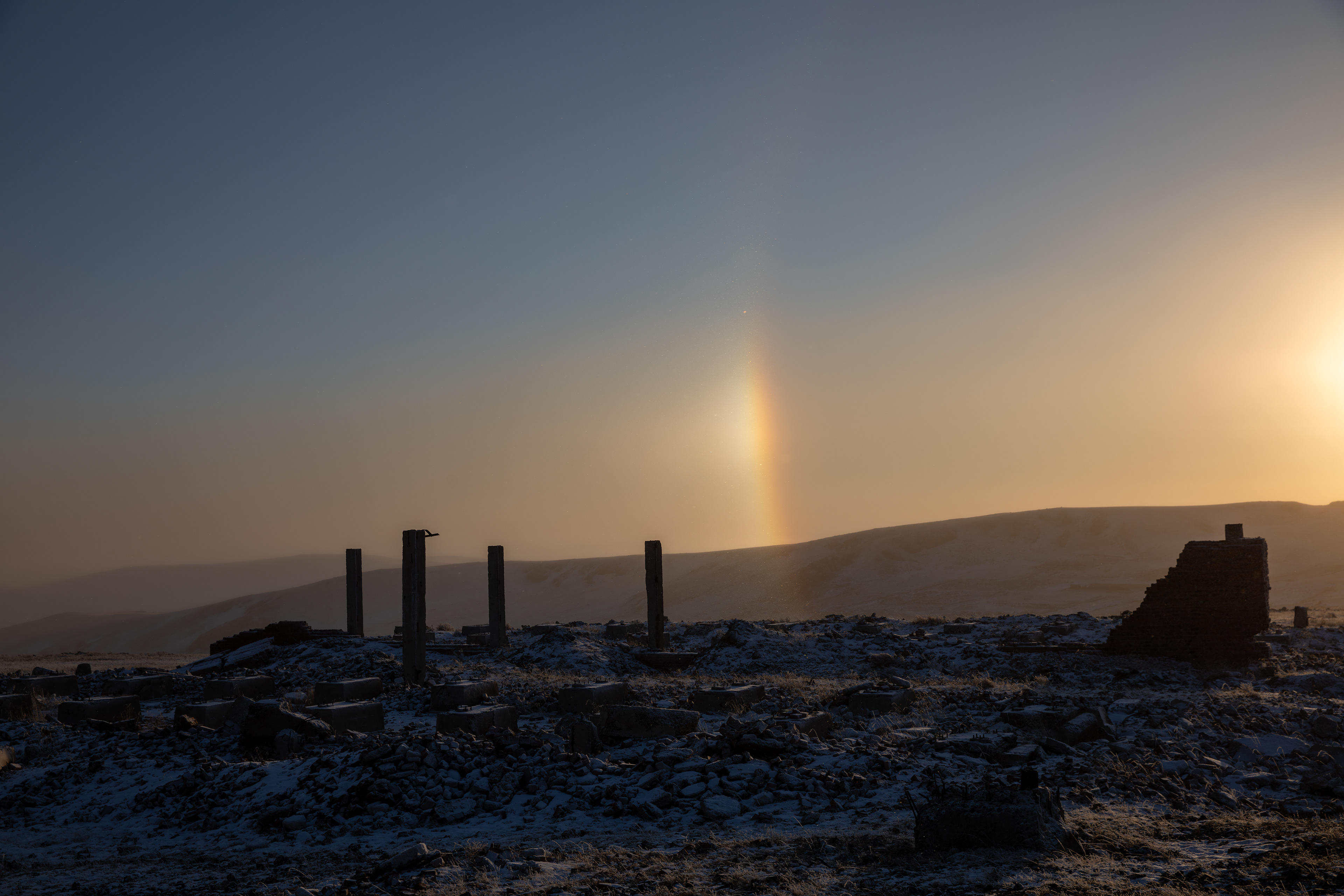
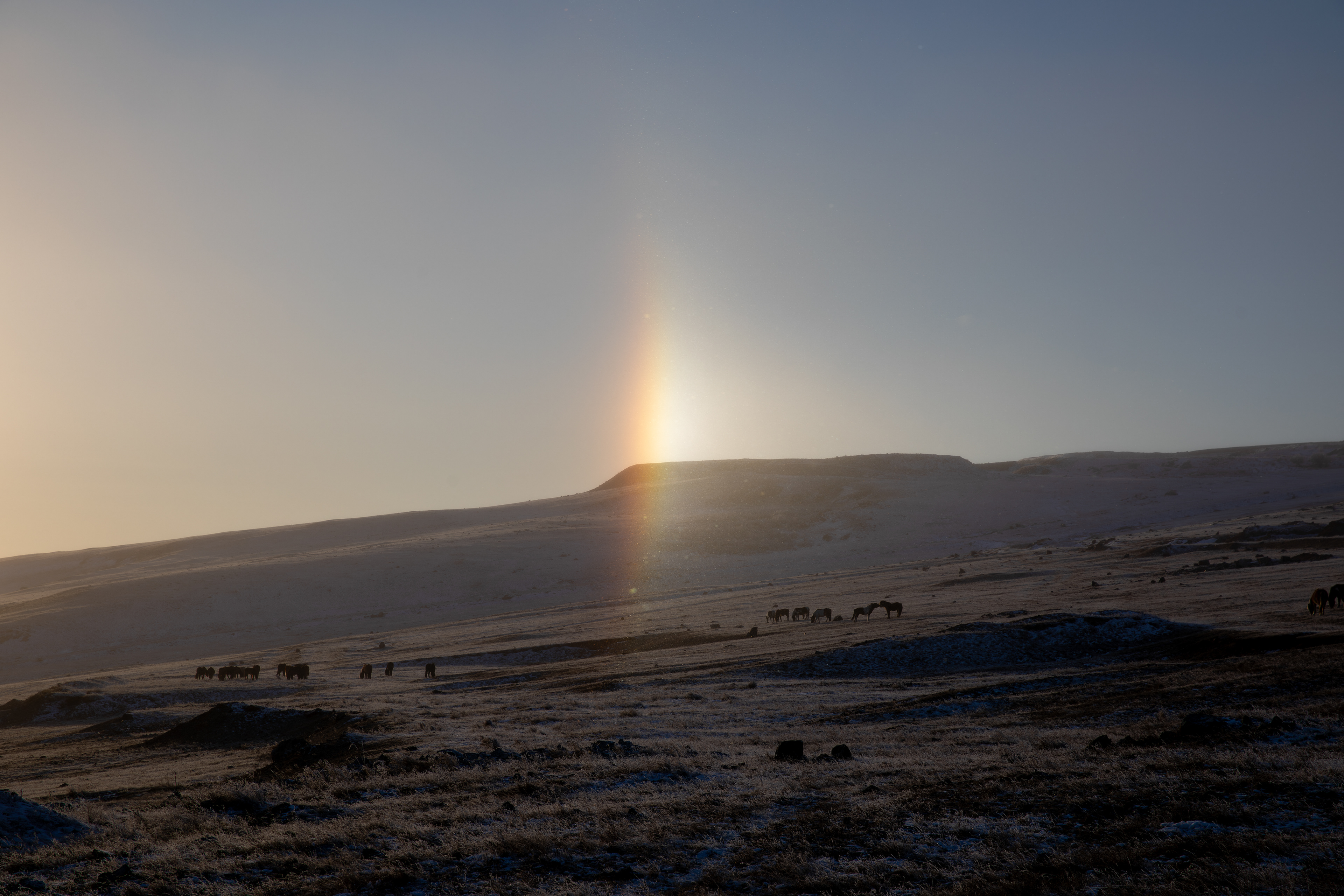
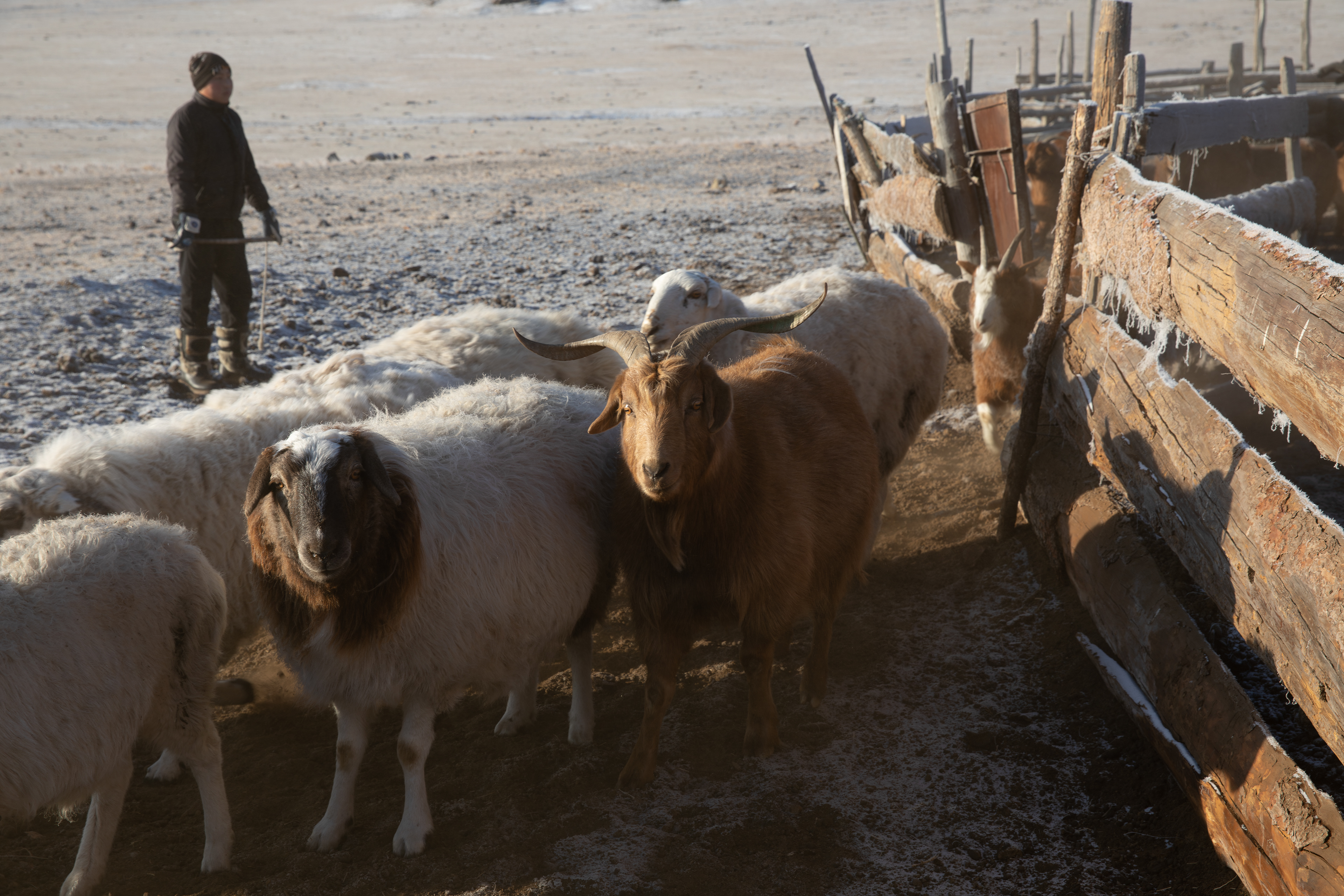
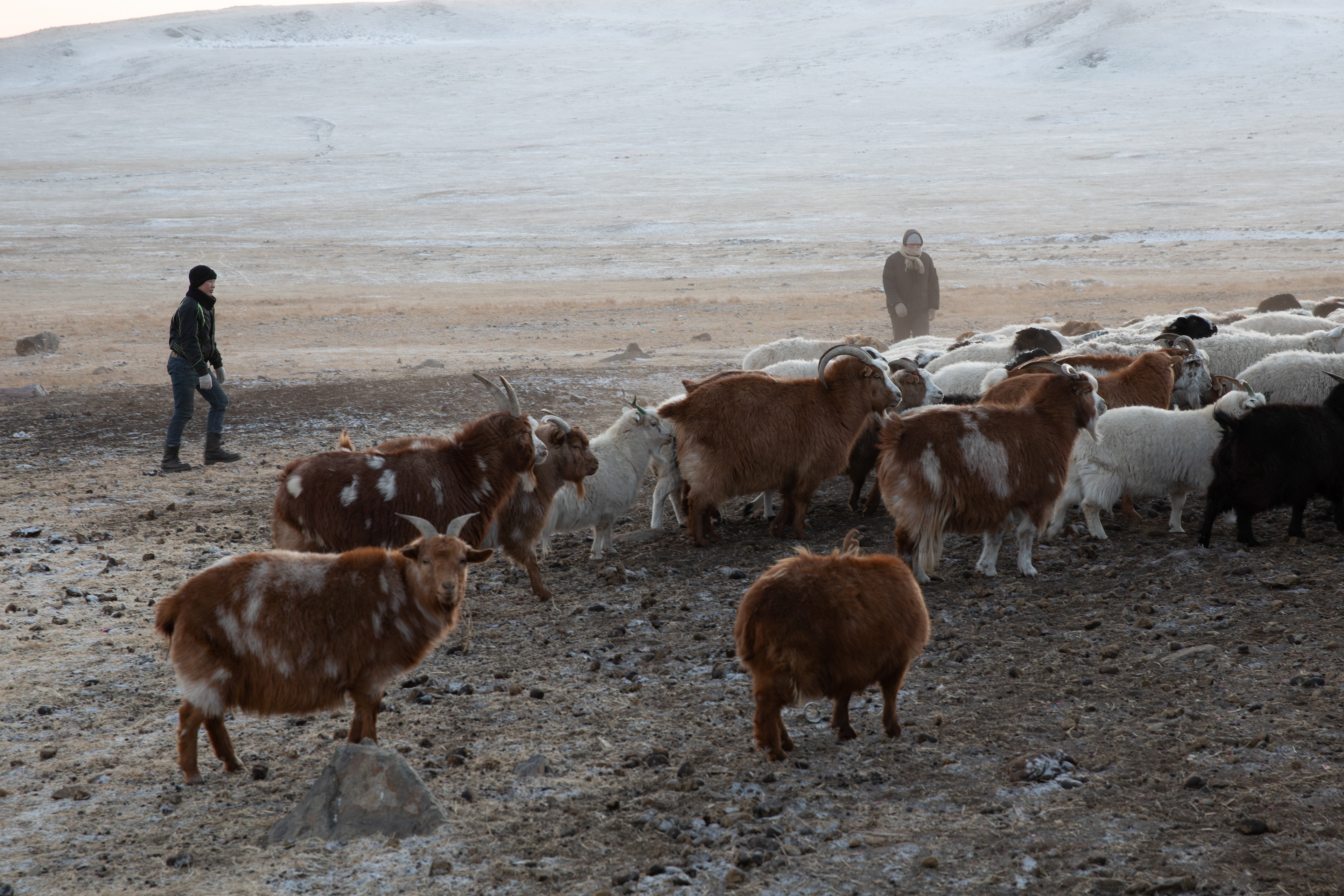
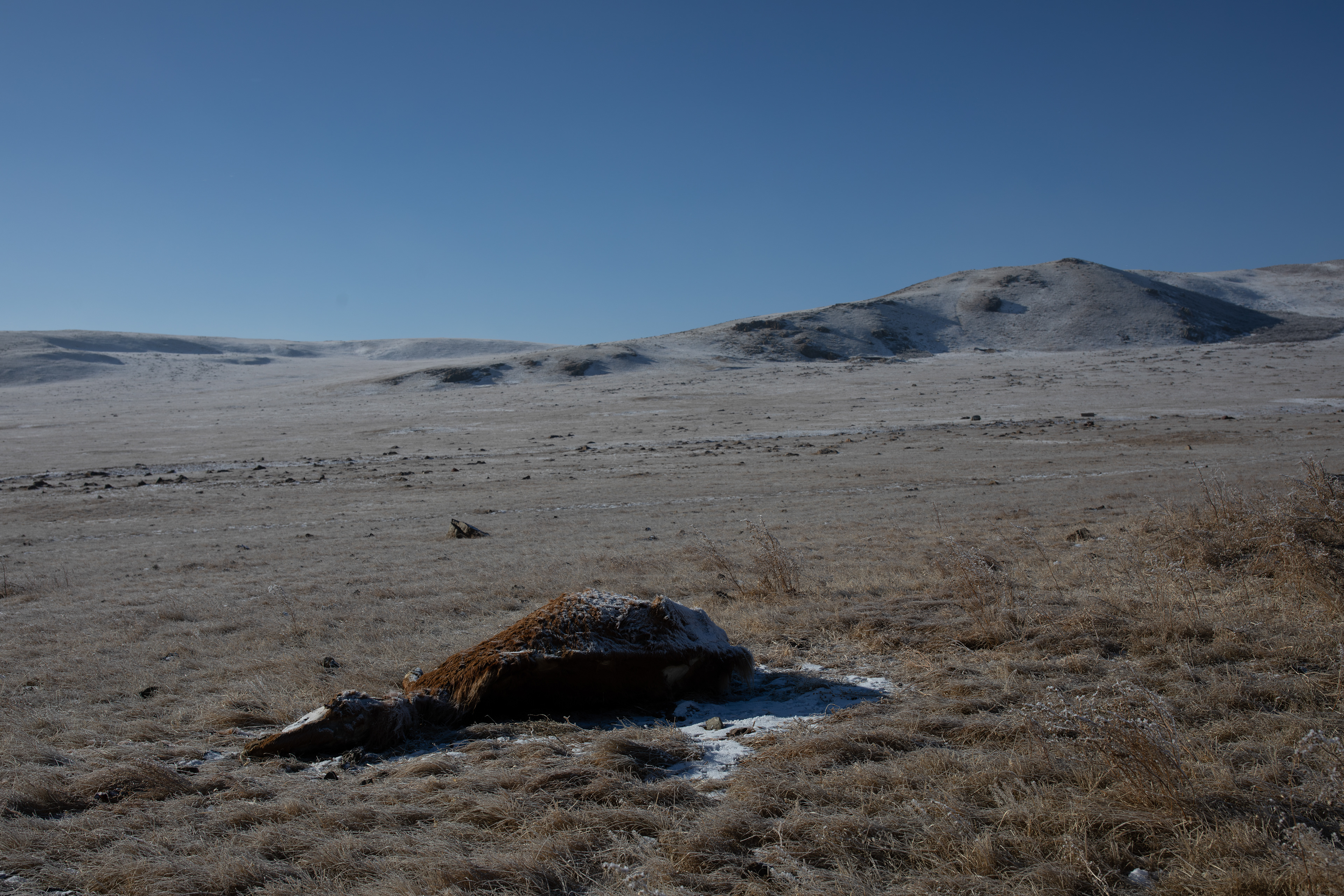
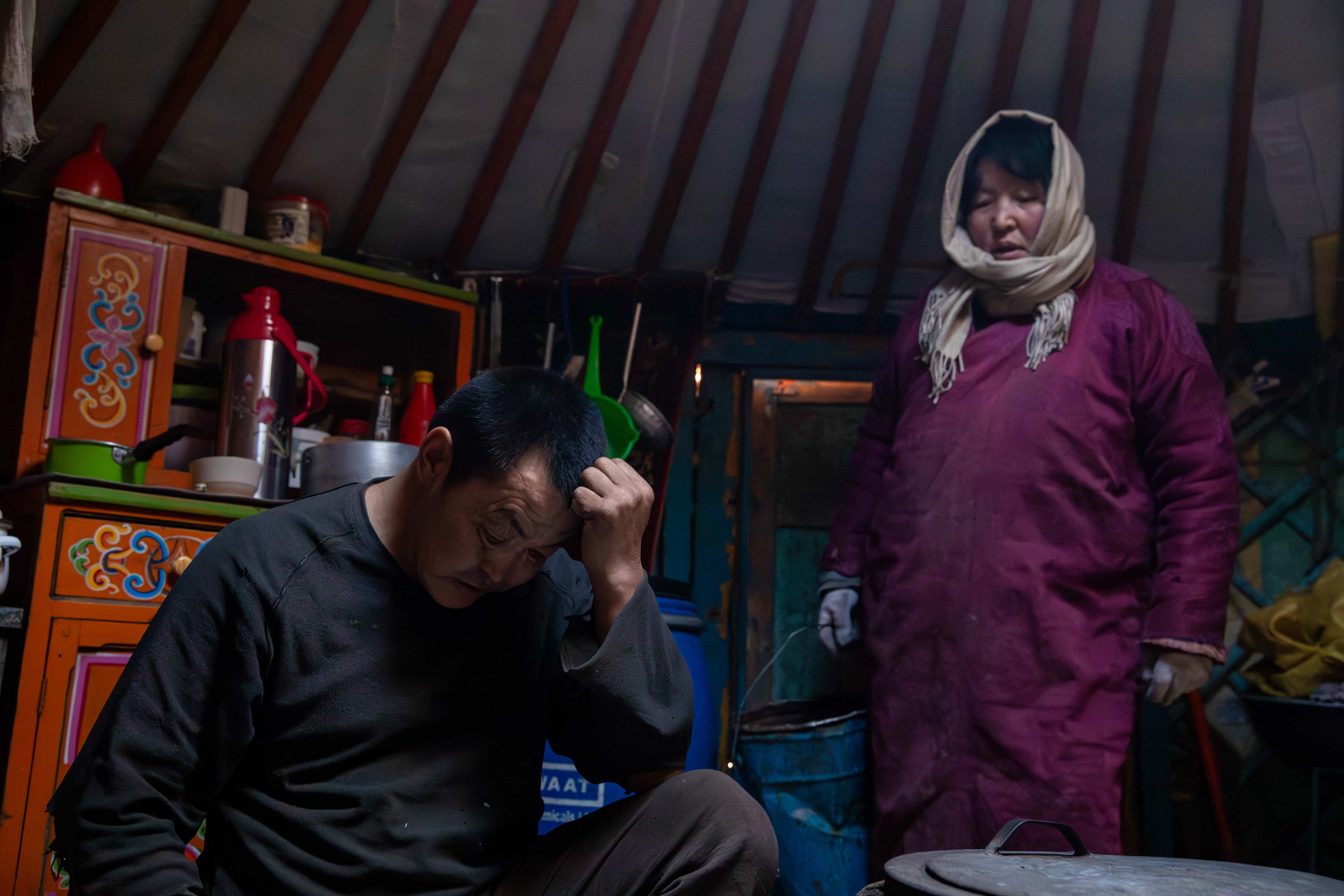
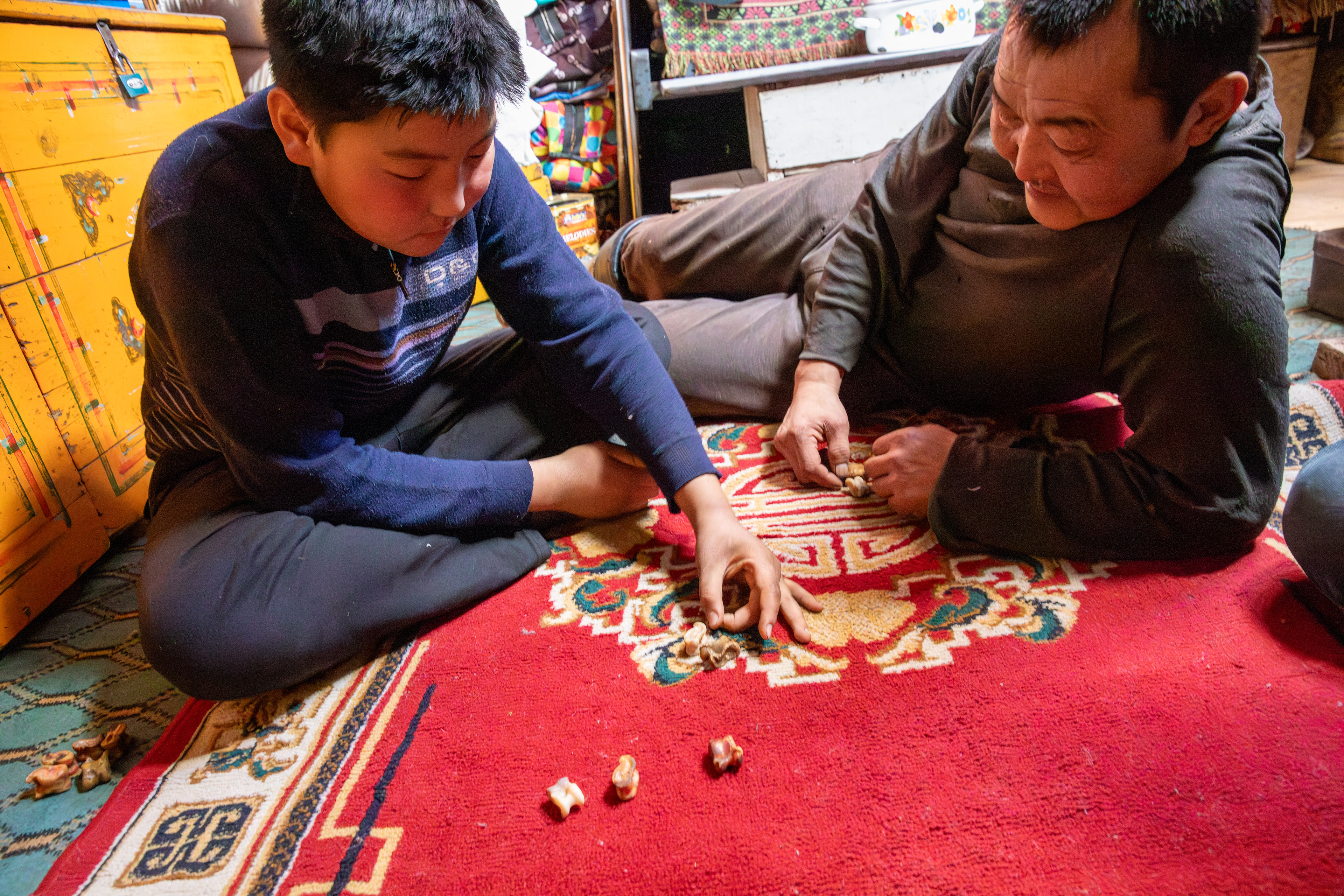
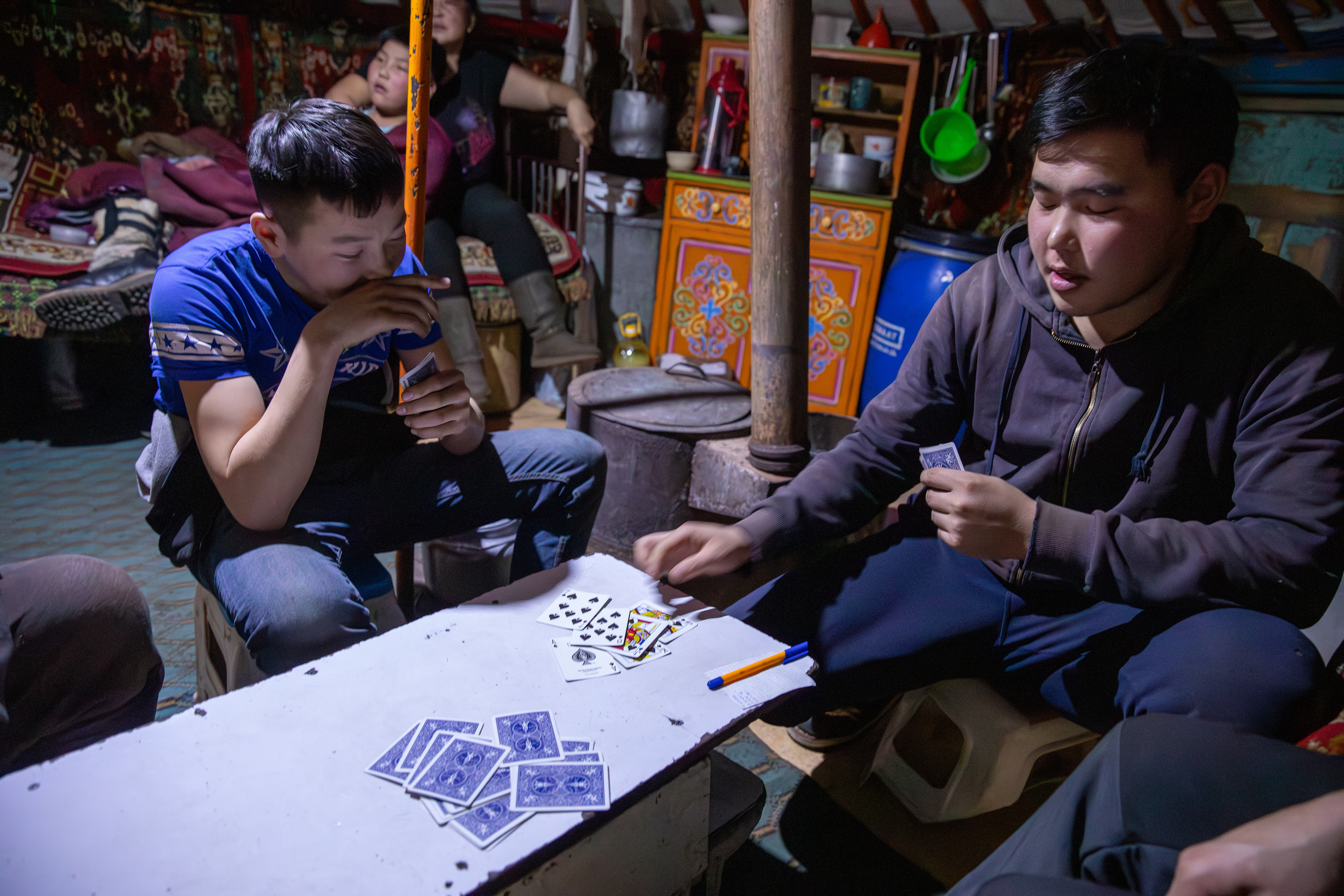
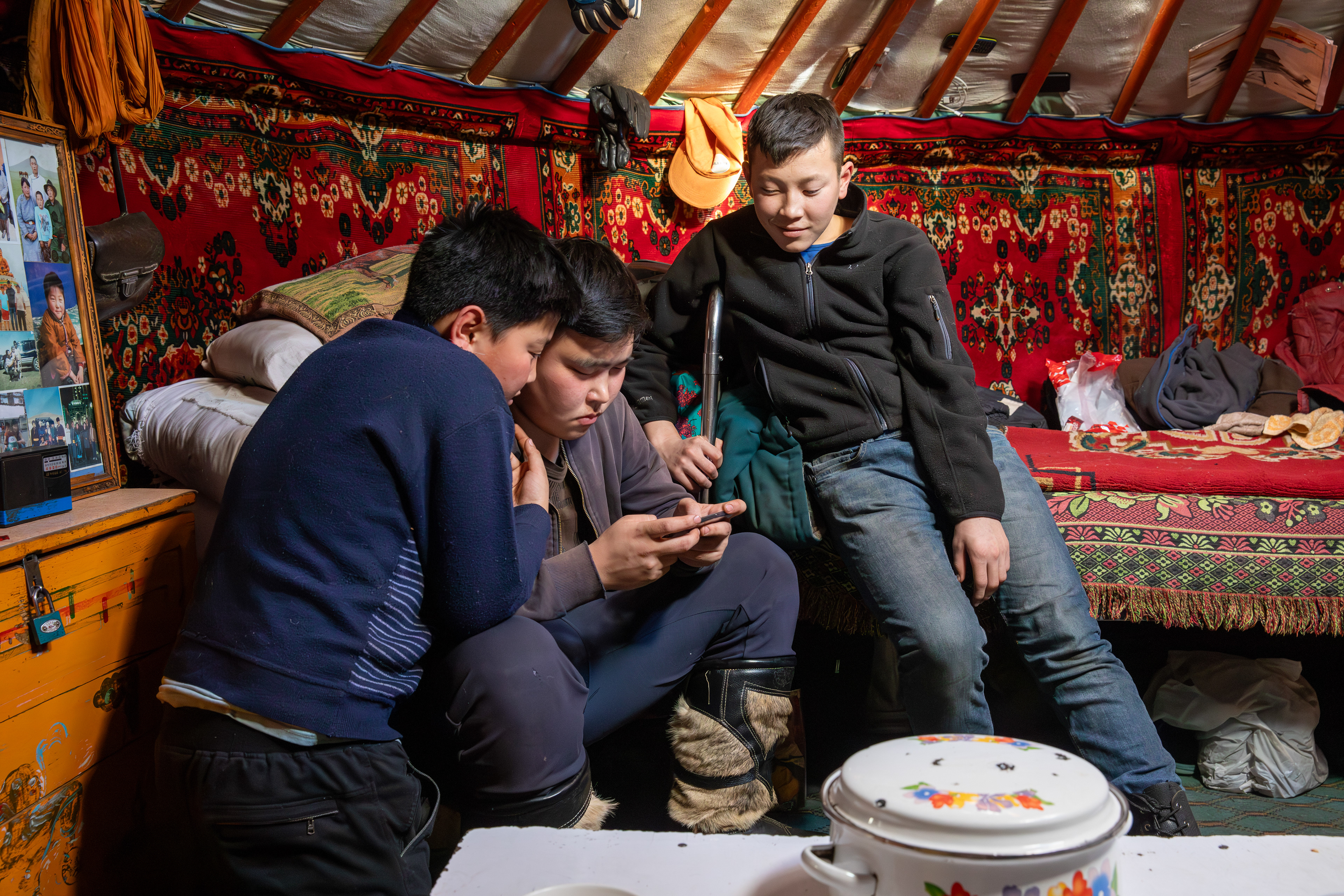
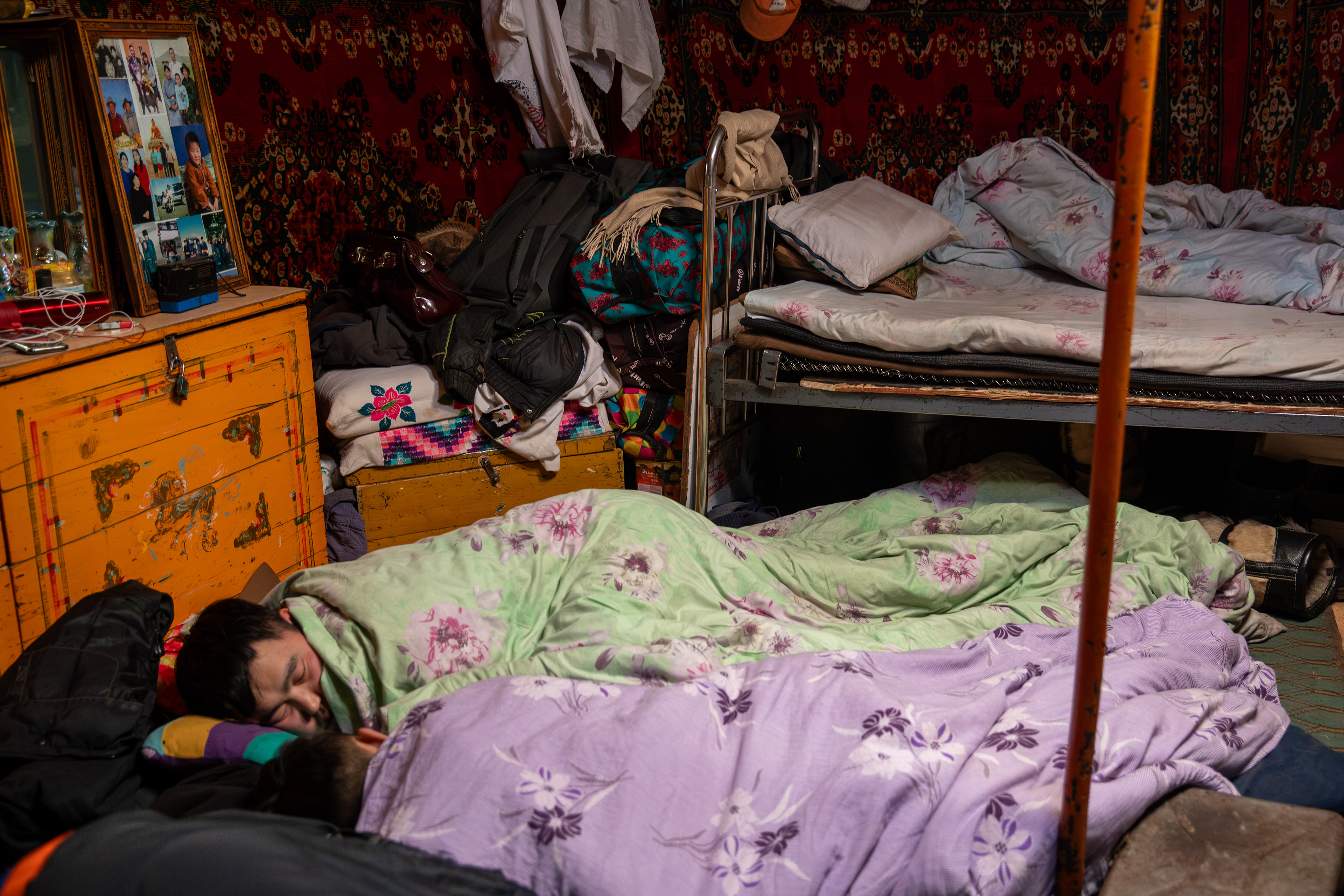
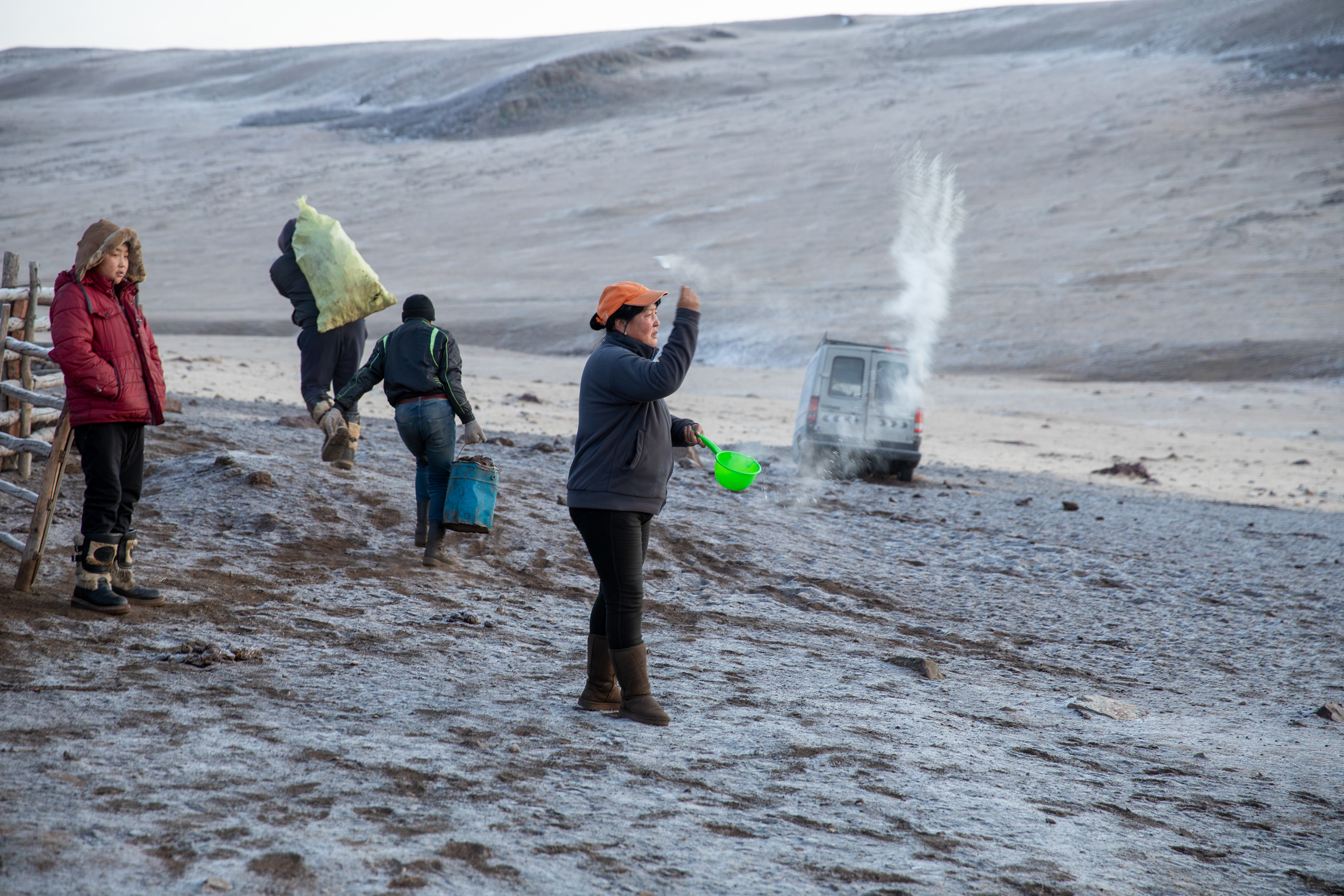
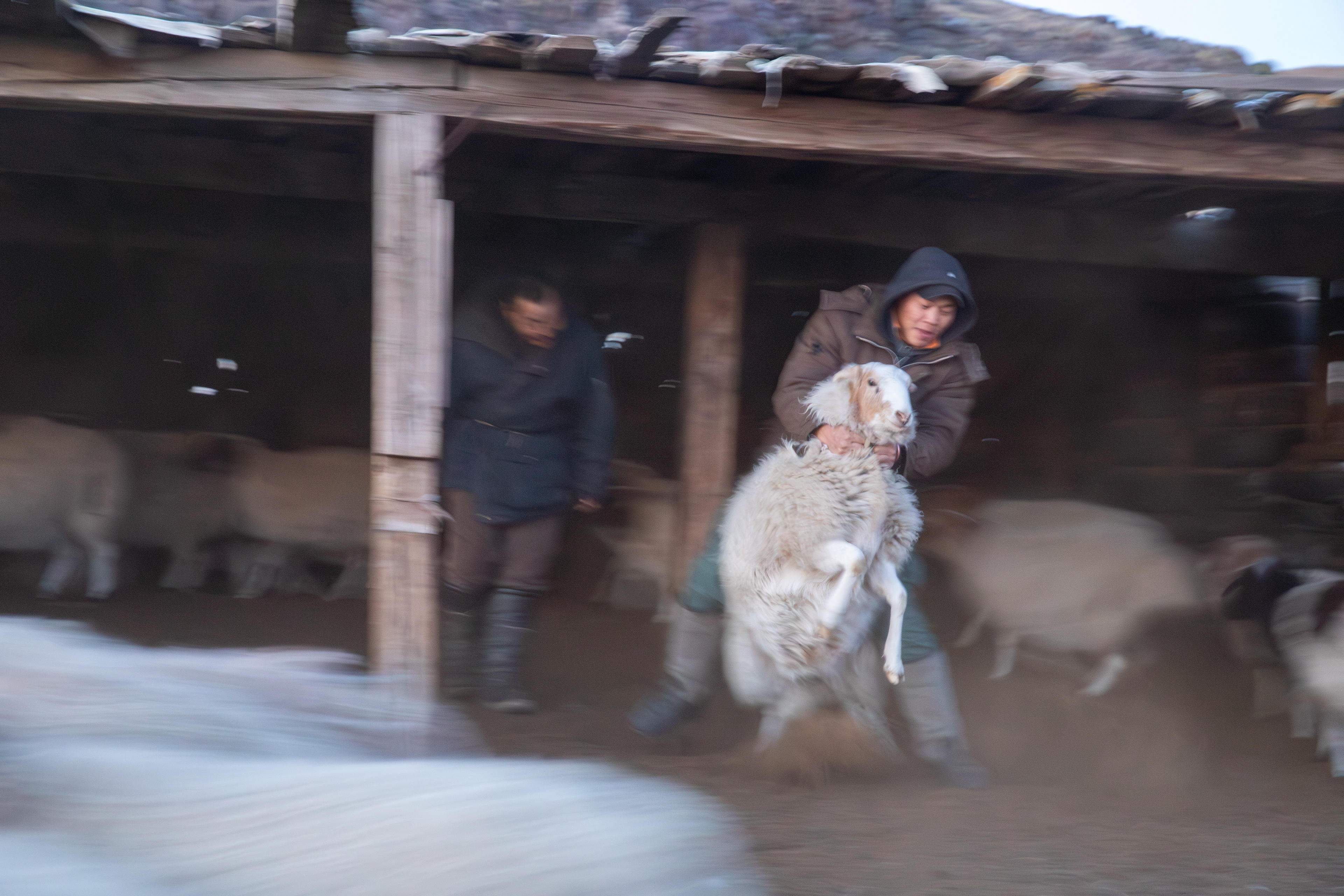
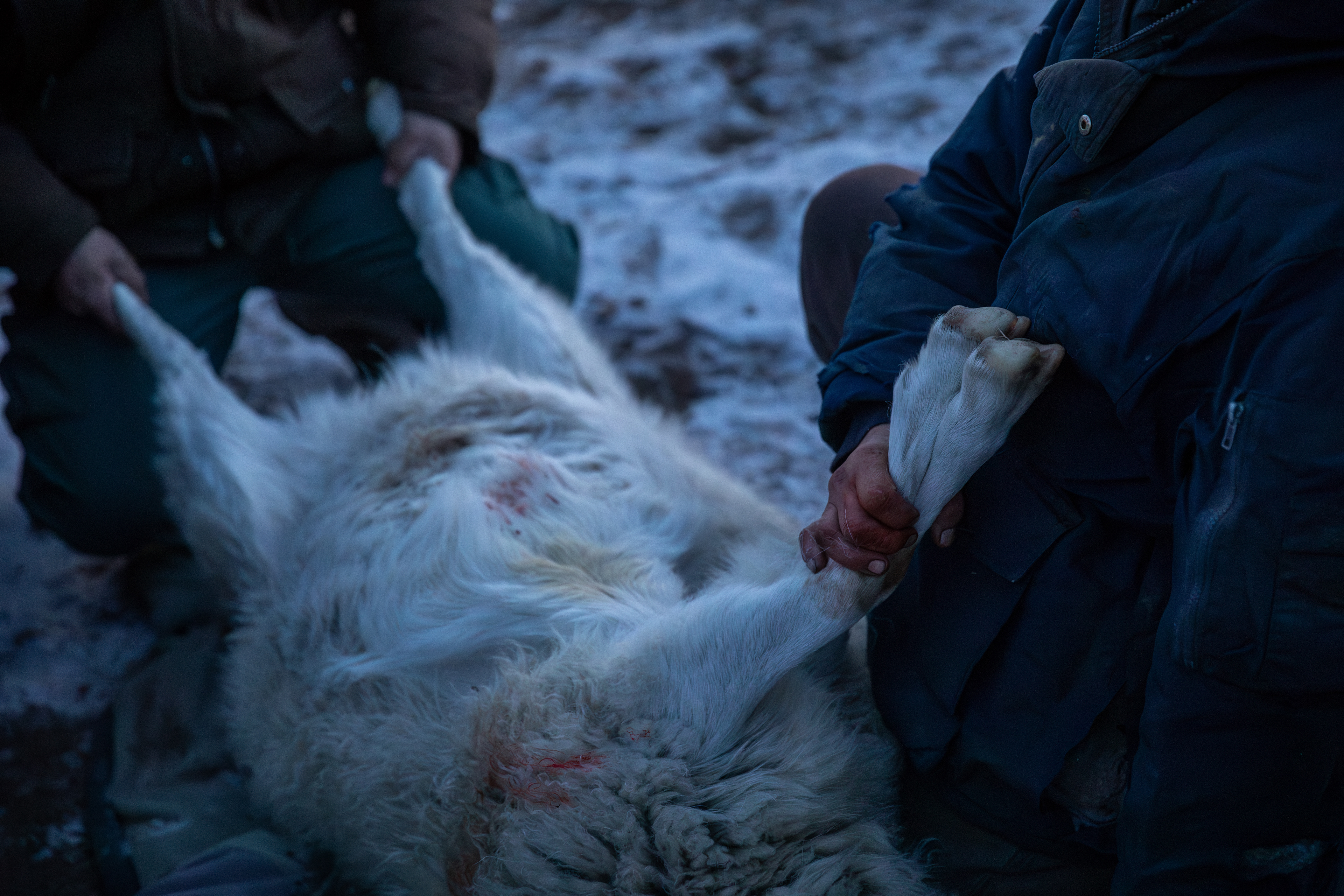
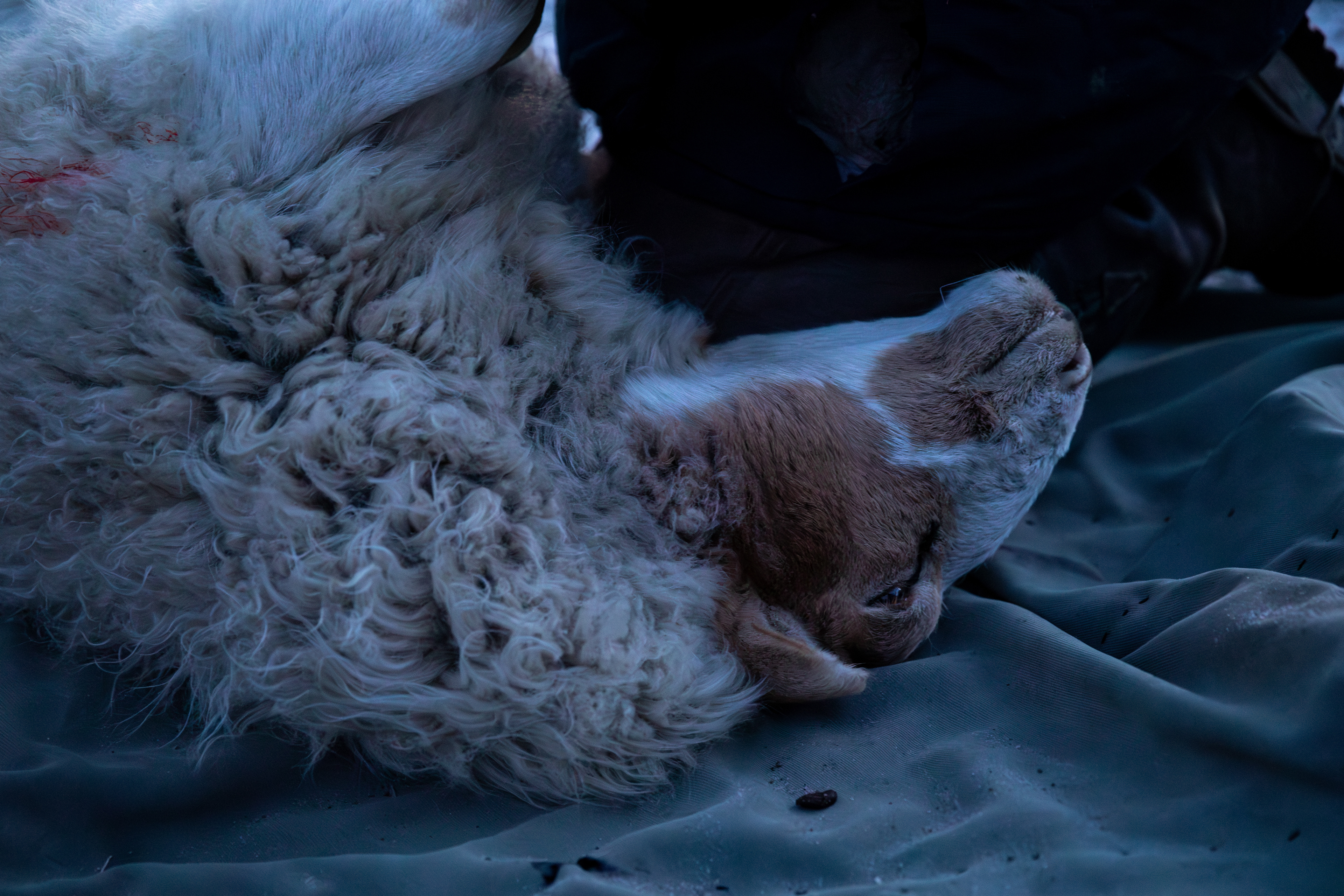
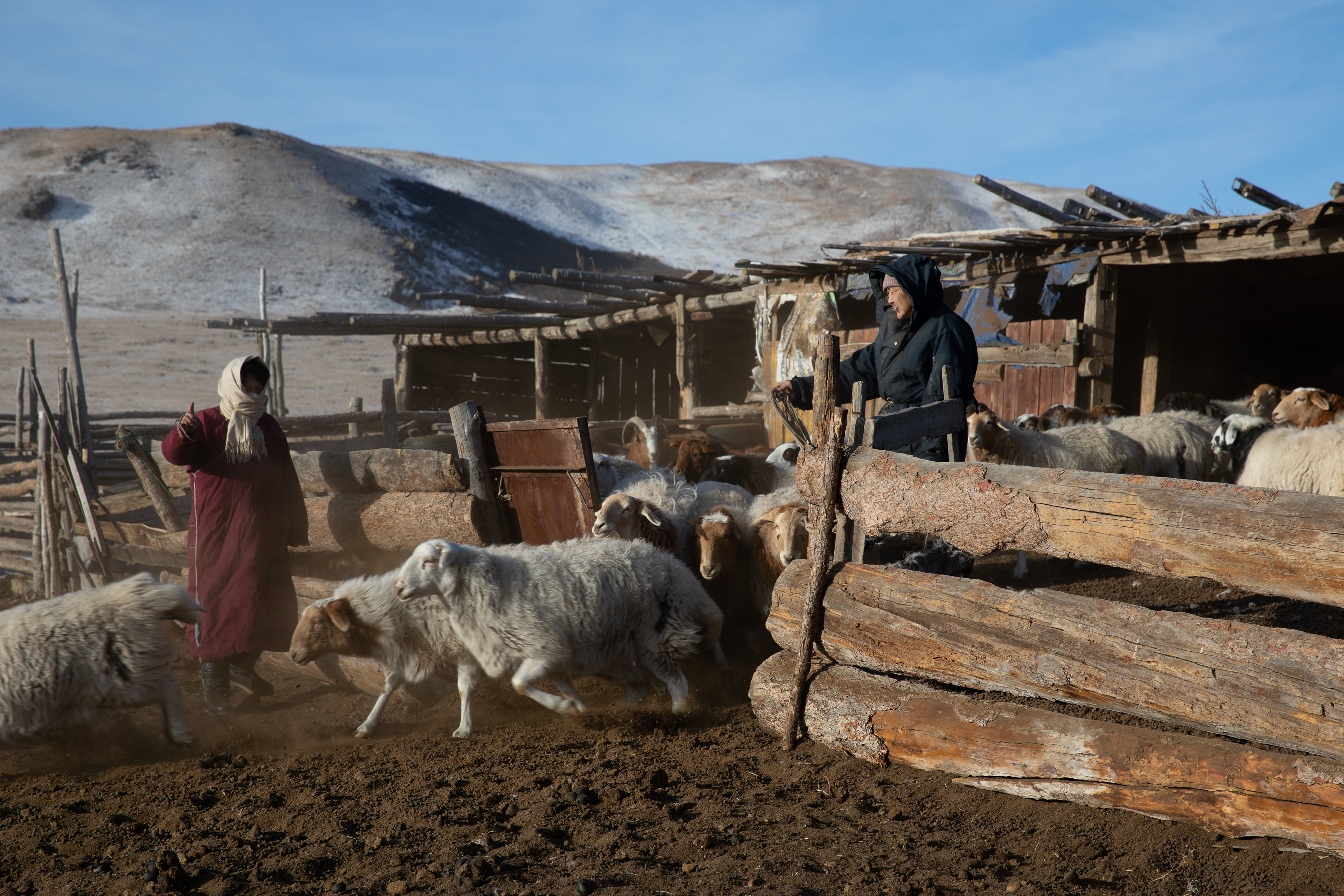
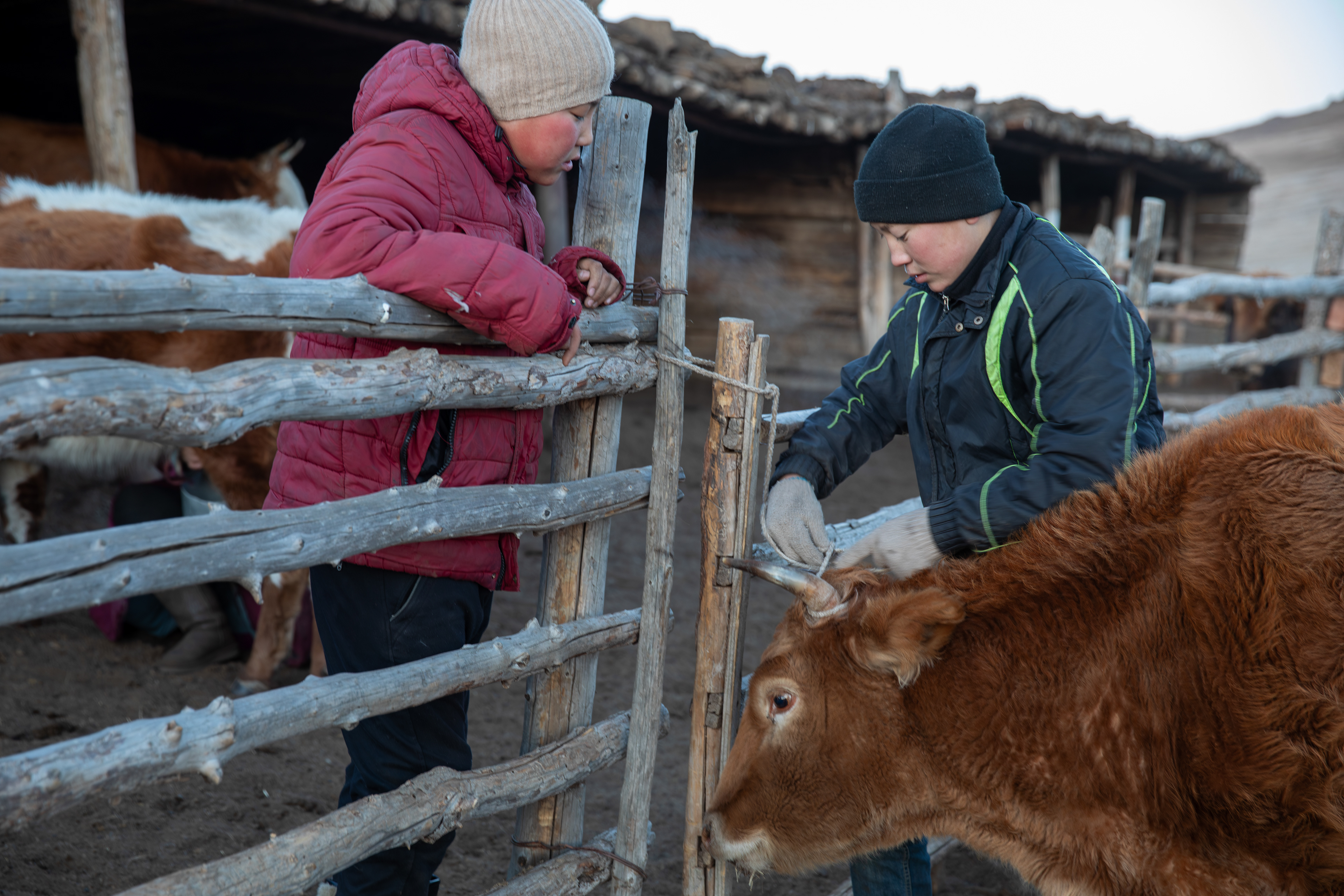
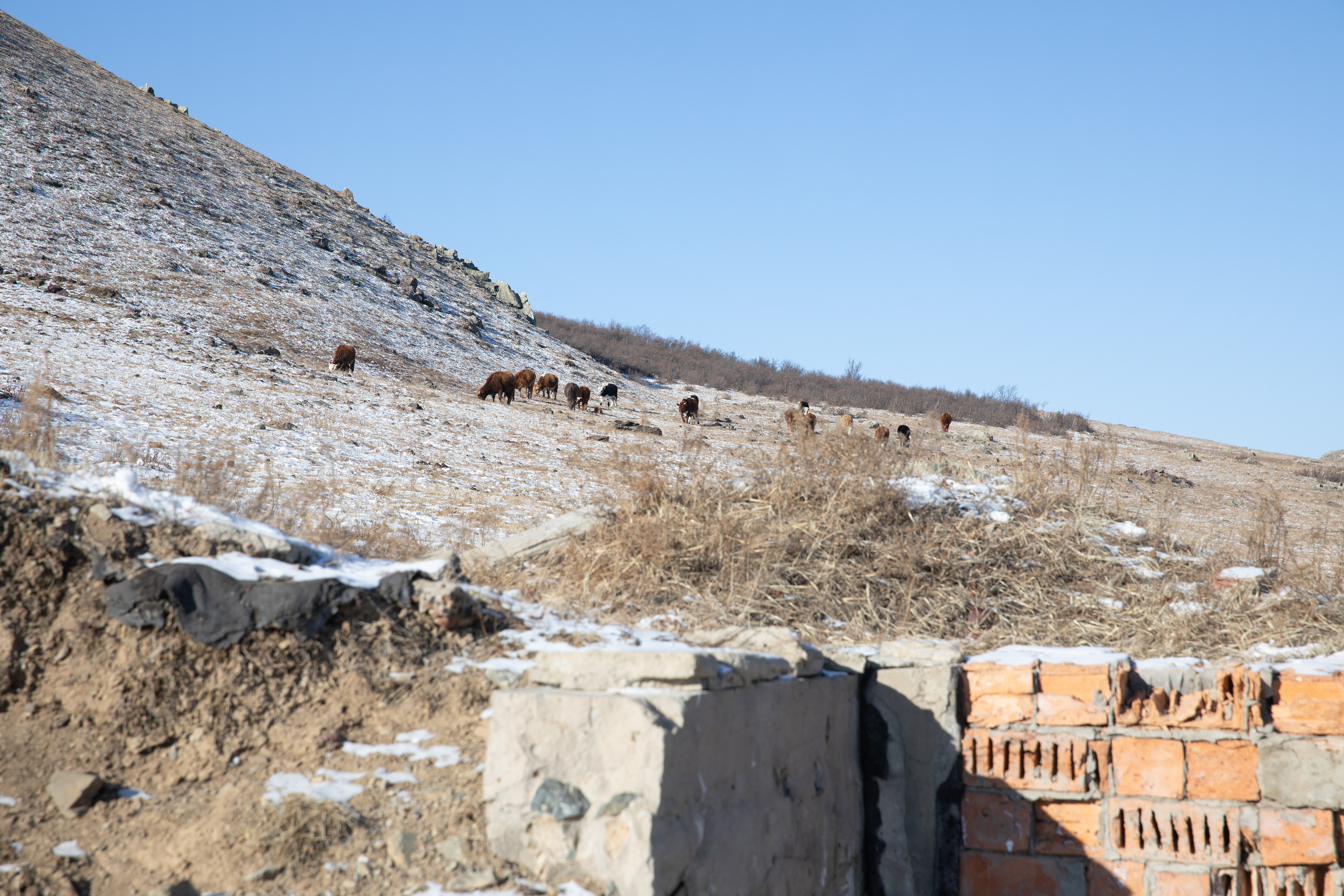
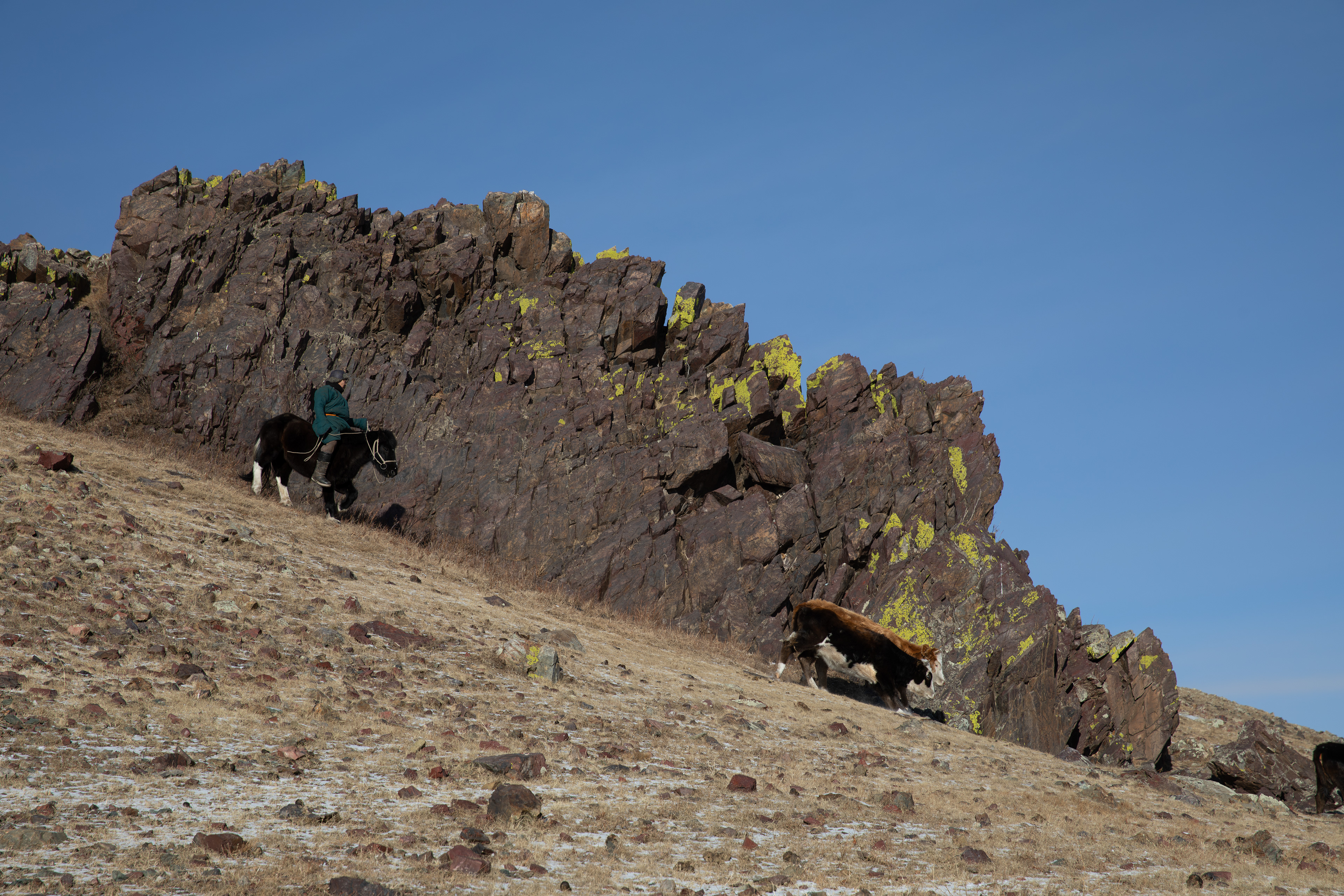
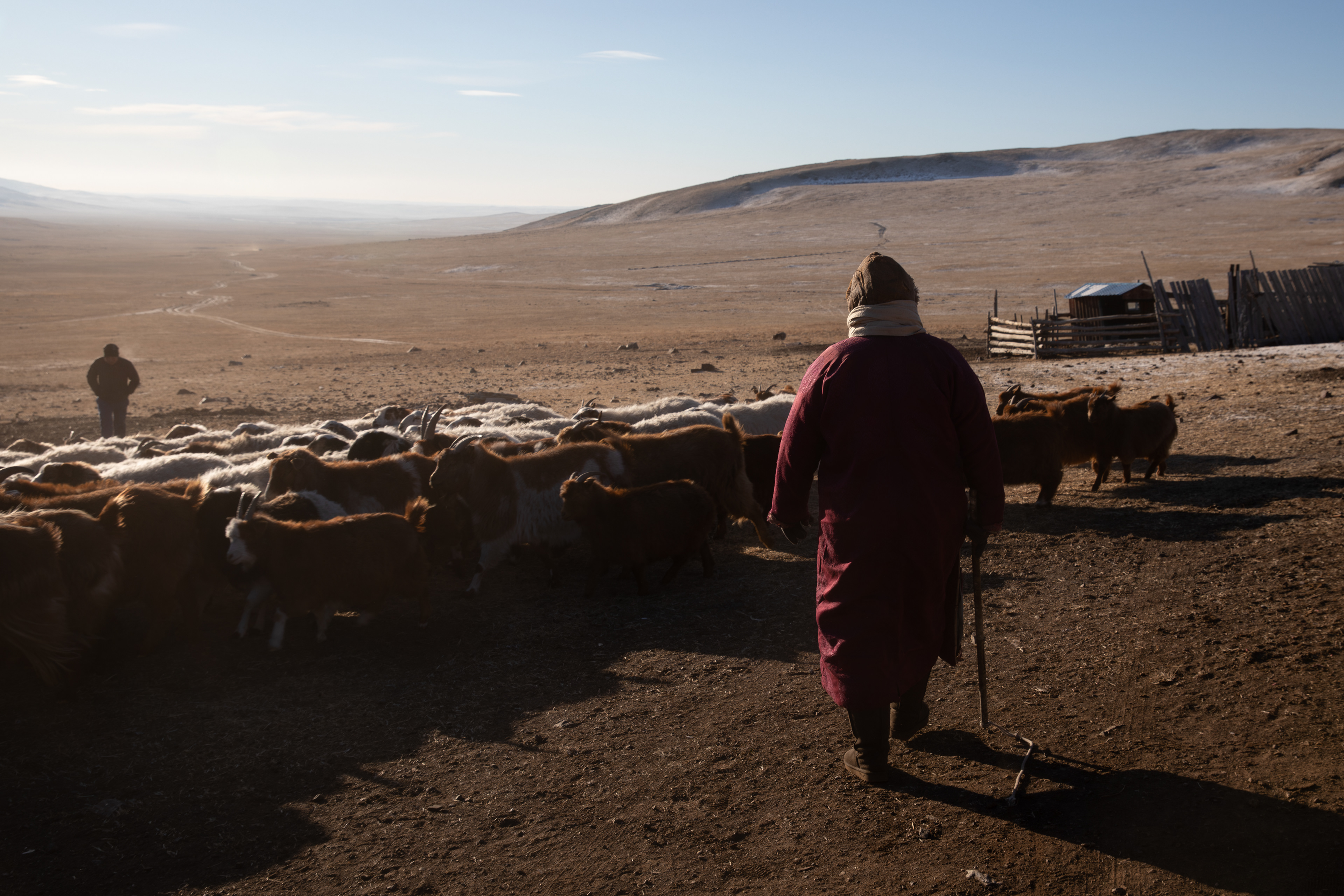
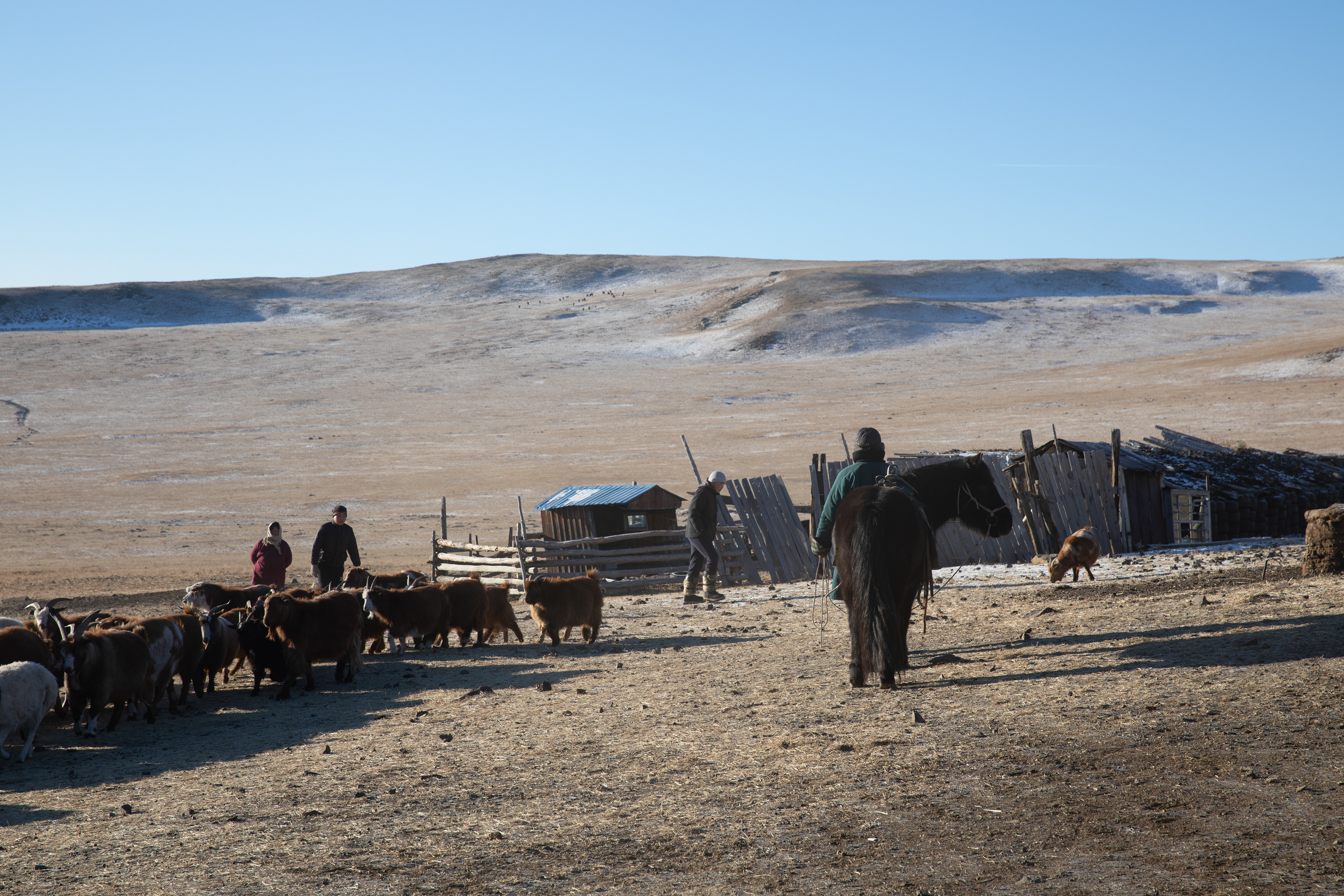
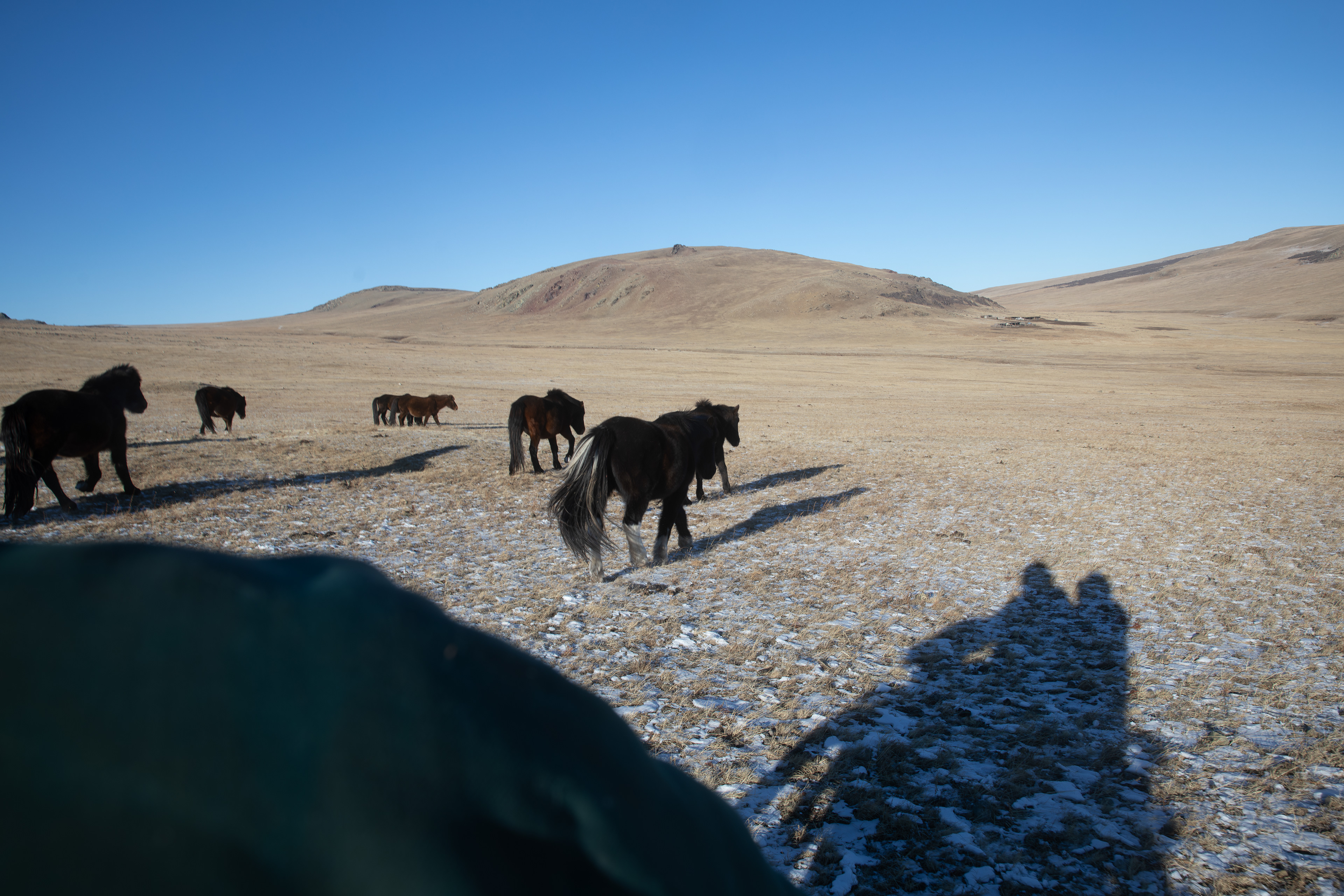
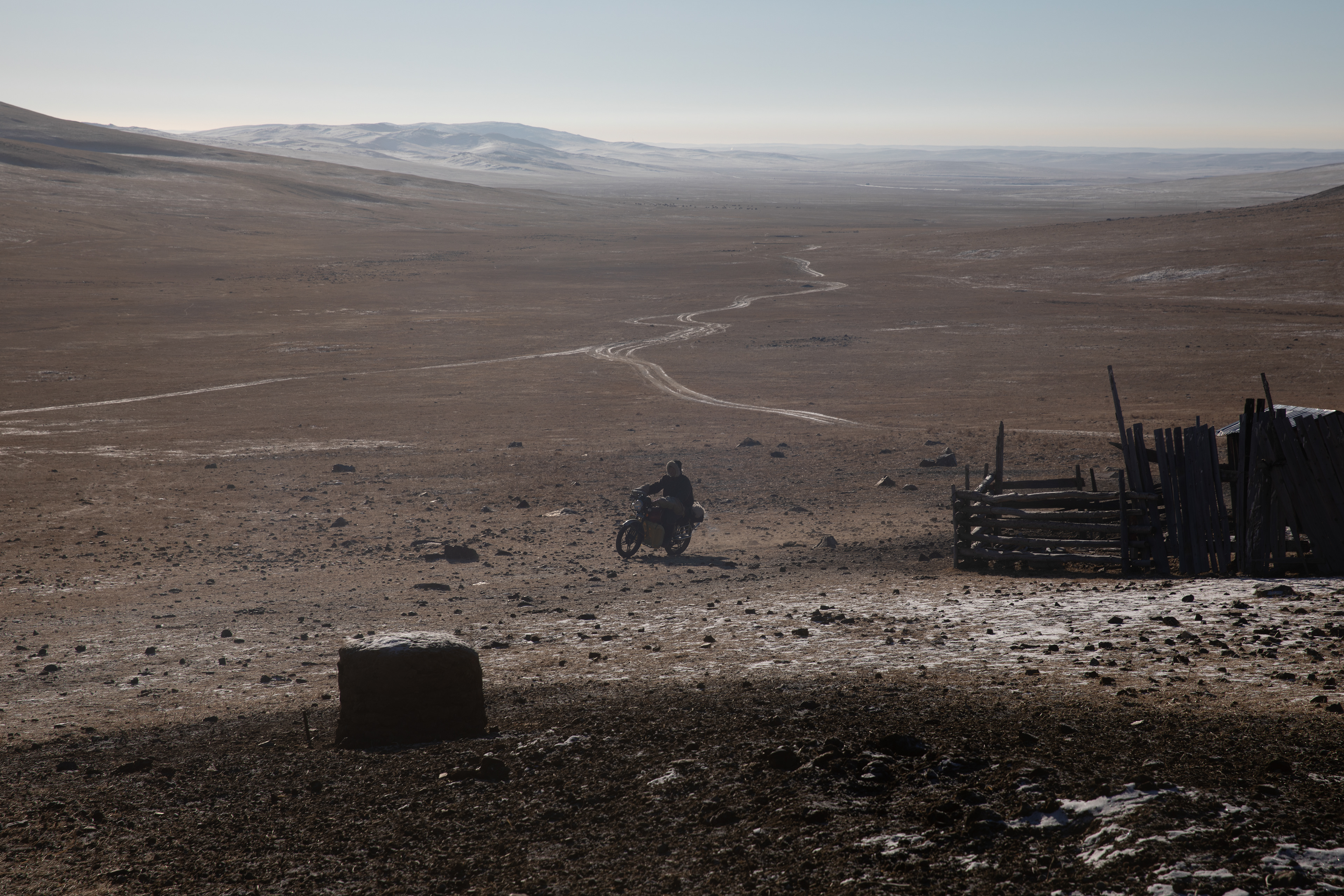
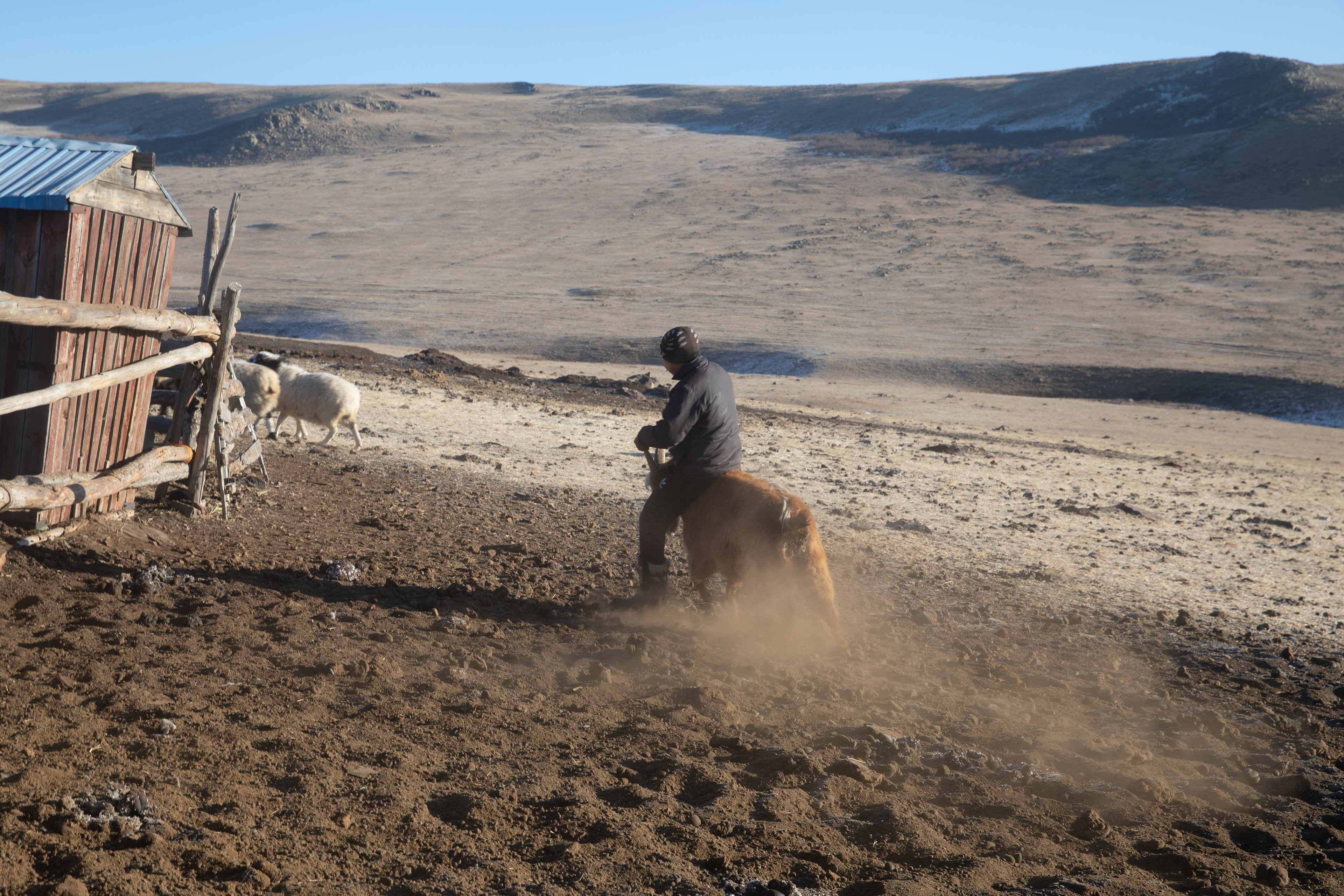
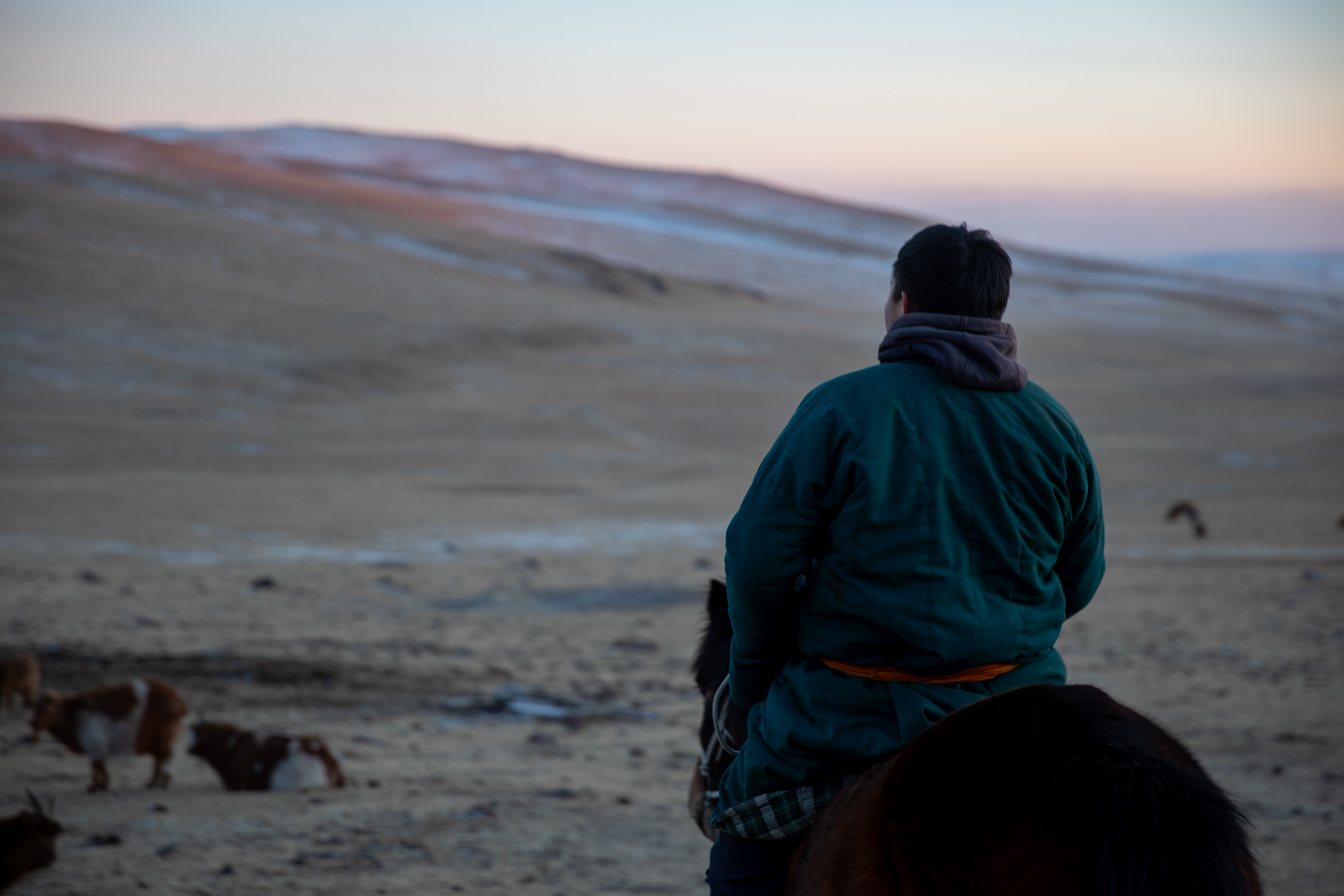
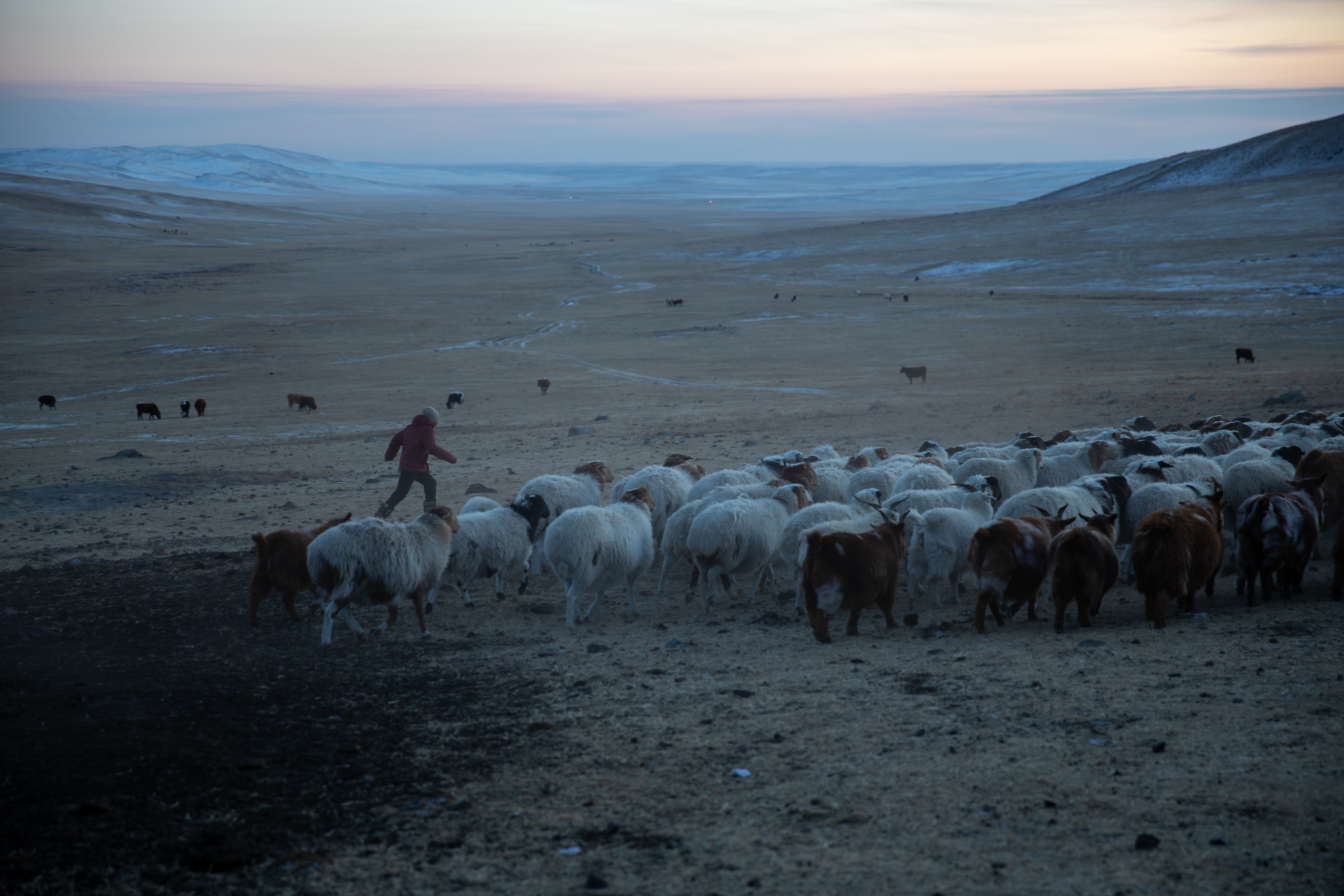
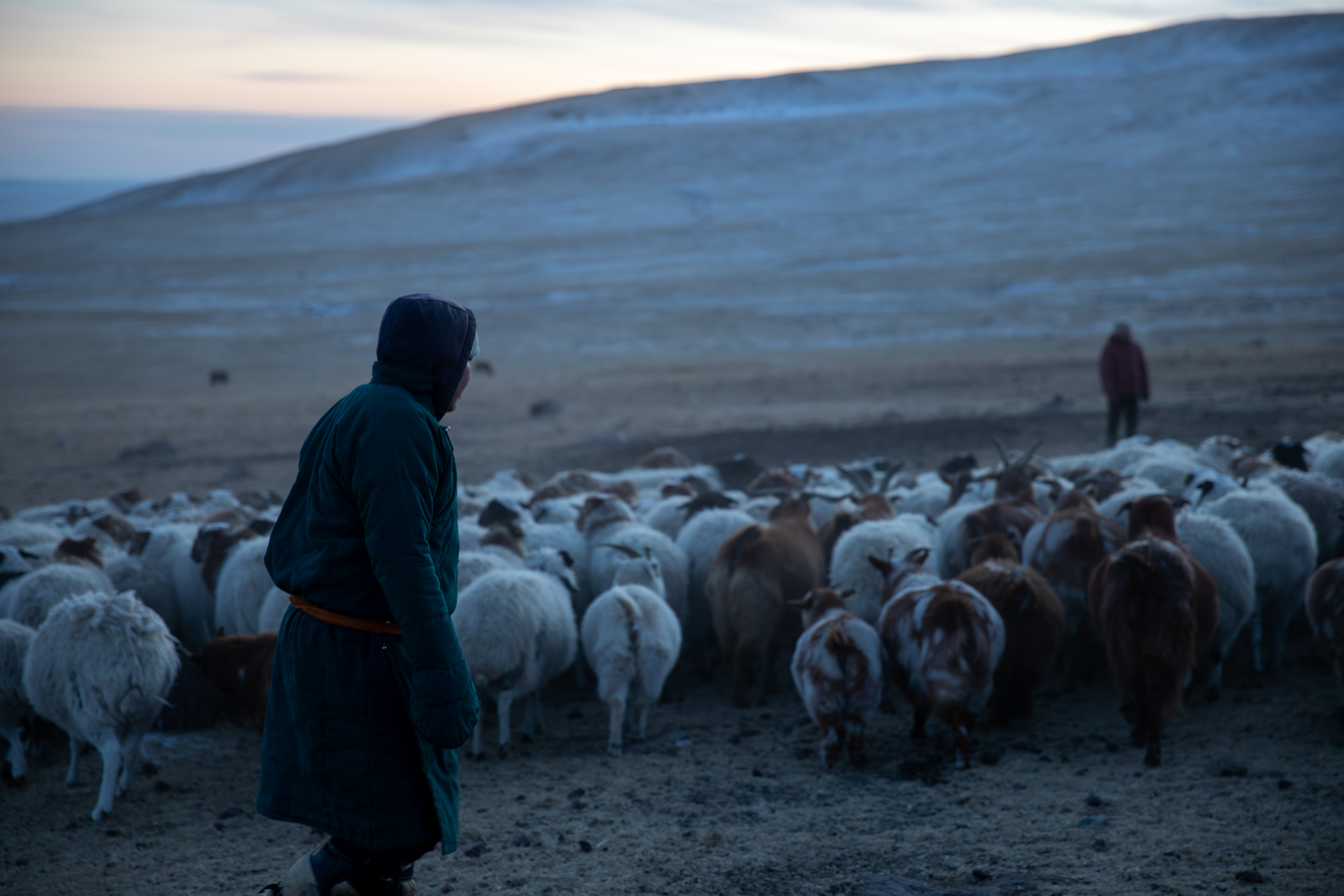
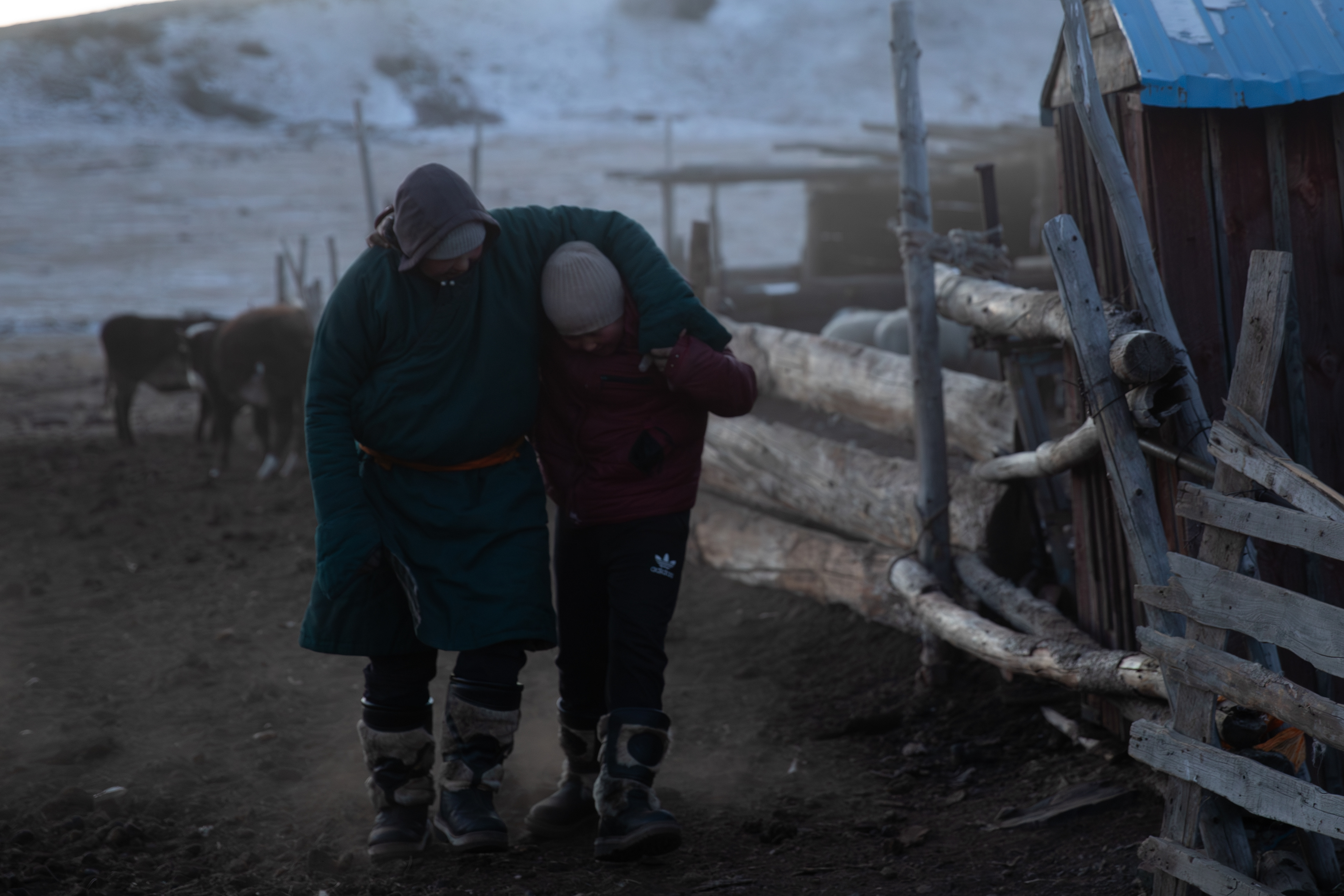
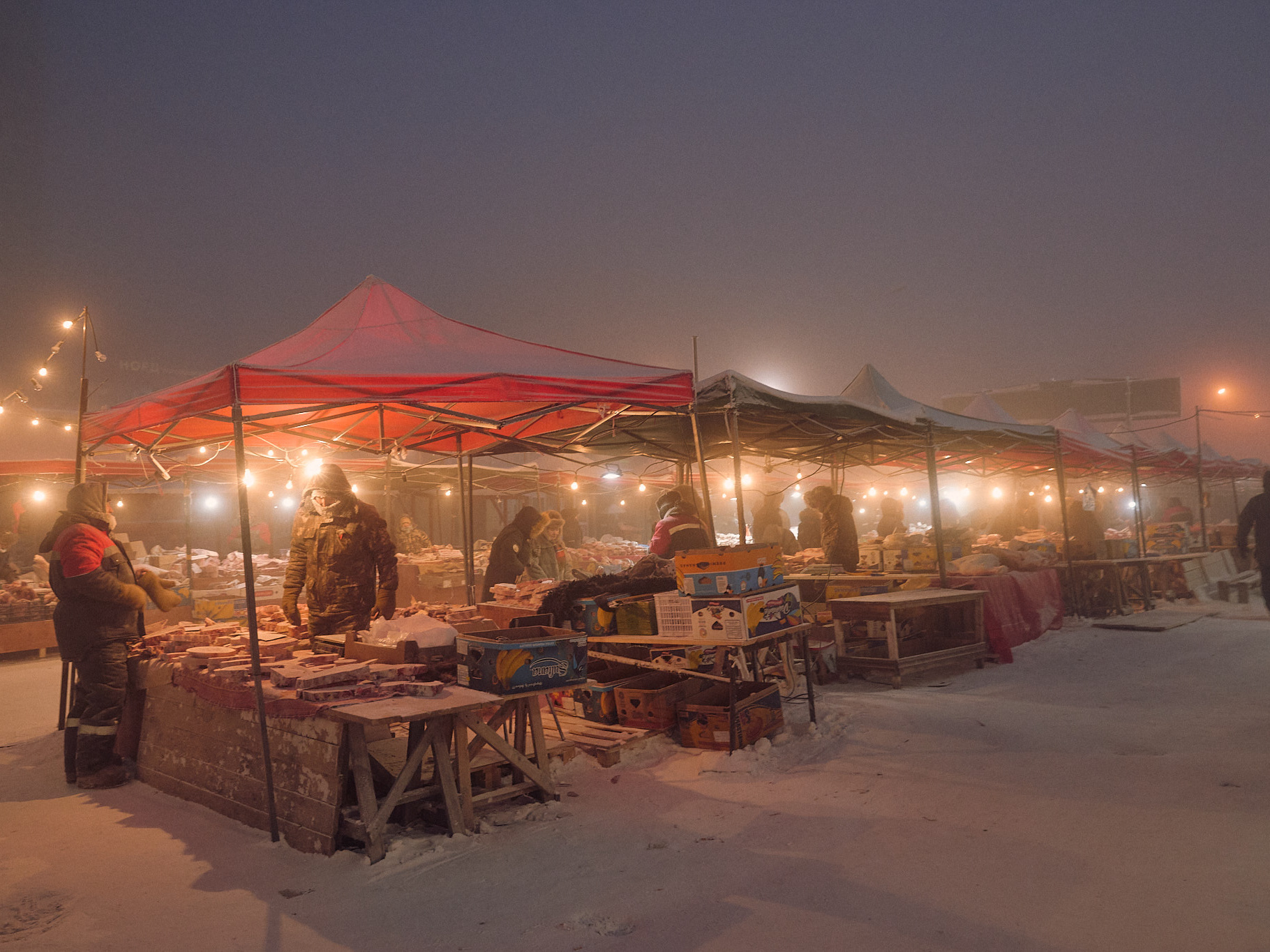
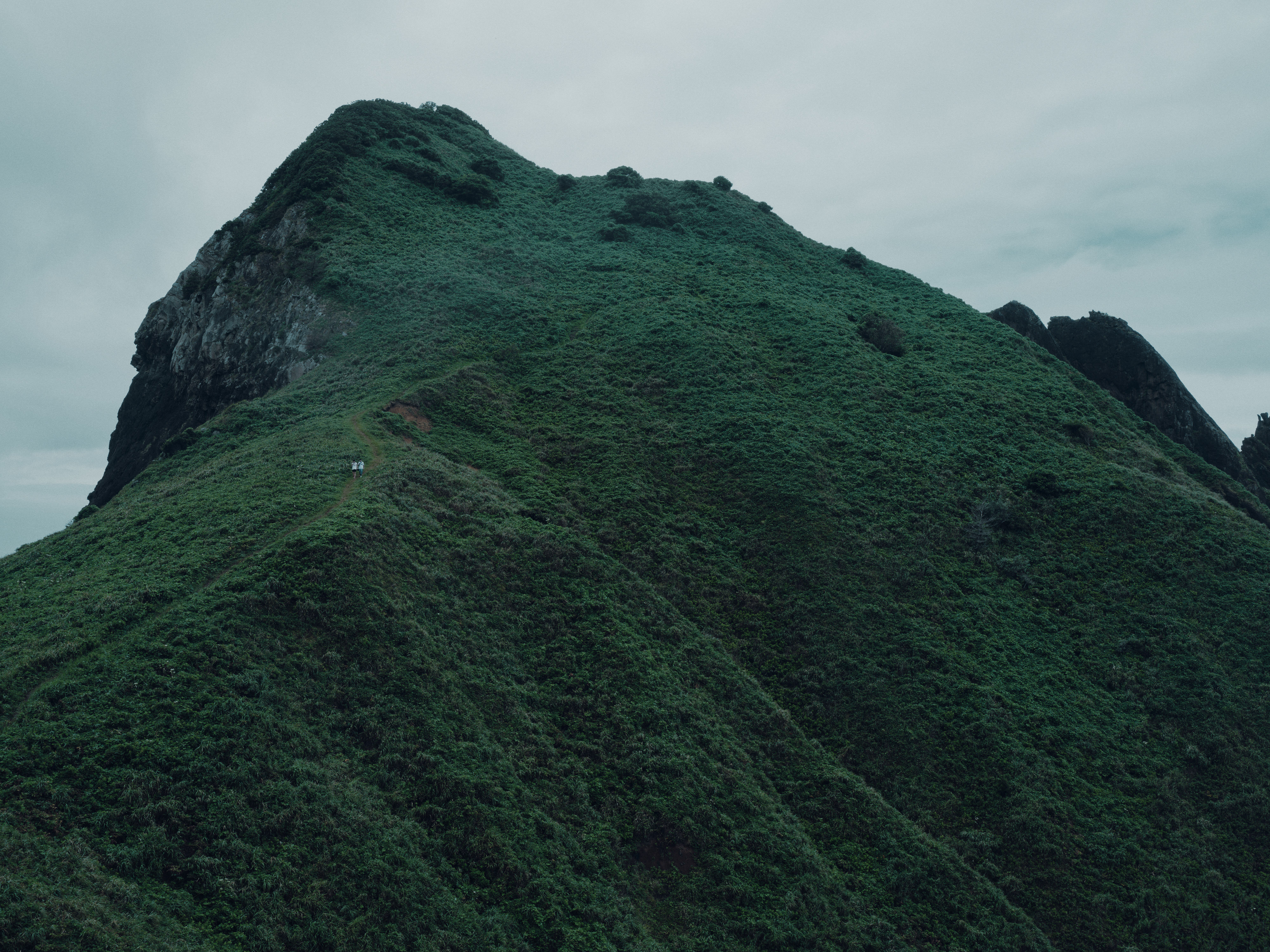
I stayed with a nomadic family on the Mongolian steppe in winter. Temperatures fell below −30°C. Every day without exception, they moved livestock, hauled water across frozen ground, and slaughtered animals to prepare for the months ahead. There were no days off. Inside the ger, the family played traditional bone games and cards; the sons scrolled through their phones. They were studying architecture at a university in Ulaanbaatar and did not intend to continue the nomadic life. The work is relentless, the conditions severe, and the number of herding families continues to decline. What the photographs record is a way of living that may not persist—a form of coexistence with the land, sustained only by unrelenting daily labor.
モンゴルの草原で、遊牧民の家族のもとに滞在した。気温は氷点下30度を下回る。休みはない。毎日、家畜を移動させ、凍った地面を越えて水を運び、冬に備えて屠畜を行う。ゲルの中では、家族が伝統的な骨の遊びやトランプに興じる一方で、息子たちはスマートフォンを操っていた。彼らはウランバートルの大学で建築を学んでおり、遊牧を継ぐつもりはないという。労働は途切れず、環境は厳しく、遊牧を営む家族の数は減り続けている。この写真が記録しているのは、存続するかどうかわからない暮らし——休みなく土地に向き合い続けることで成り立つ、共存の一つの形である。