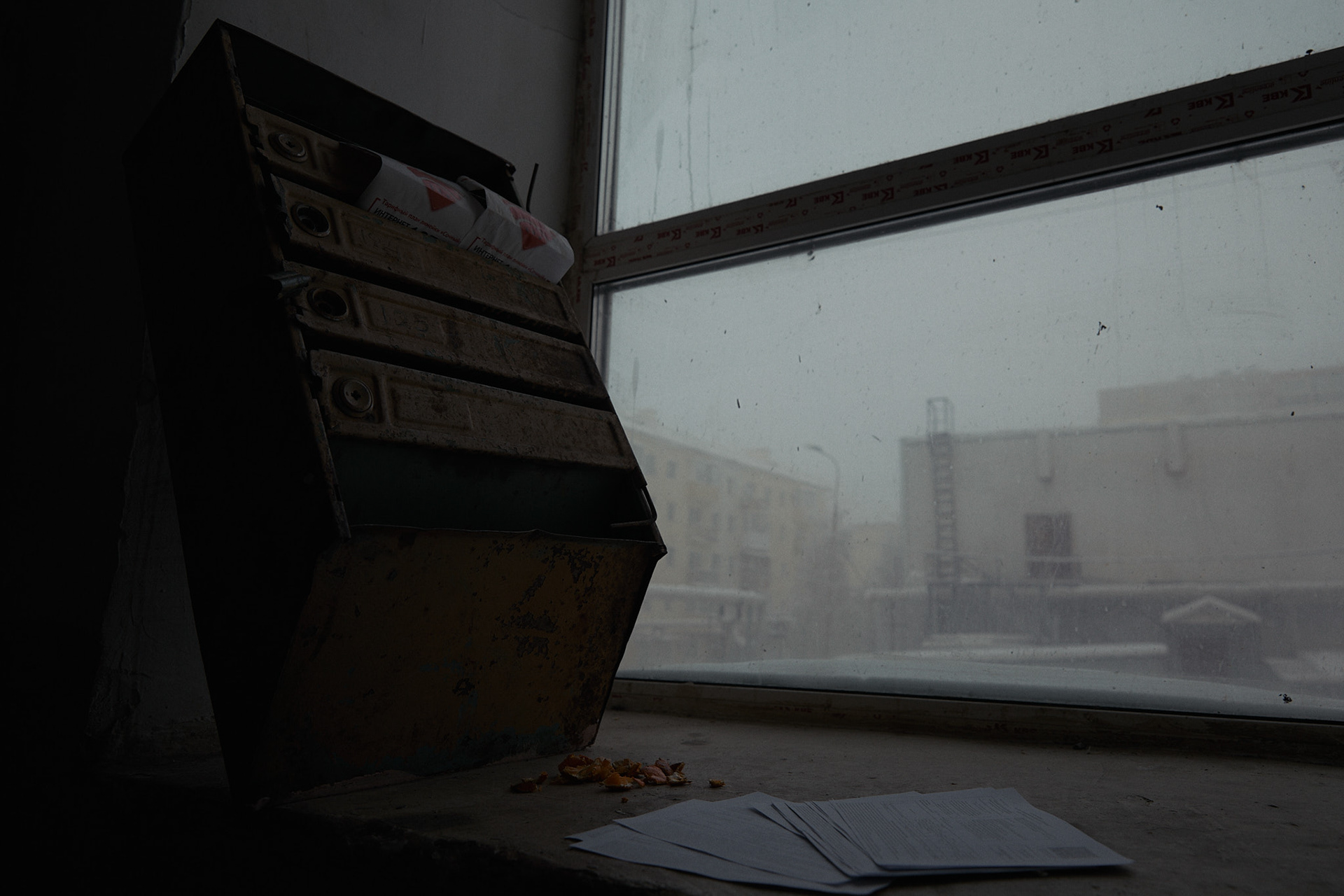
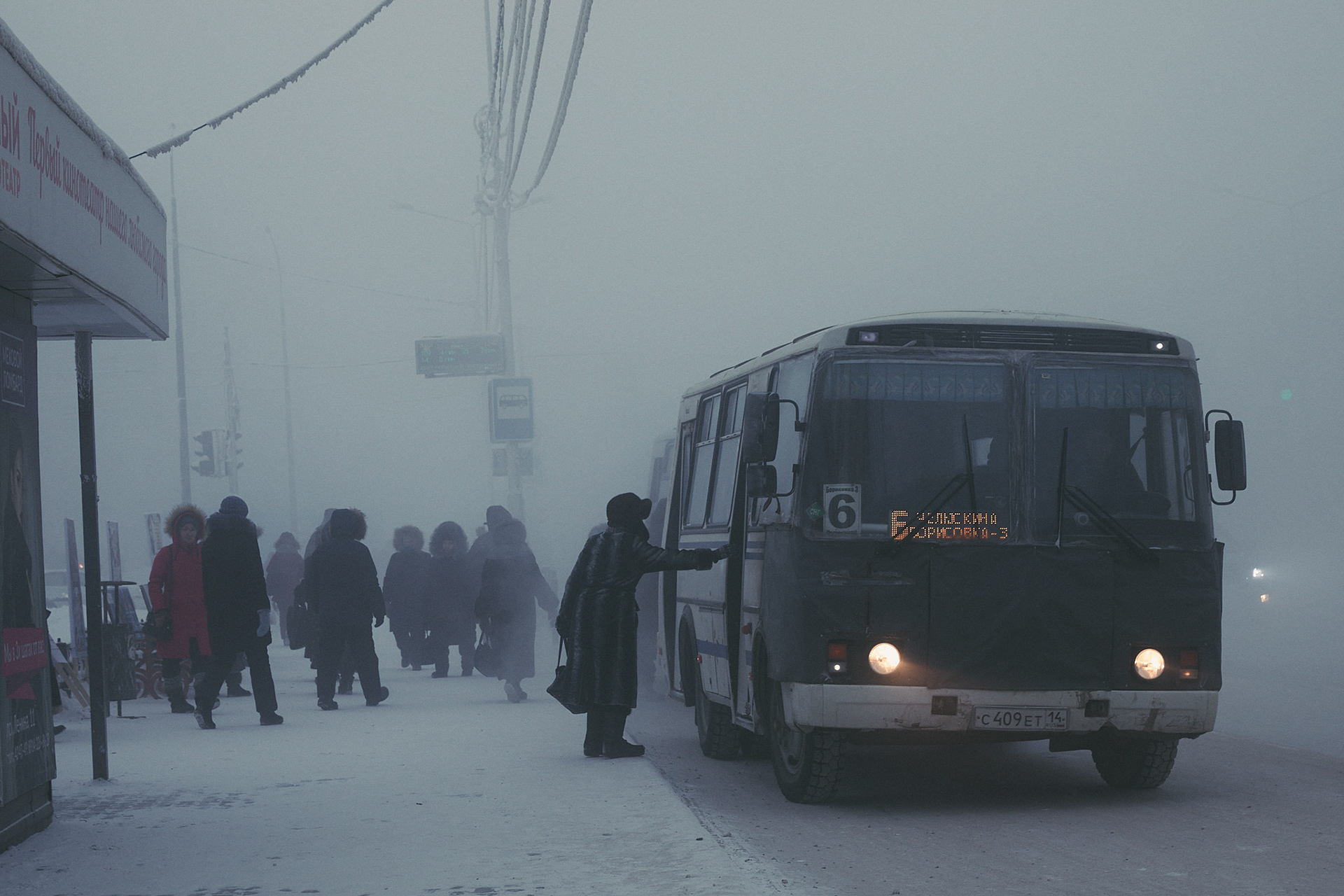
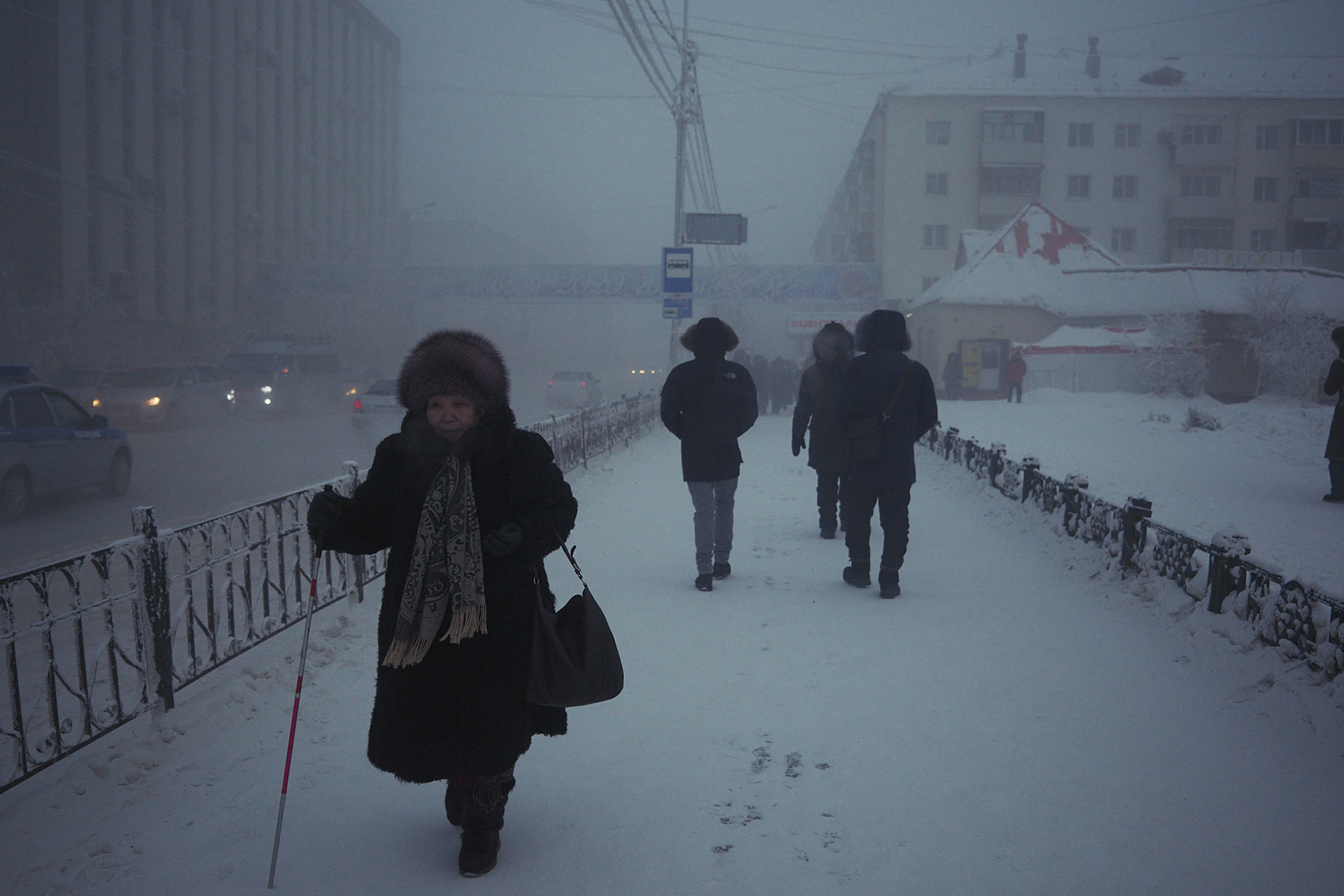
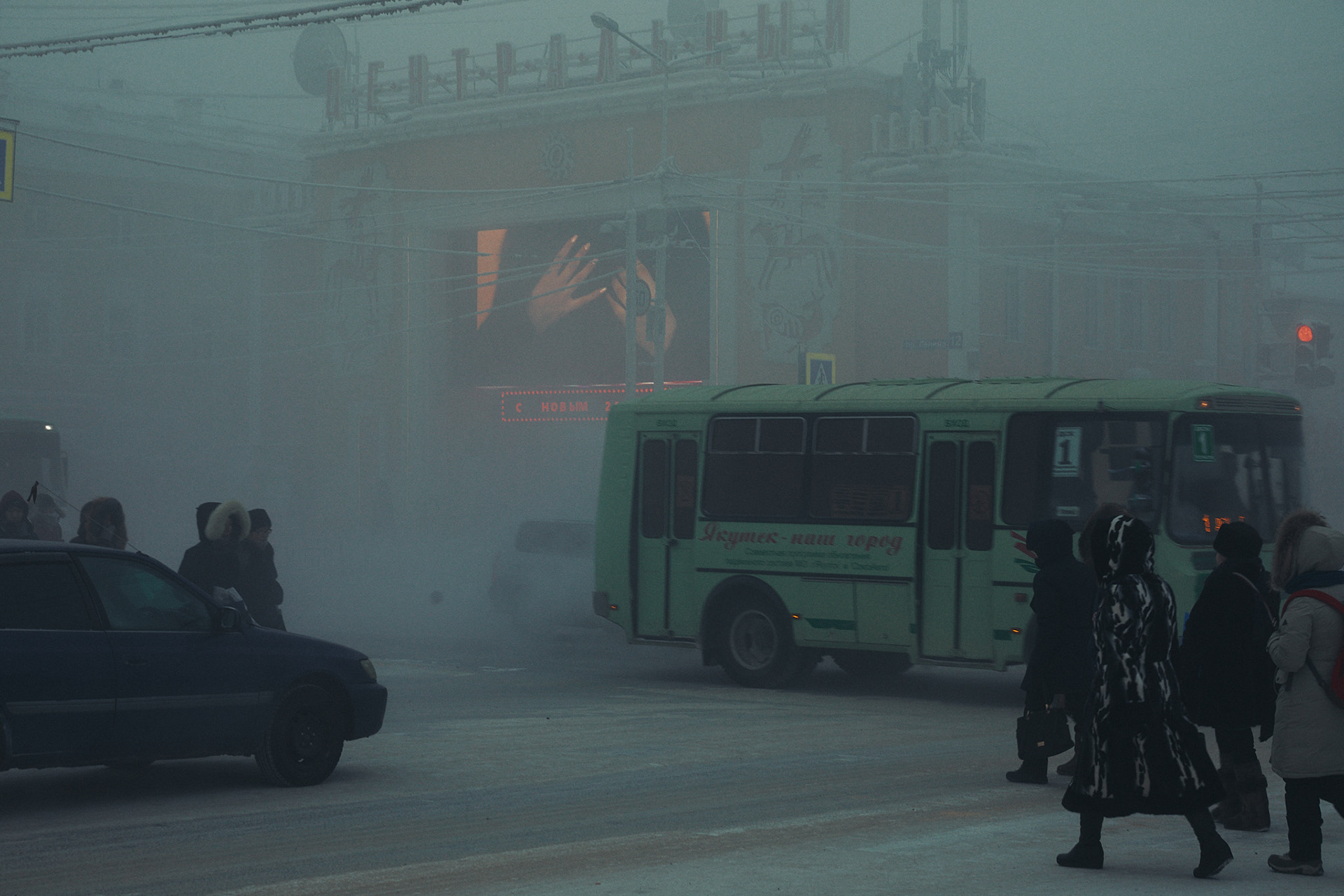
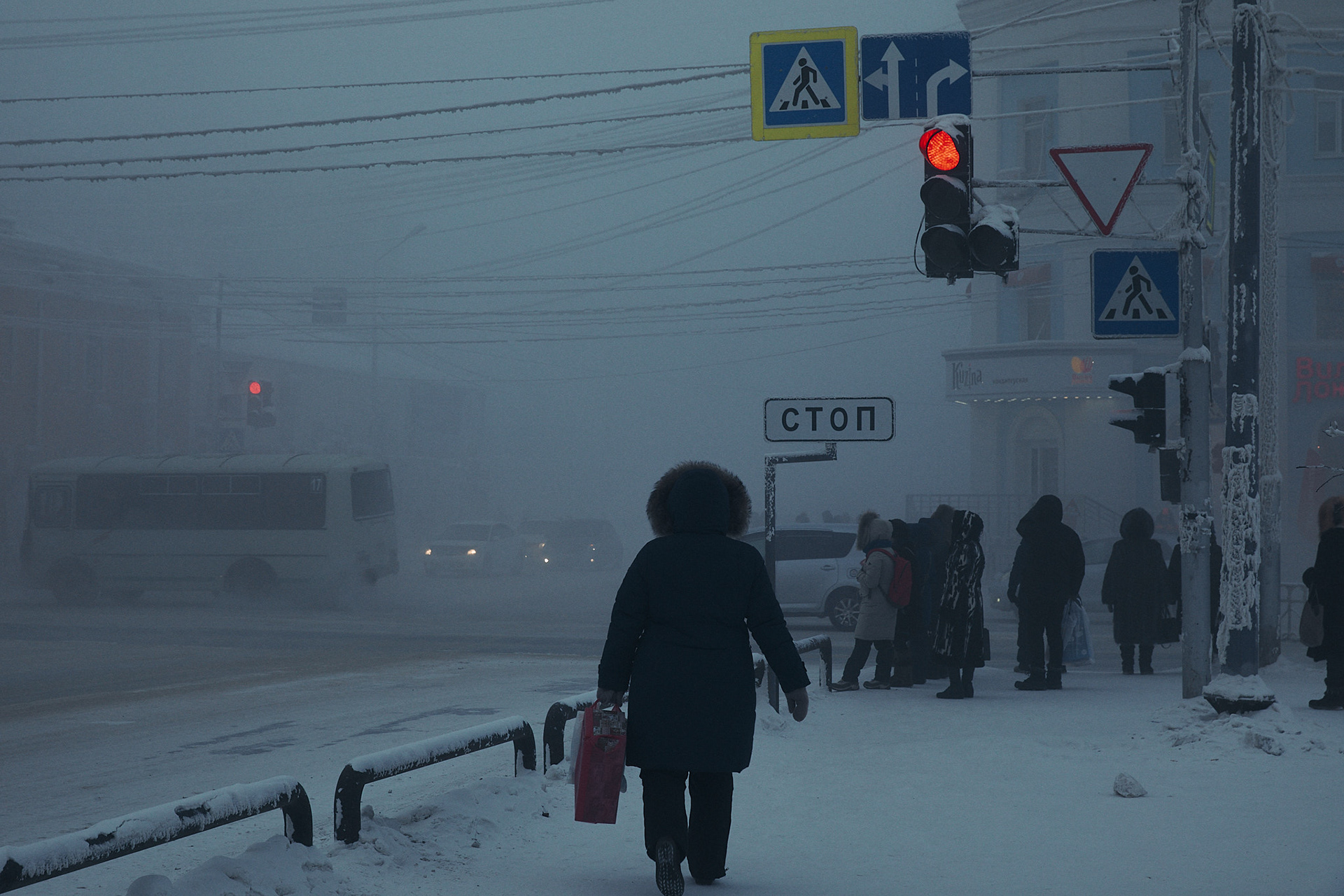
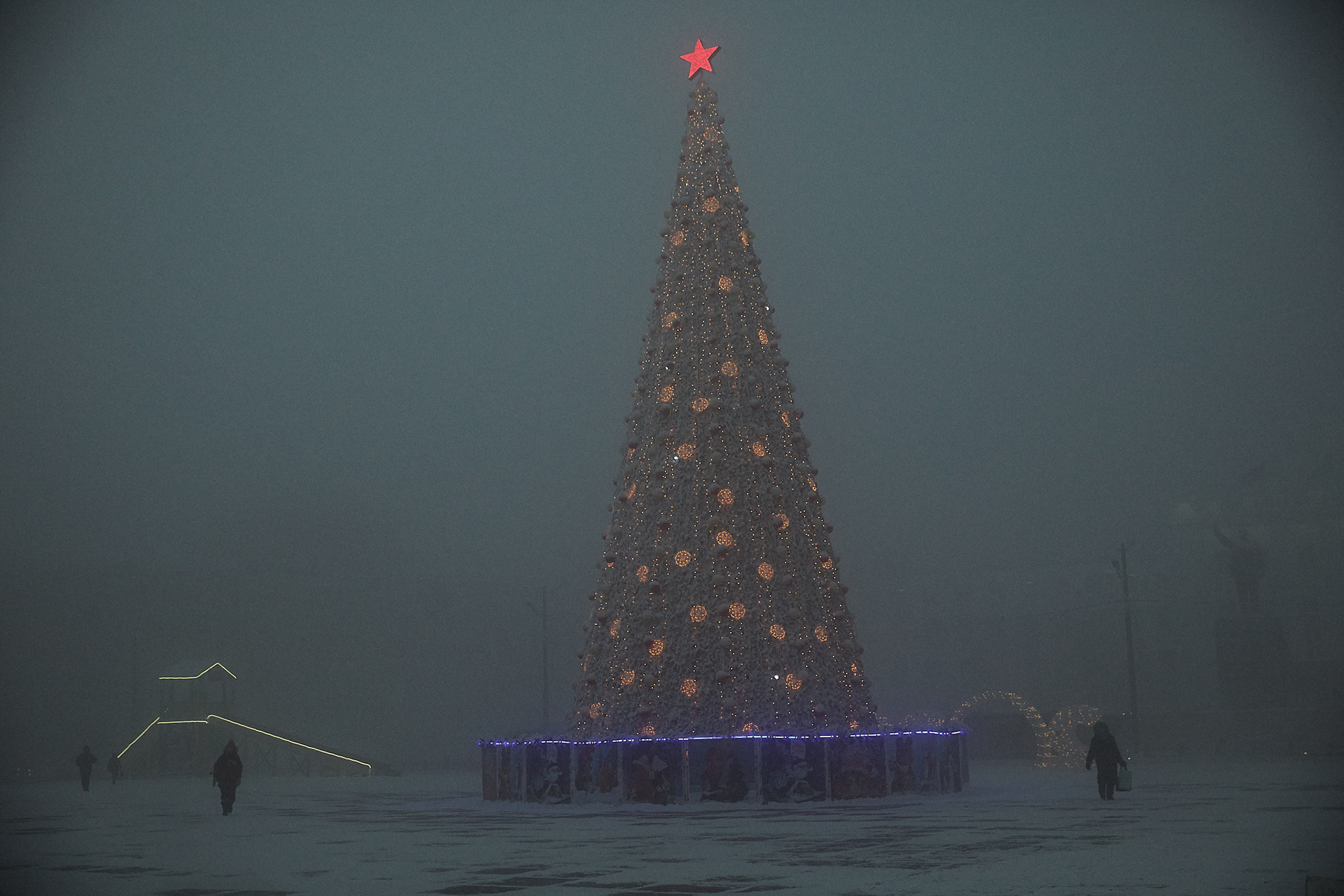
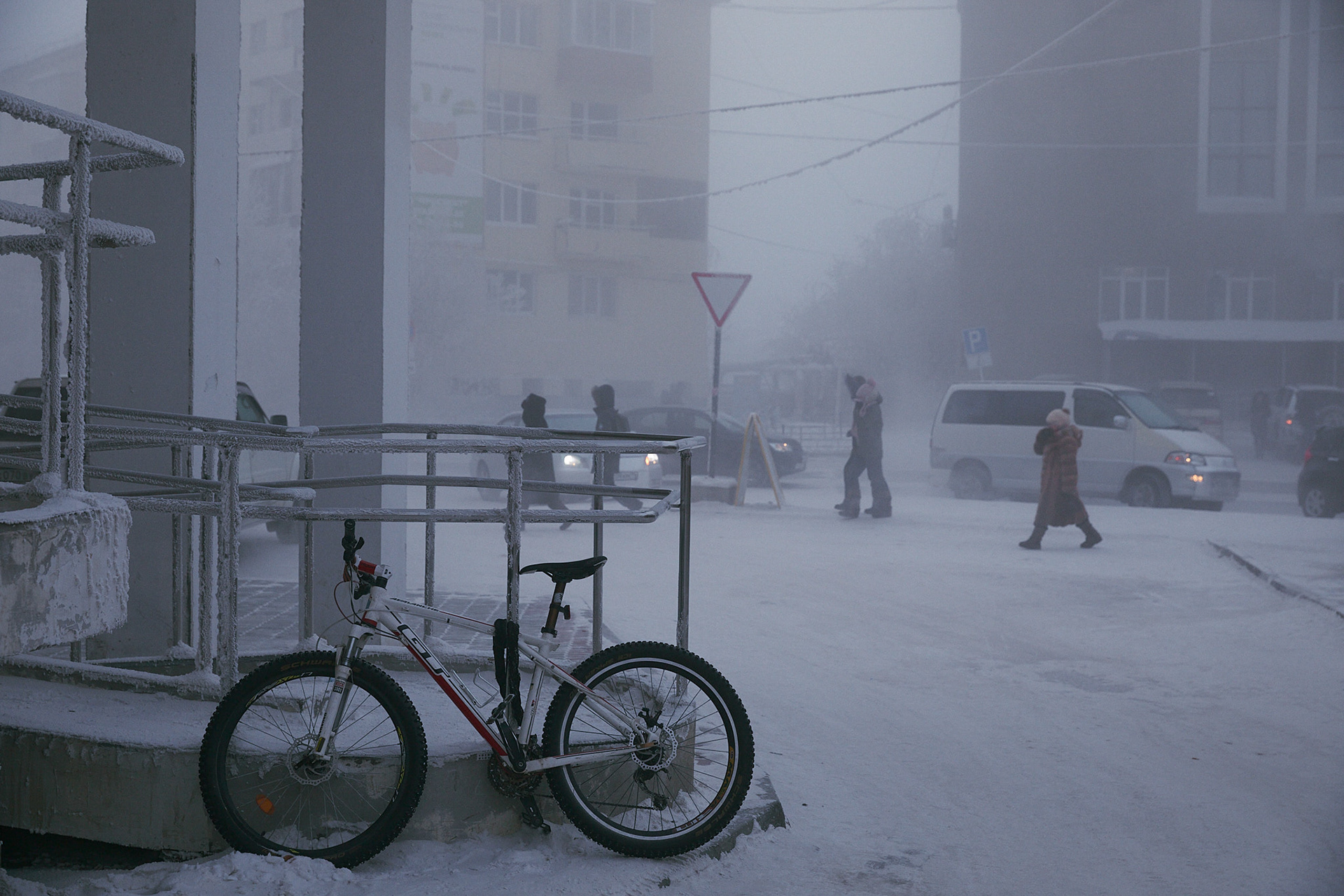
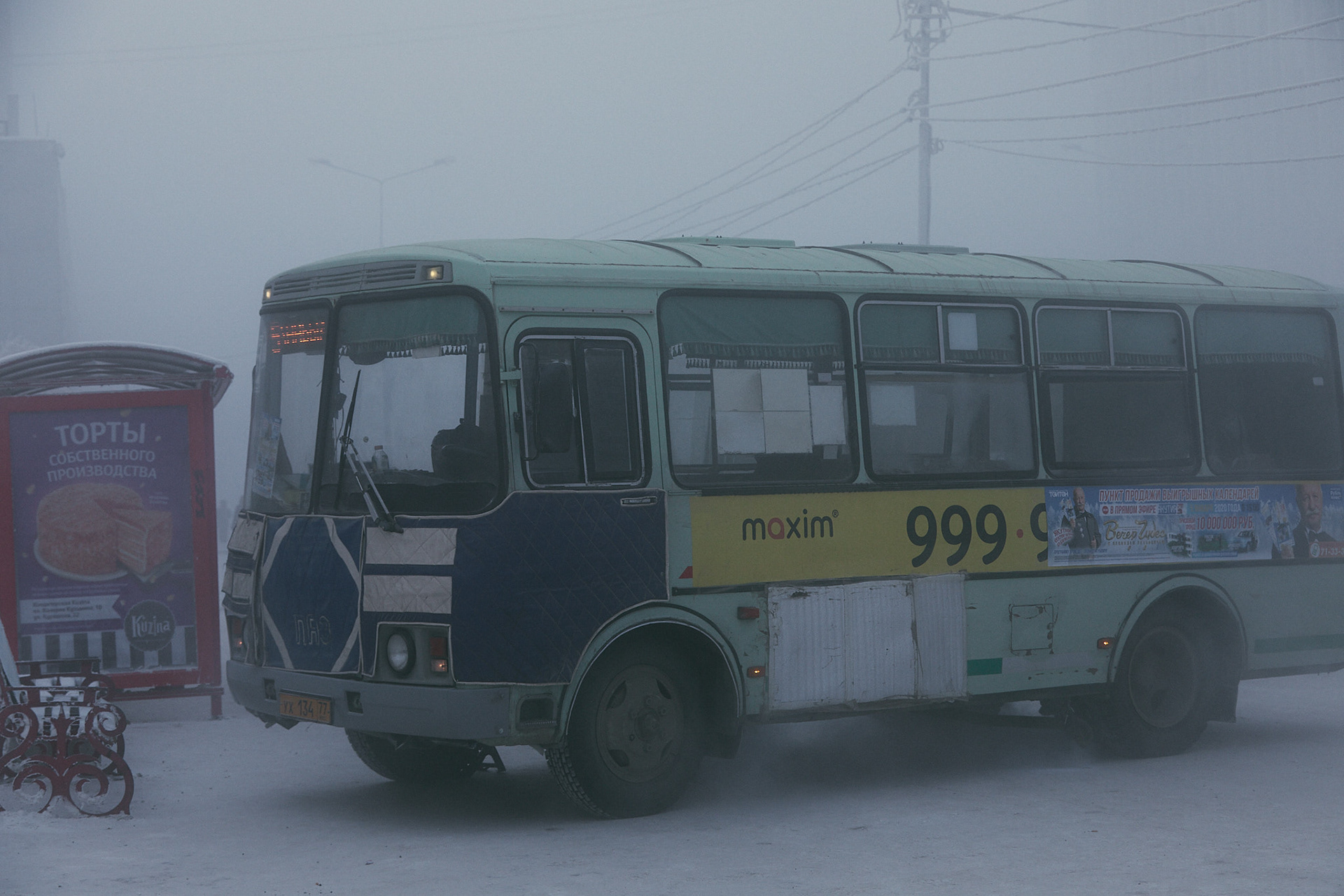
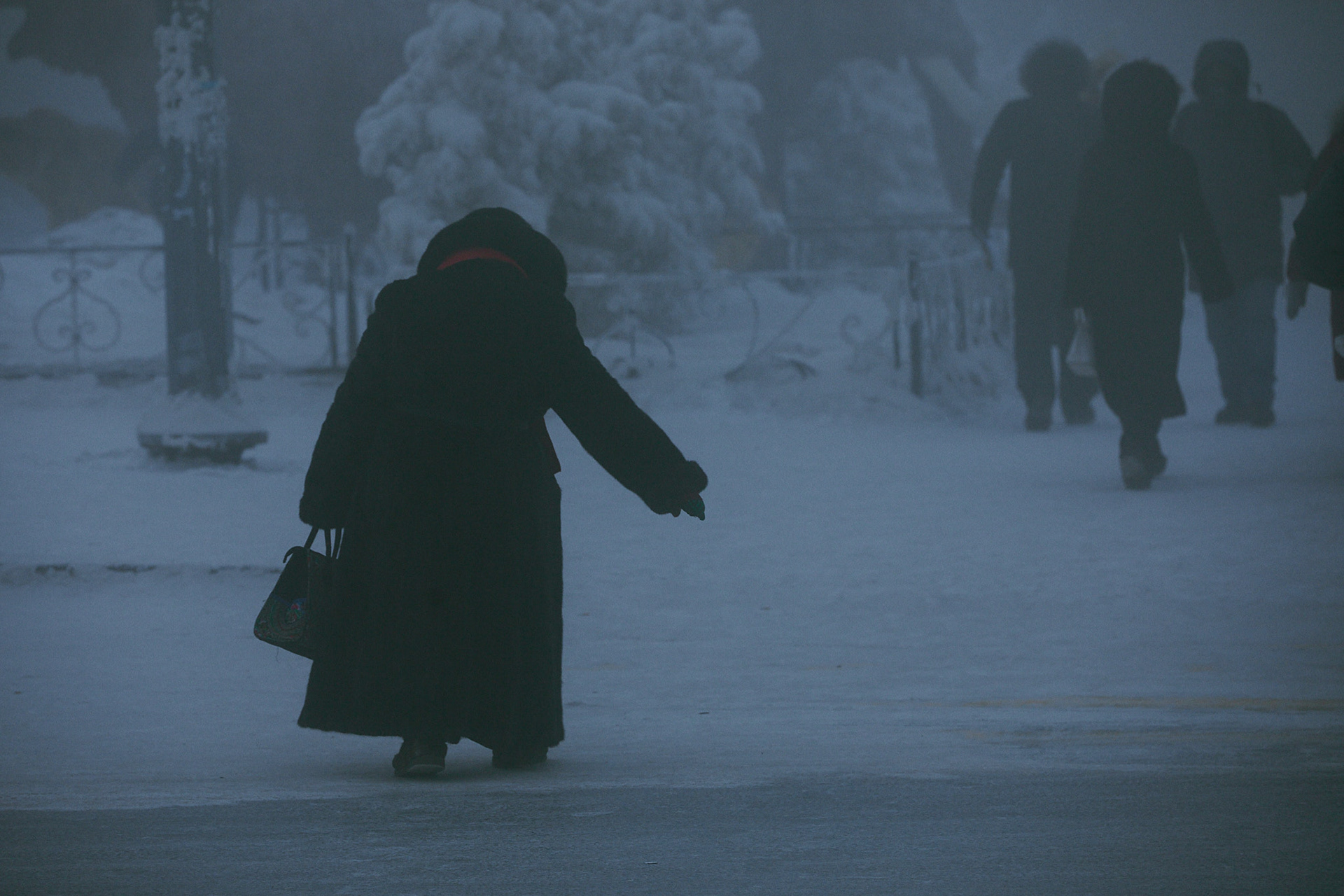
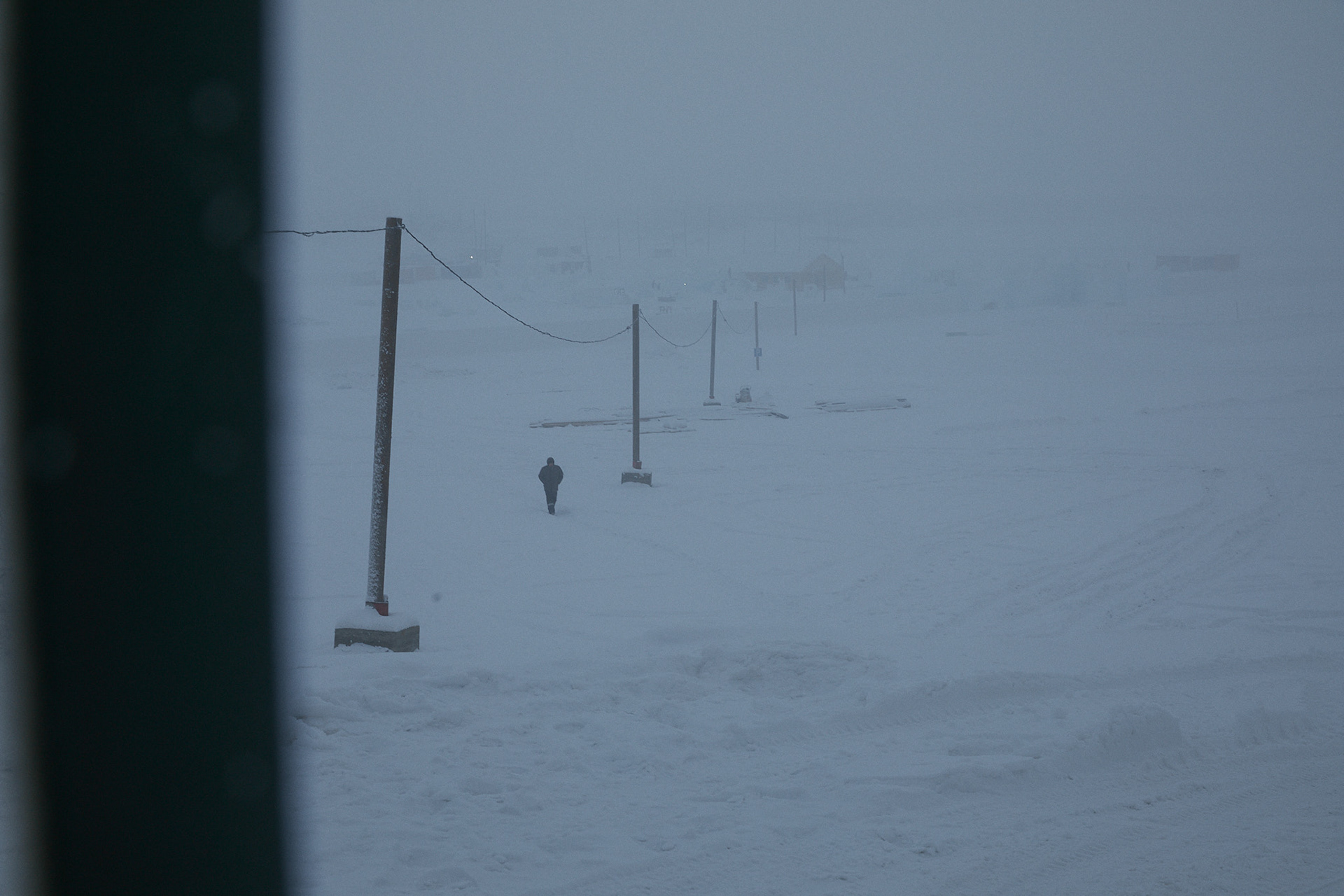
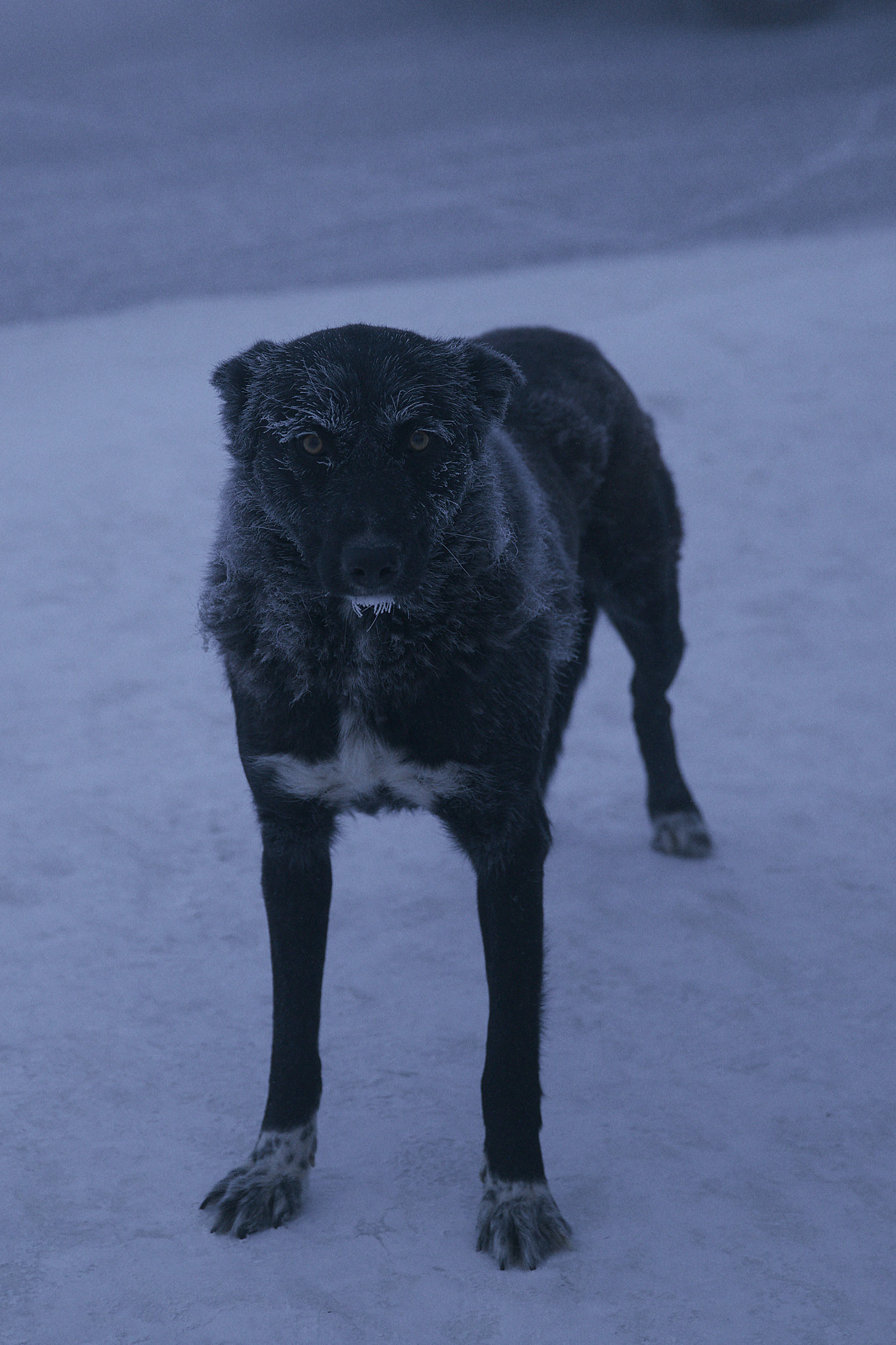
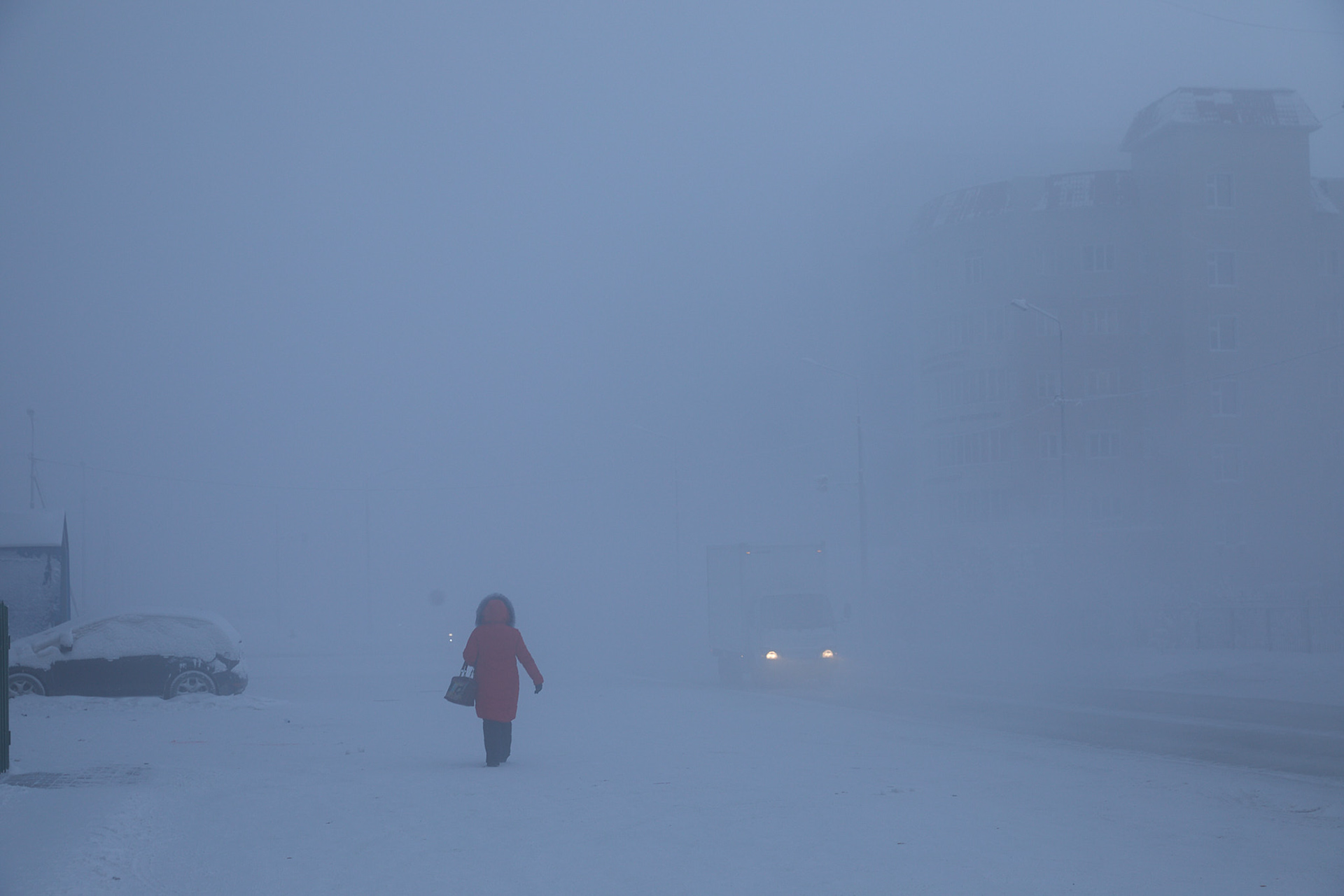
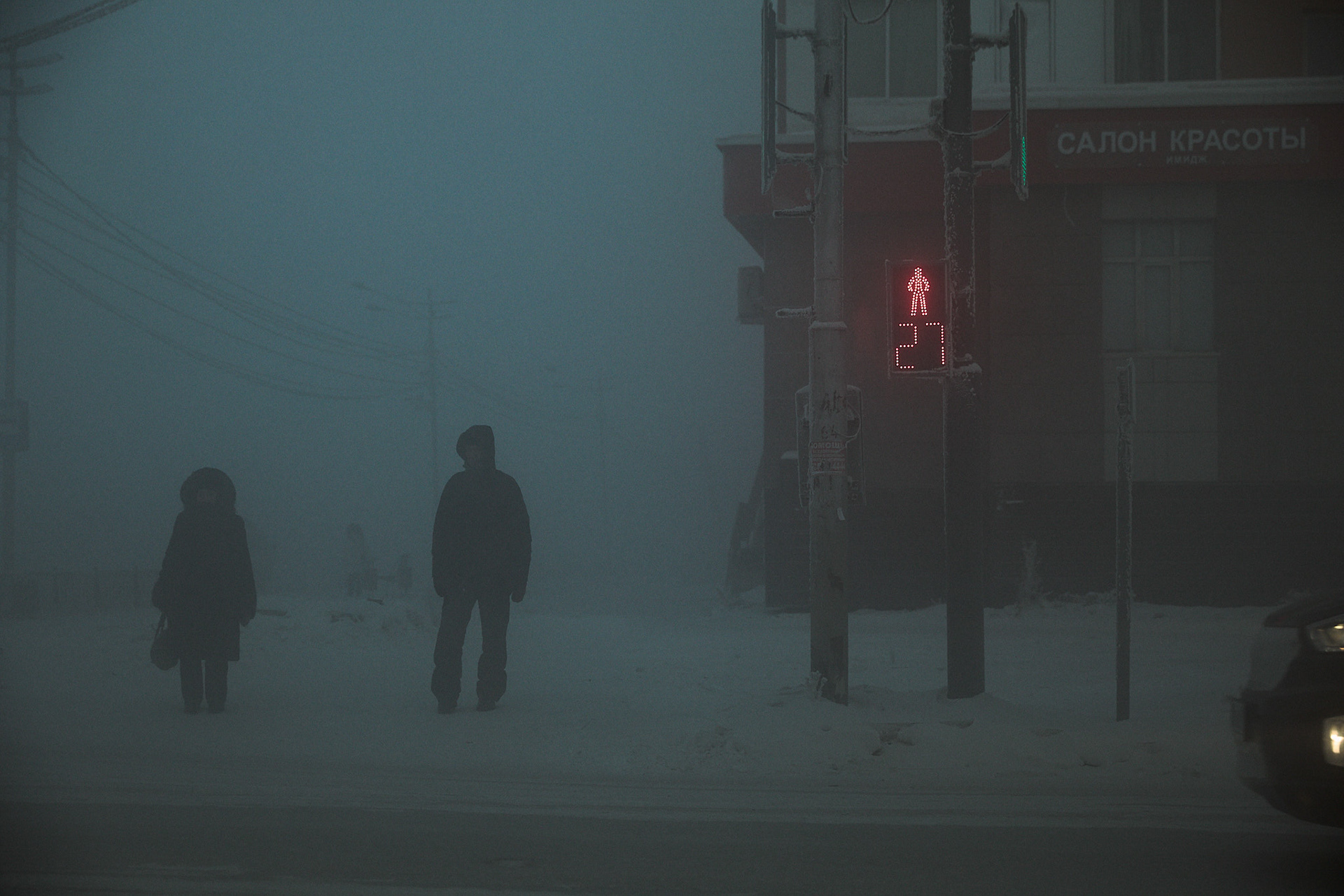
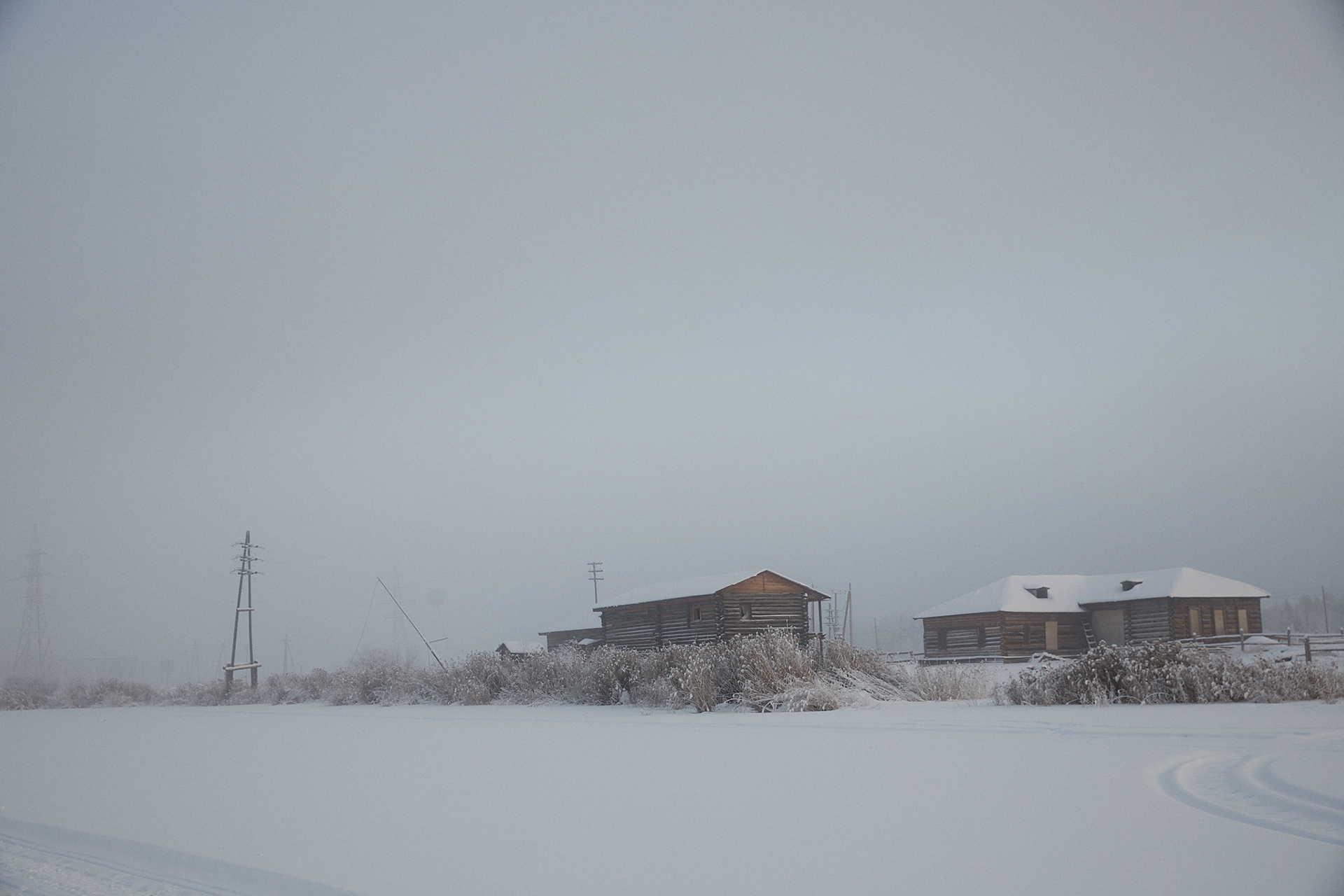
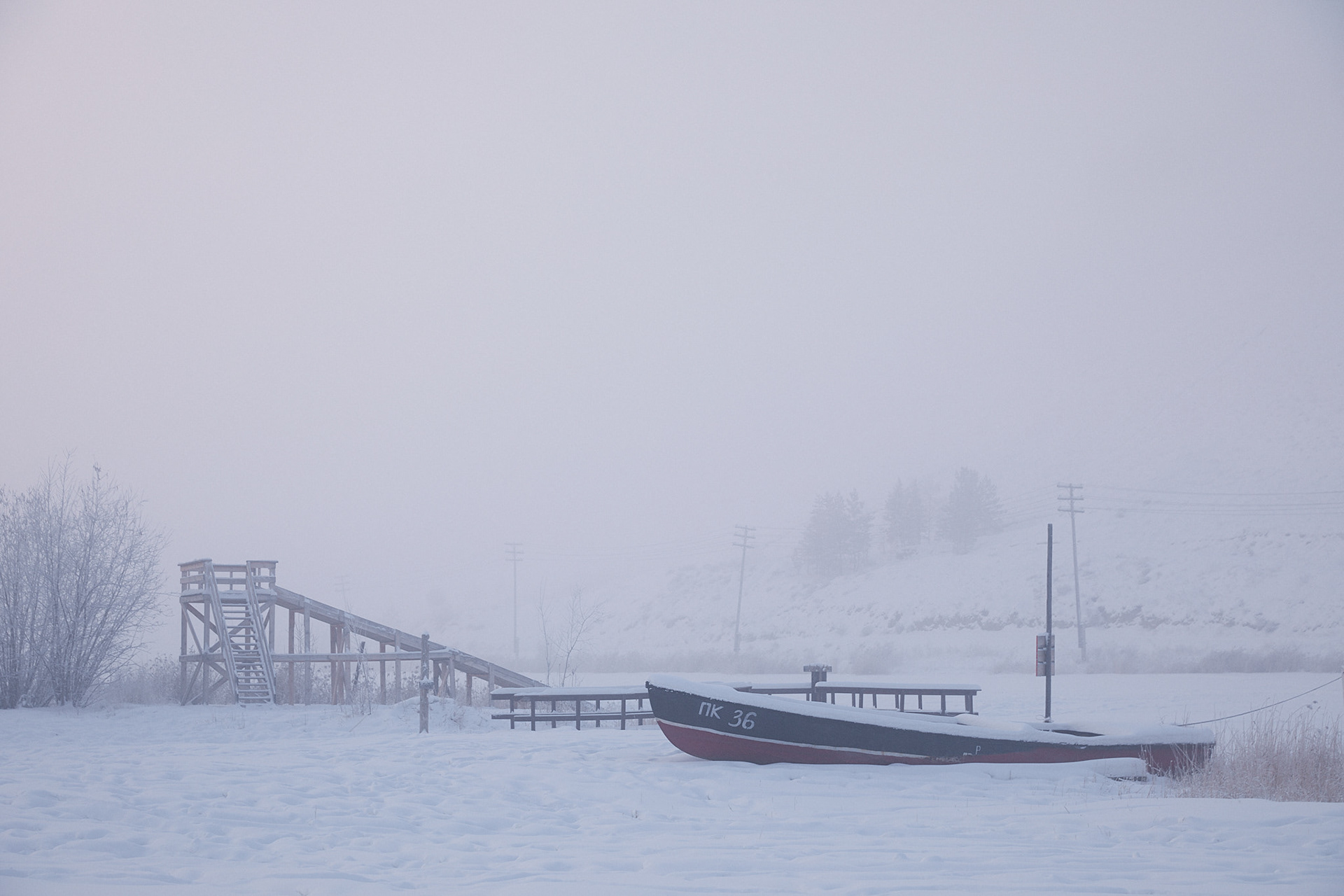
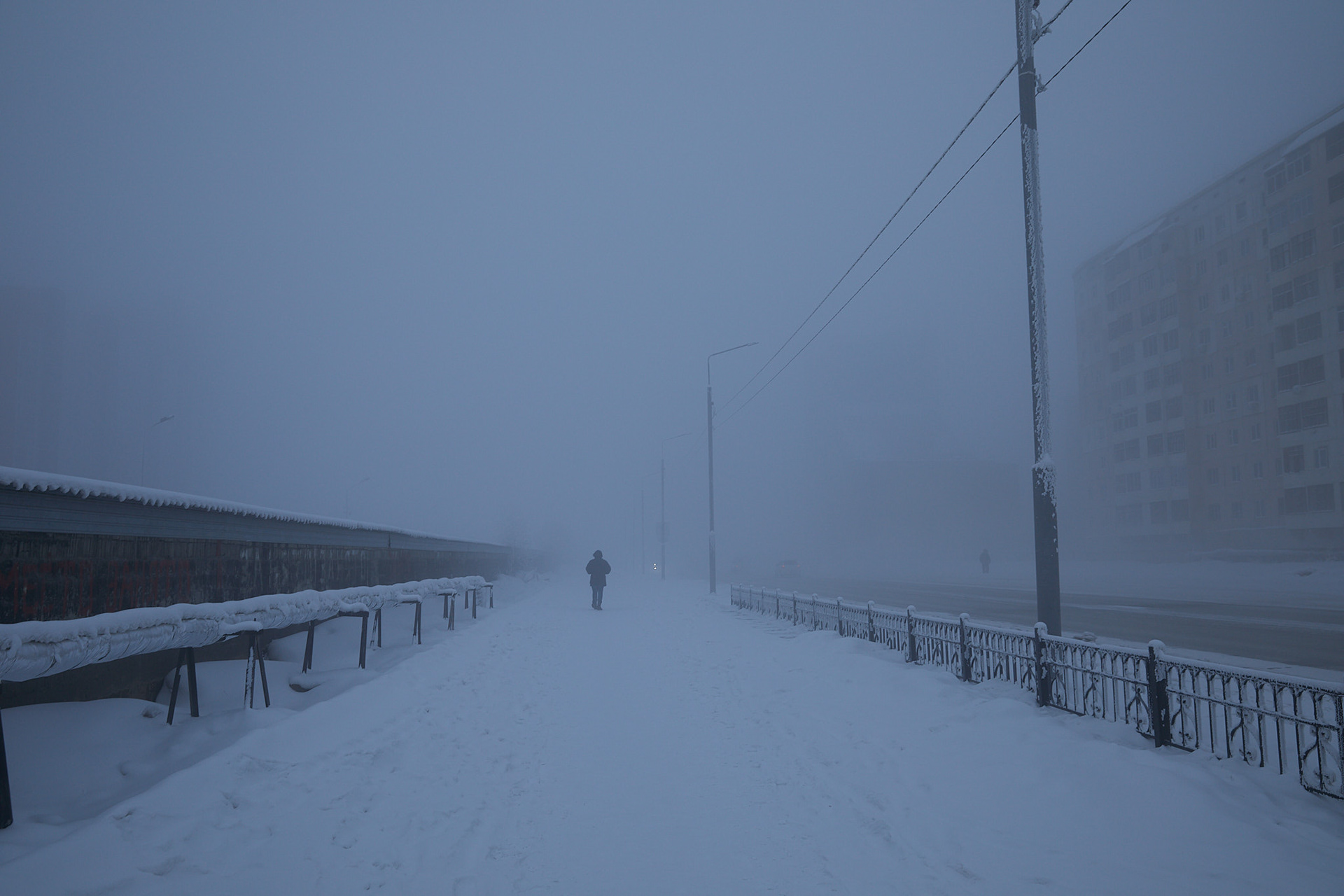
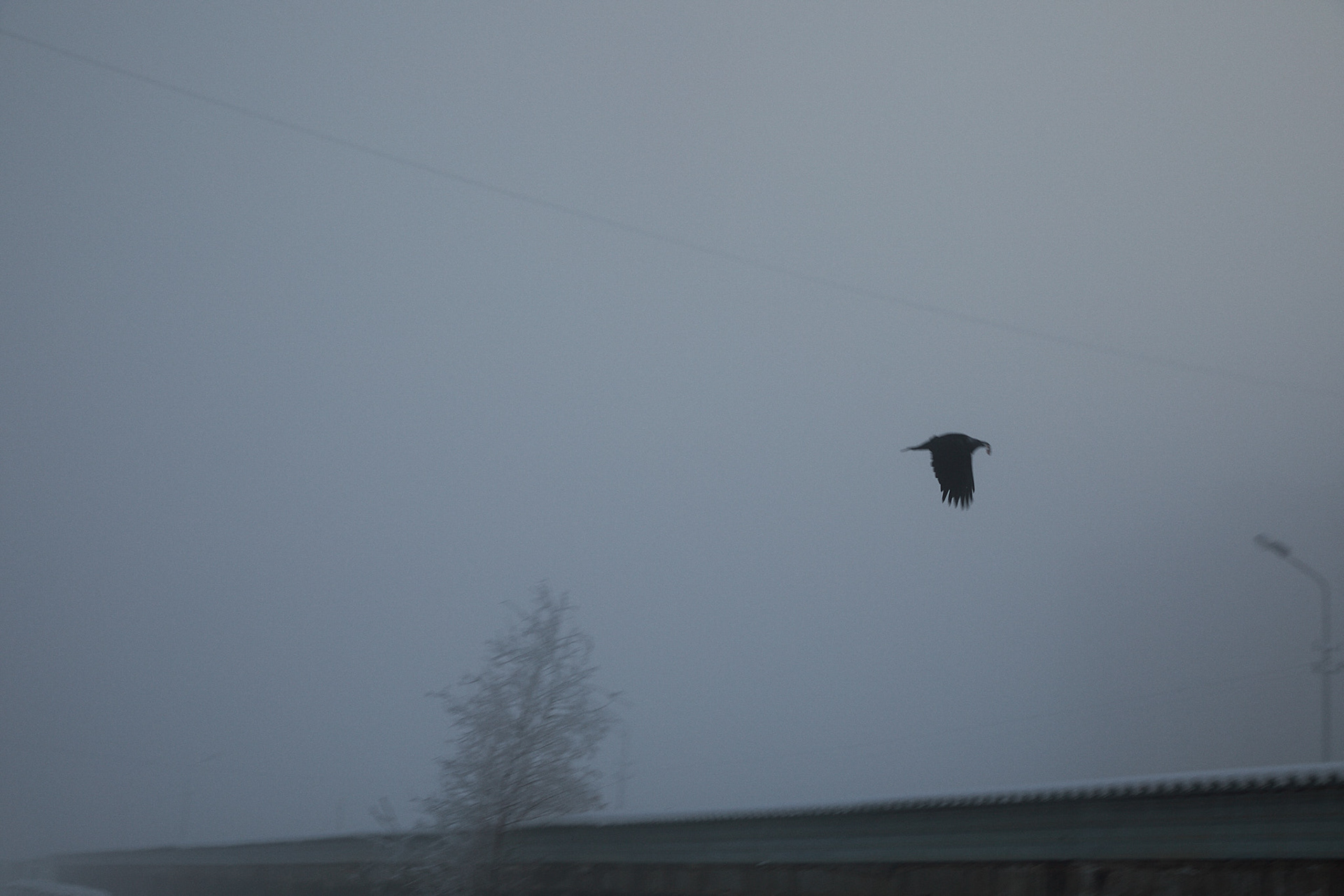
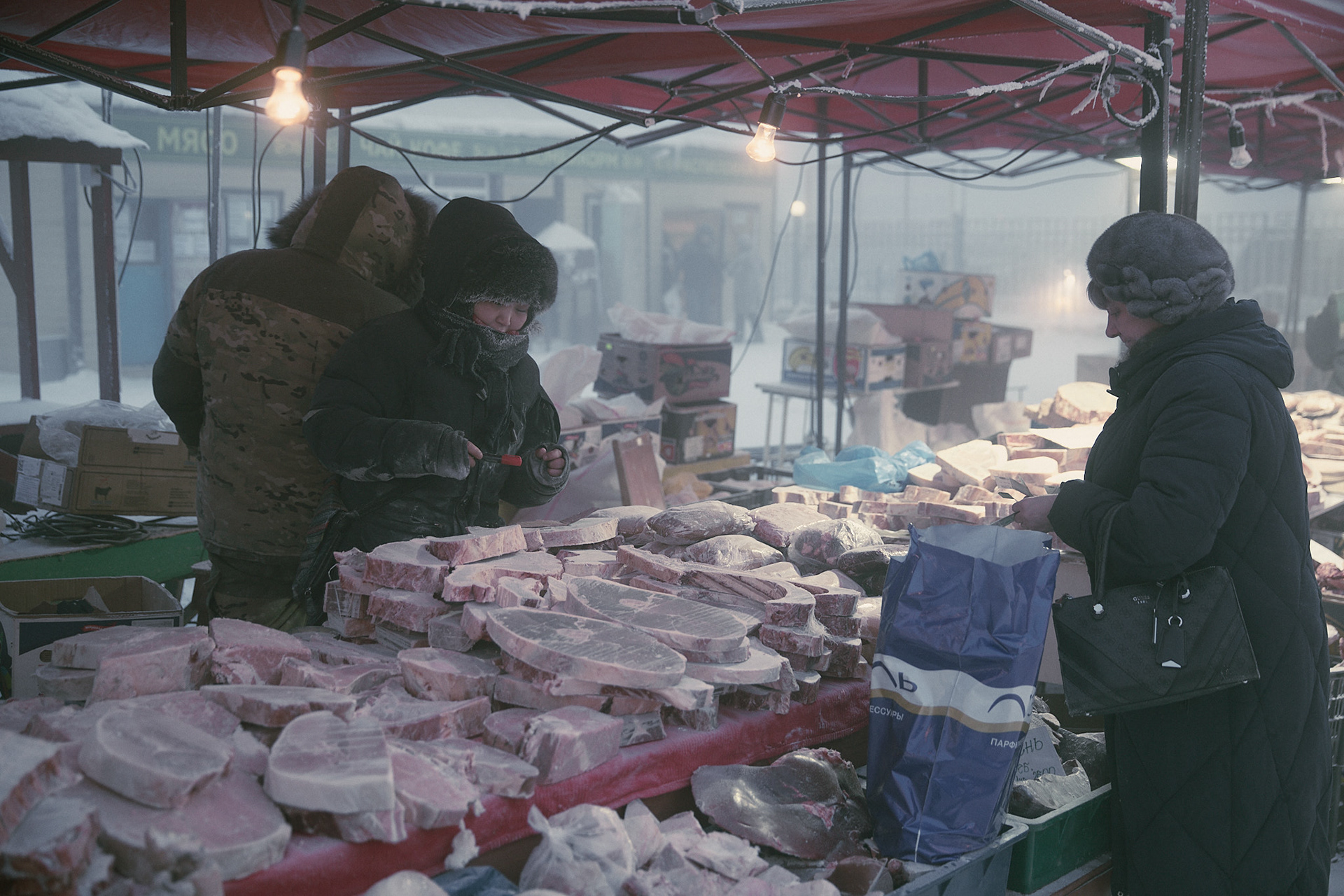
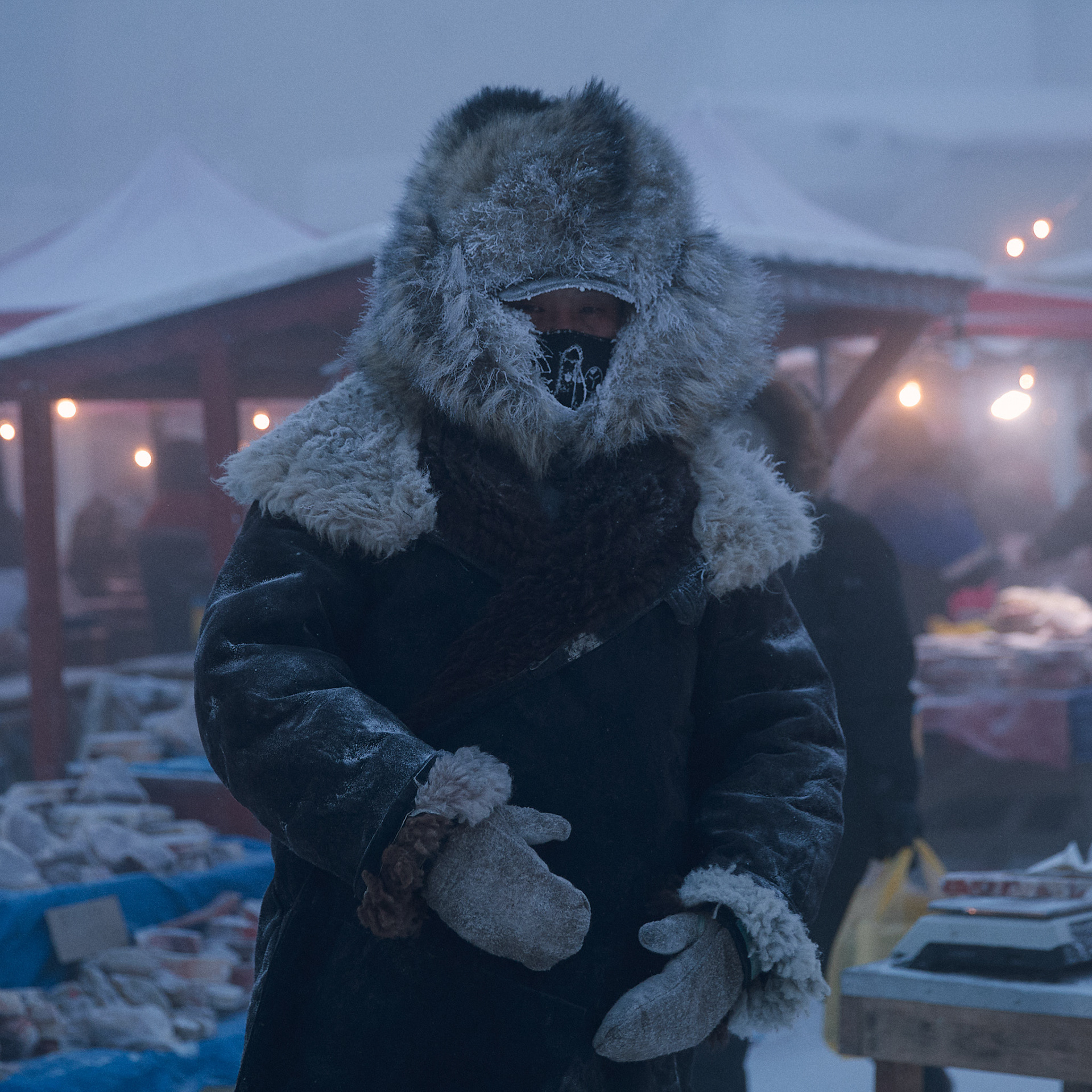
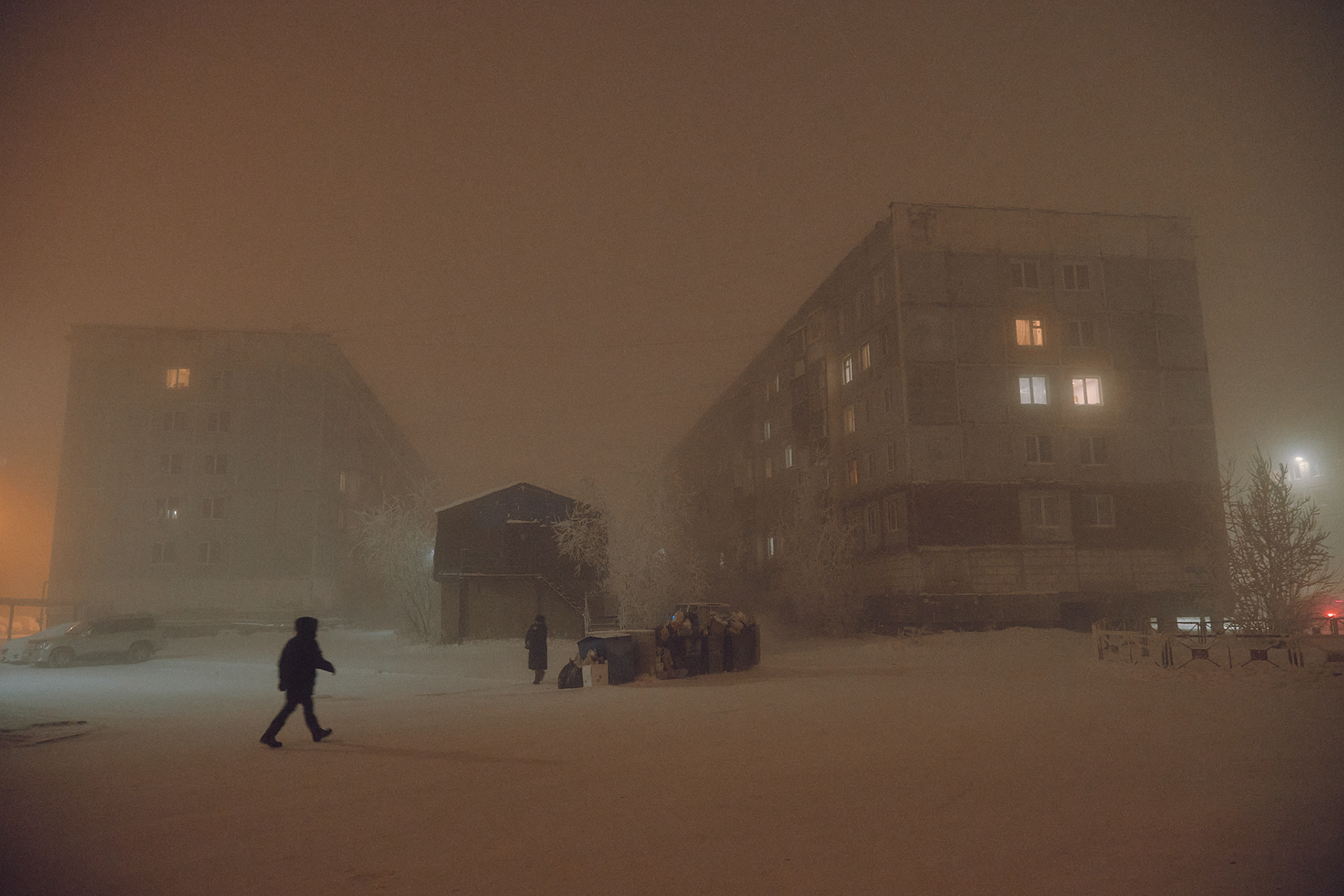
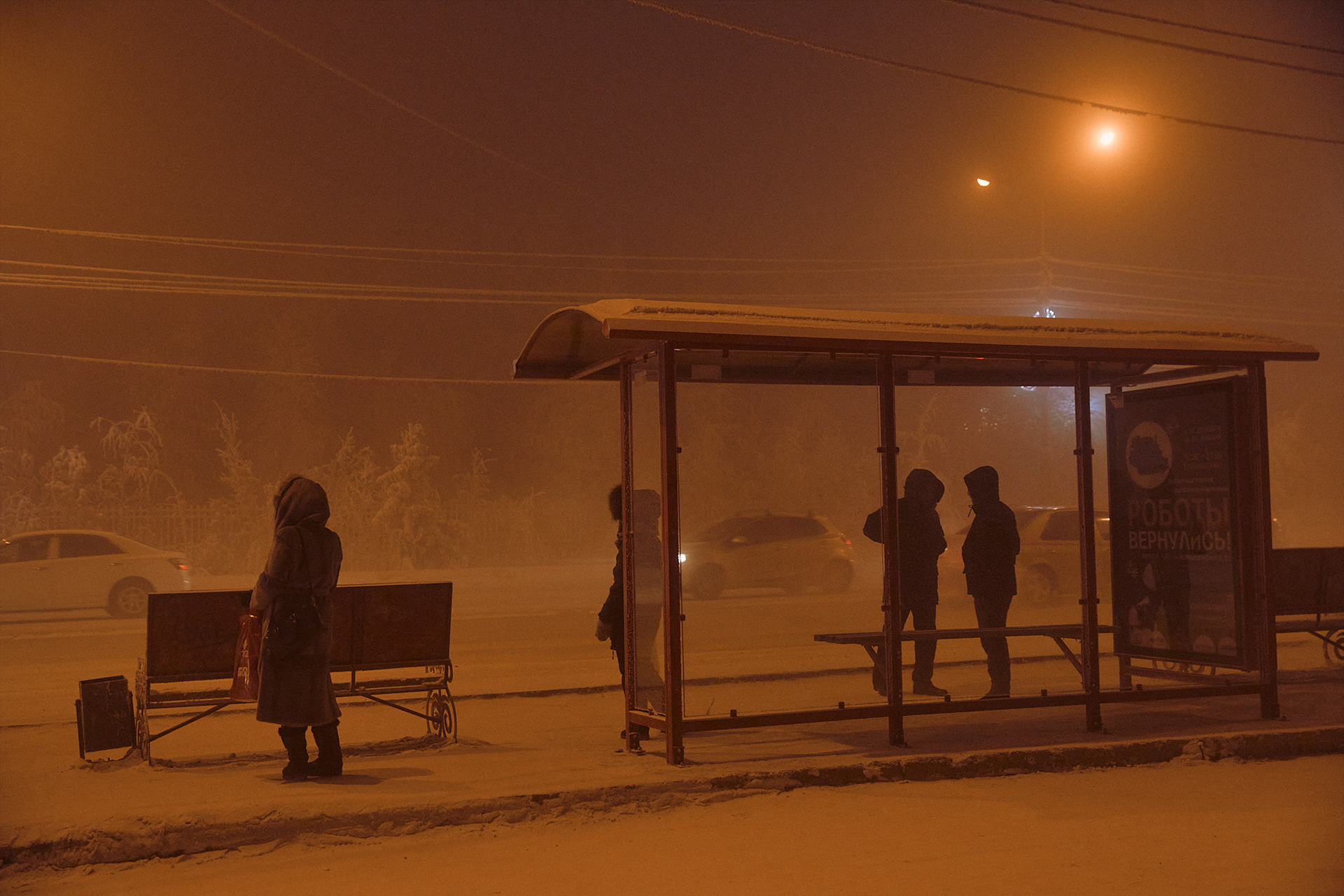
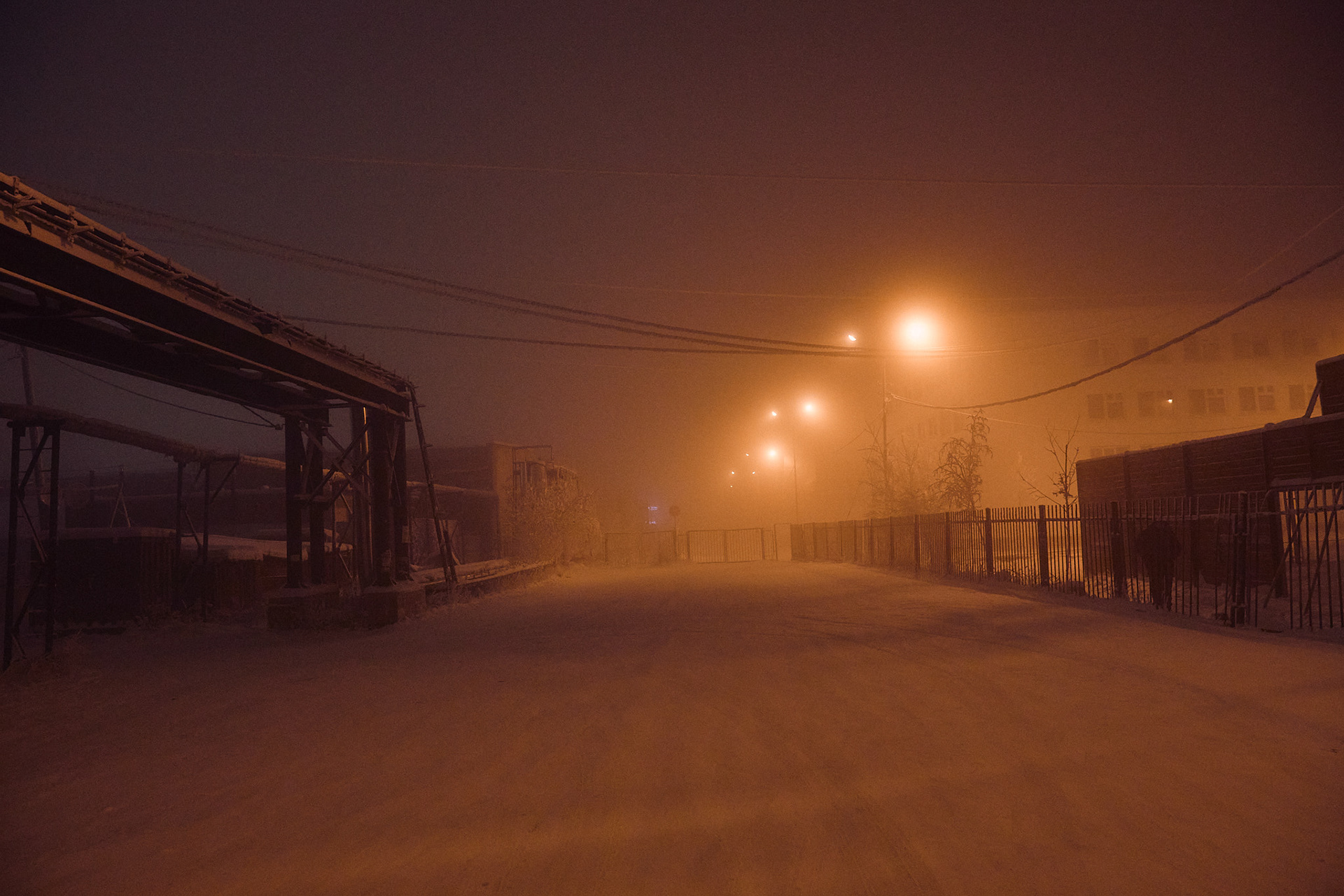
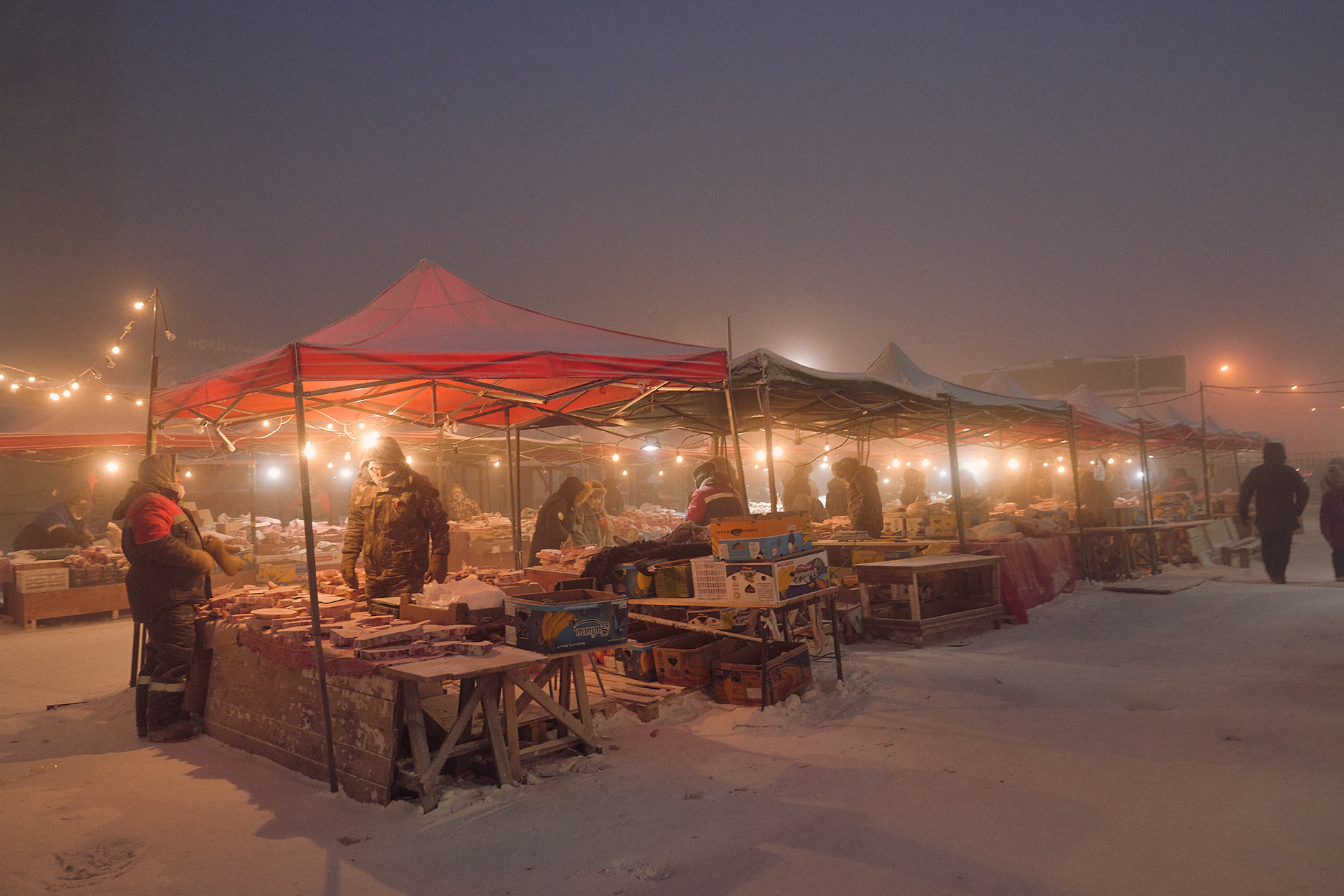
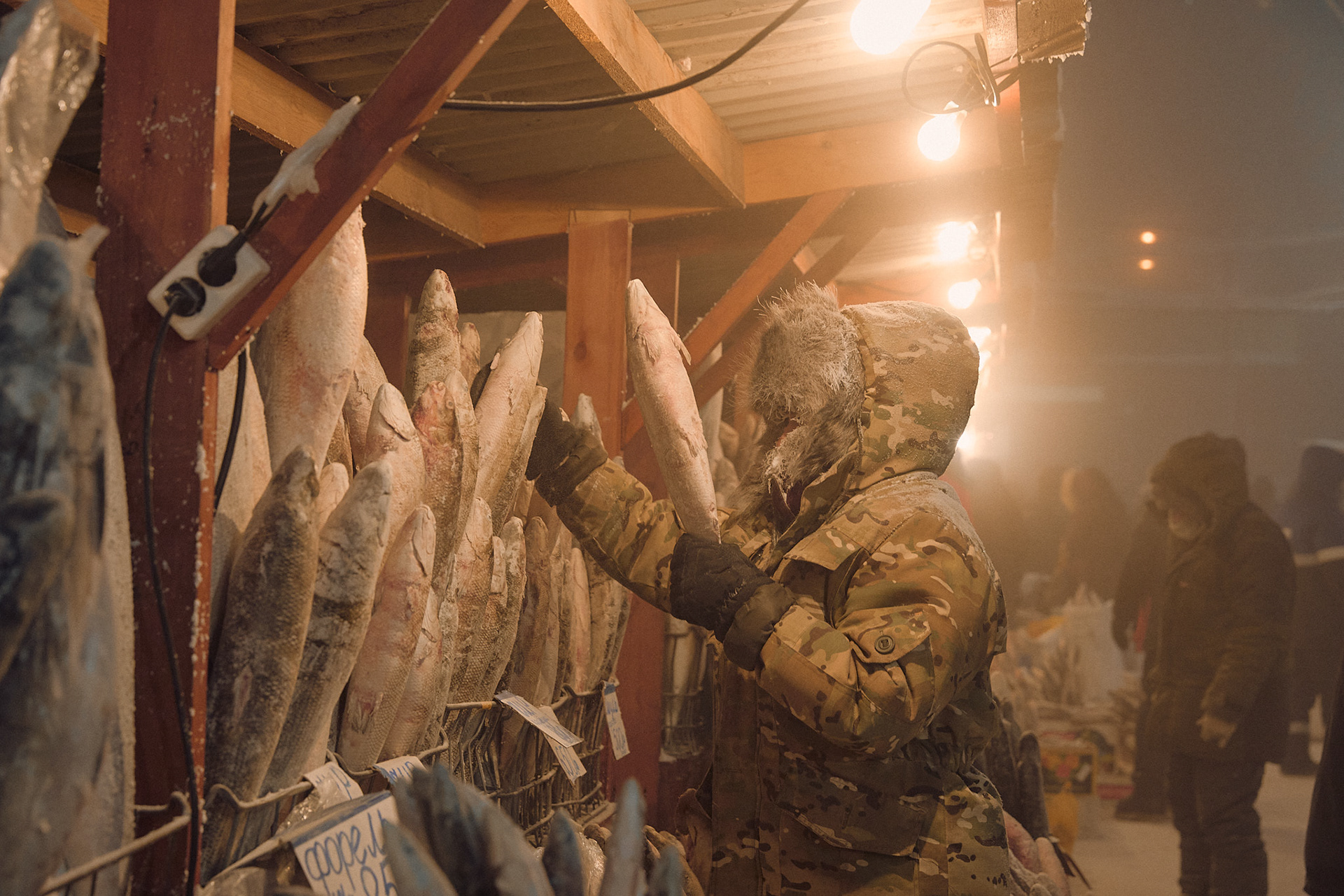
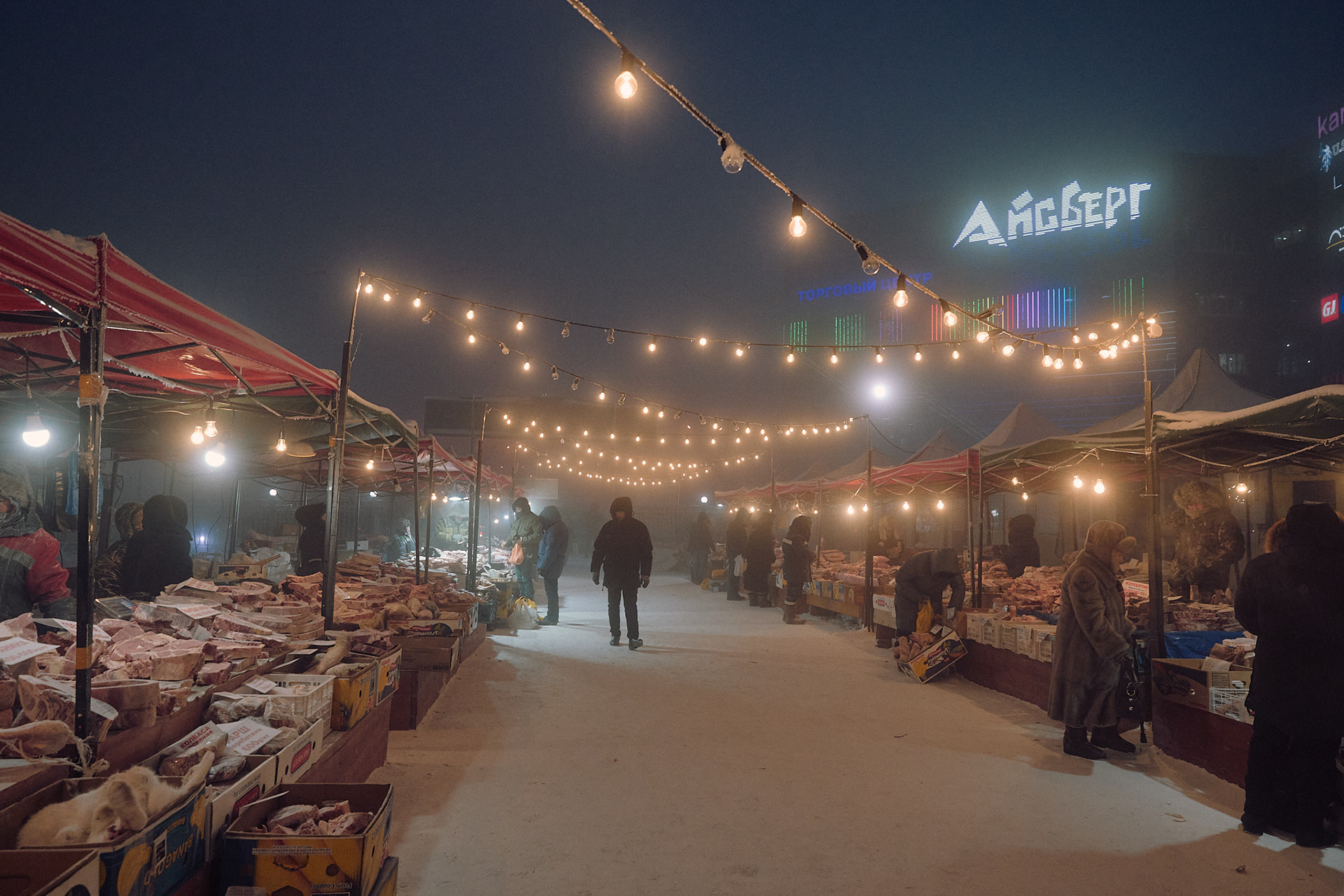
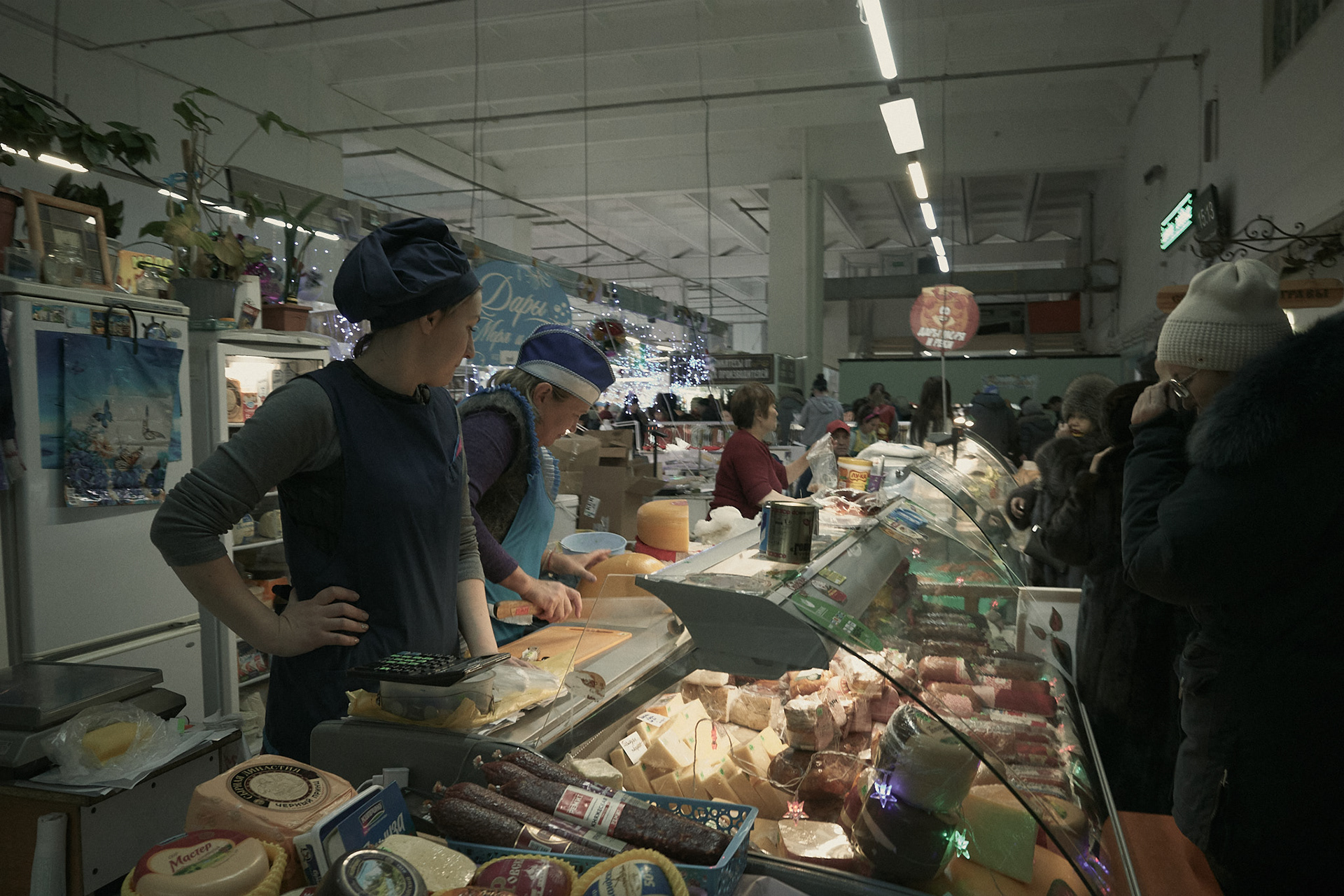
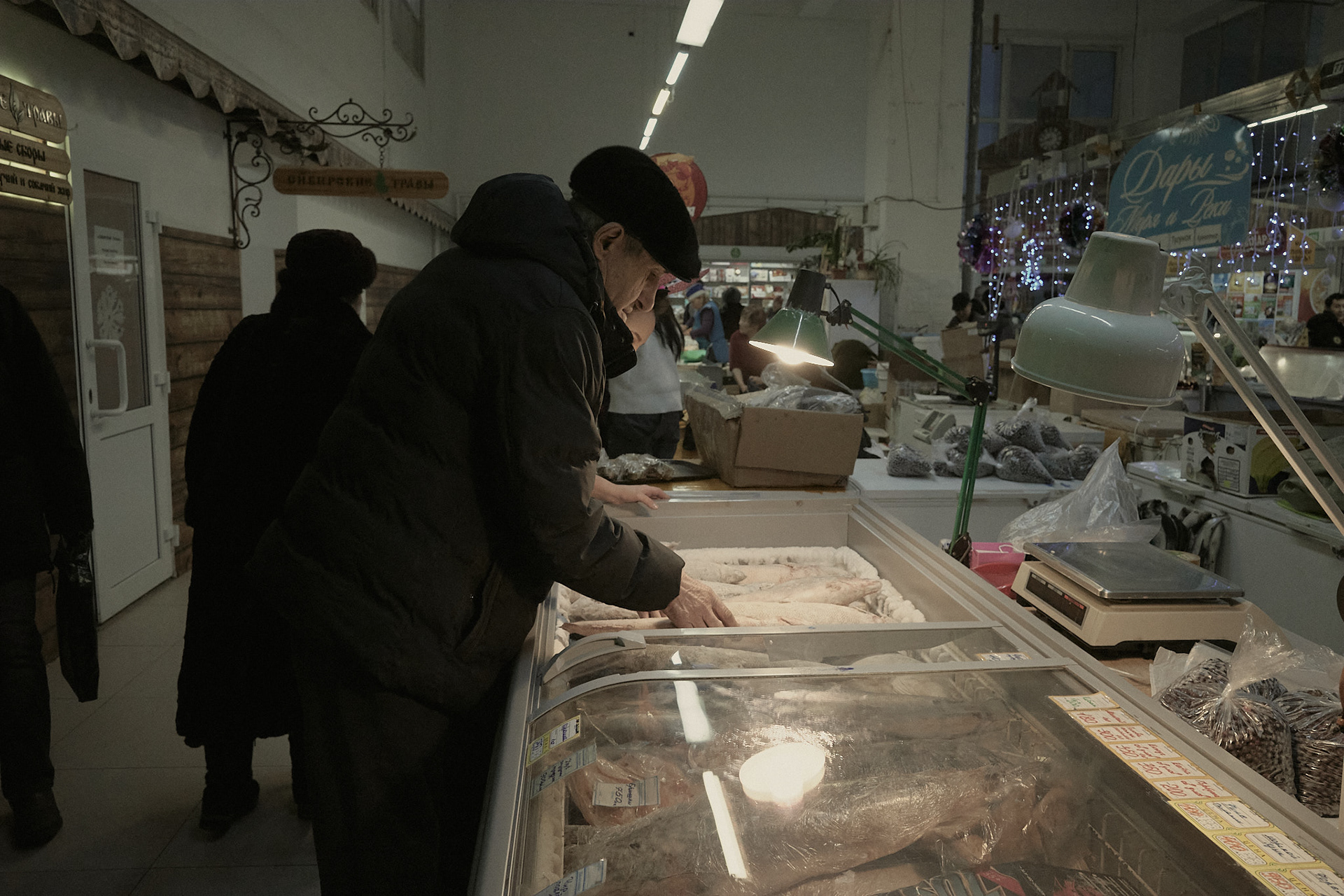
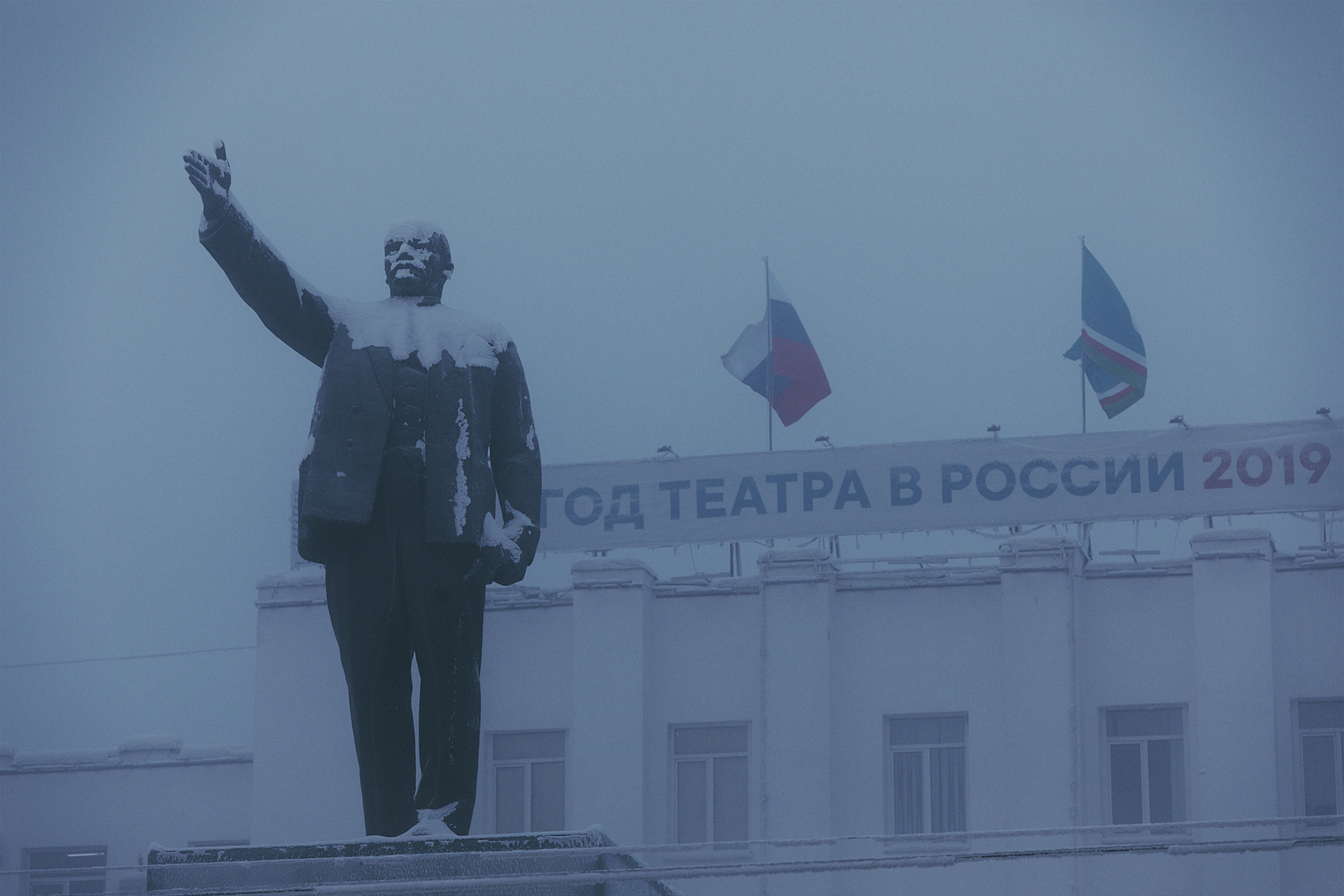
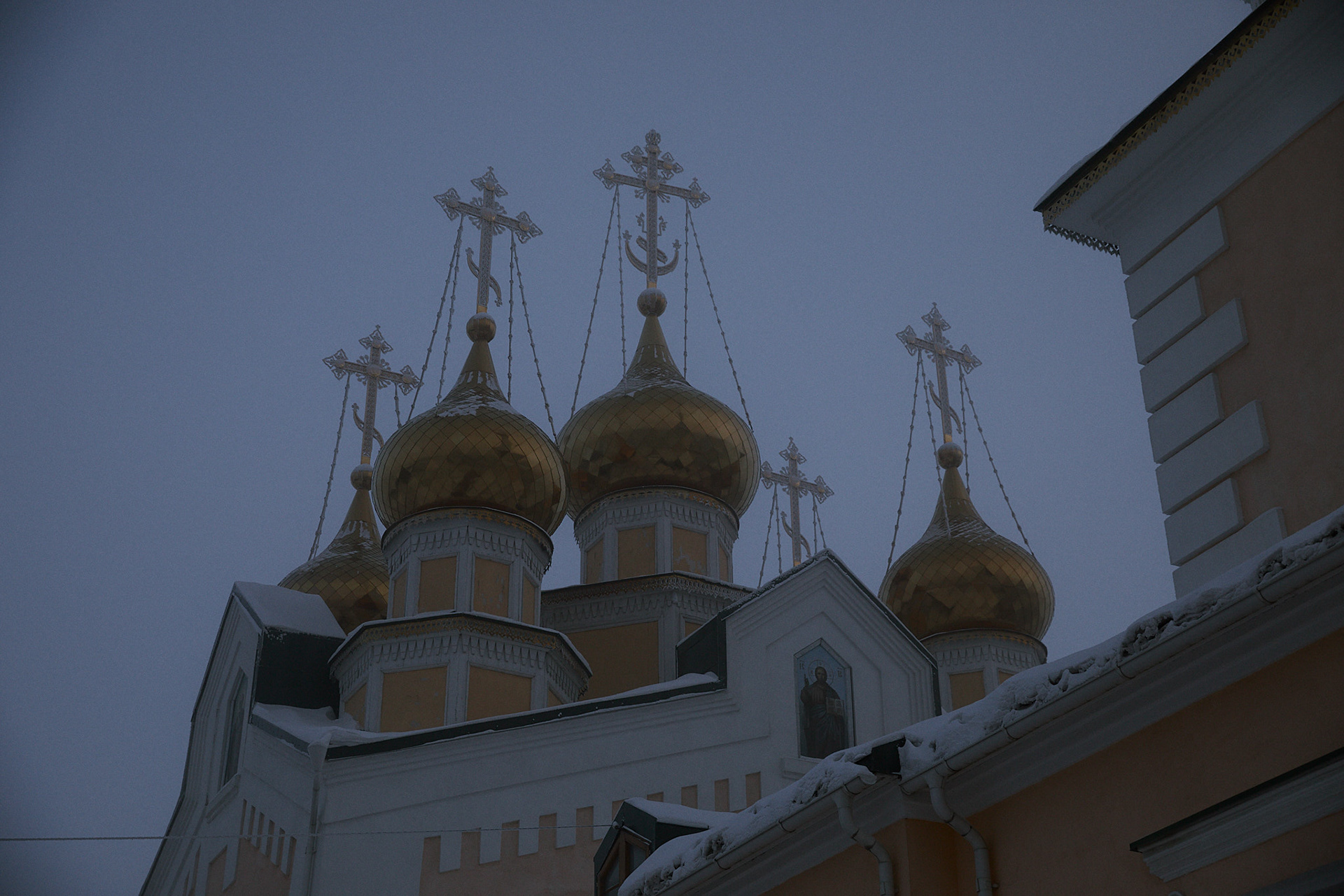
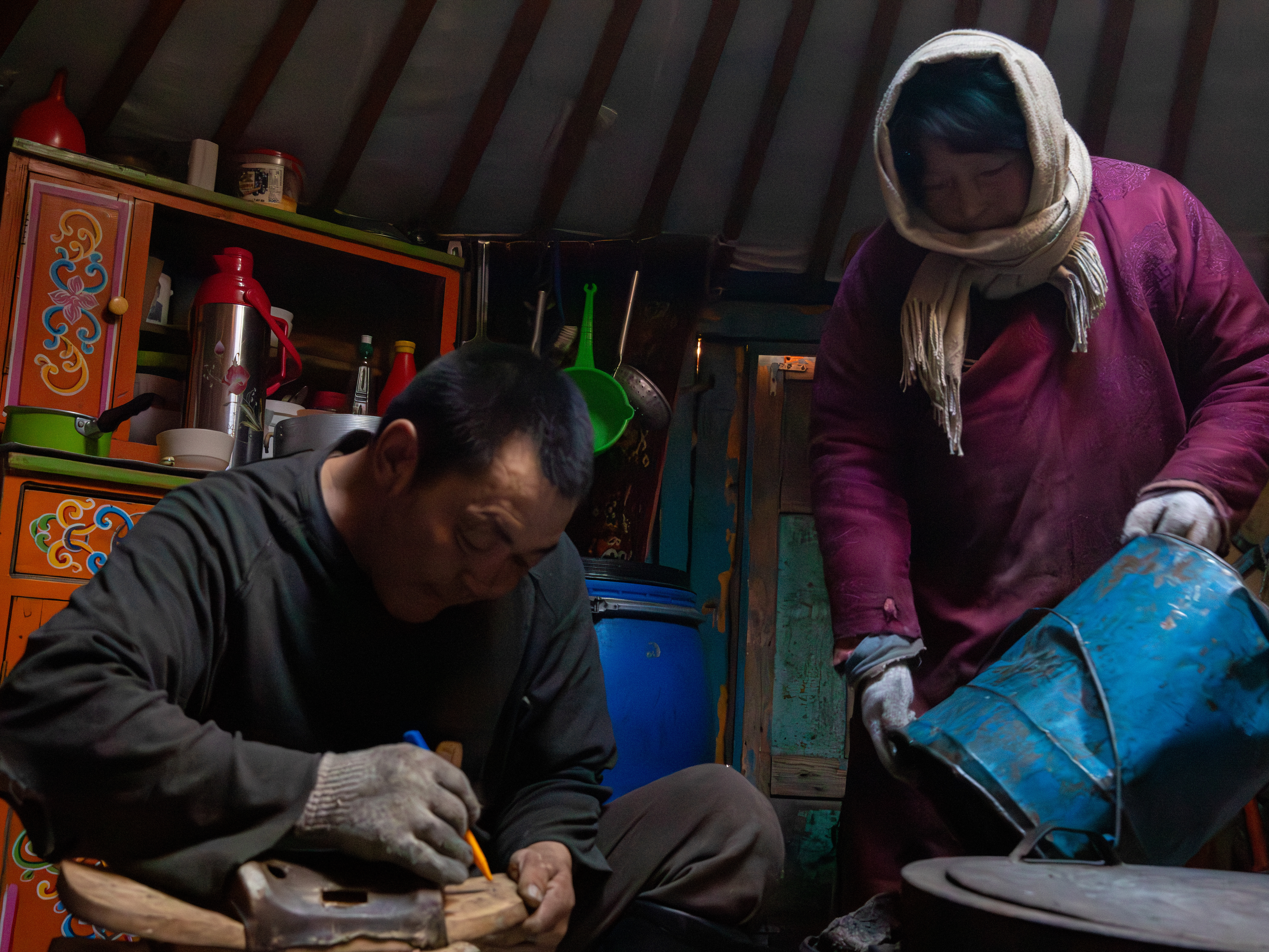
The coldest city on Earth, built entirely on permafrost. Buildings stand on stilts to keep their heat from melting the frozen ground, and gas pipes run through the air rather than underground. The entire city operates as if connected to a life-support system—insulating, circulating, holding the cold at bay. Yet what struck me was not the infrastructure but the people moving through it. At minus fifty degrees, breath freezes mid-air and a dense ice fog settles over the streets, reducing visibility to a few meters. Within that fog, people wait for buses, cross at traffic lights, sell frozen fish at open-air markets, and walk home carrying groceries. Daily life does not pause. It was here, watching a city function inside conditions that should make it impossible, that I first recognized the structure of "treatment" I would later document in Nature's Treatment—not as an attempt to change nature, but as people shaping their lives around conditions they cannot alter.
世界で最も寒い都市ヤクーツク。永久凍土の上に建っている。建物は地熱で凍土が溶けないよう高床式で地面から切り離され、ガス管は凍結を避けるために地中ではなく空中に張り巡らされている。都市全体が、巨大な生命維持装置のように機能している。しかし、私が最も強く印象を受けたのはインフラではなく、その中を動く人々だった。氷点下50度になると吐息は空中で凍りつき、濃い氷霧が街路を覆って視界は数メートルに落ちる。その霧の中で、人々はバスを待ち、信号を渡り、屋外の市場で凍った魚を売り、食料品を抱えて帰路につく。日常は止まらない。都市が機能し続ける条件を本来満たしていない環境の中で、それでも暮らしが回っている——その光景の中に、私が後に『Nature's Treatment』で記録することになる「処置」の構造を初めて認識した。自然を変えるのではなく、自然の条件を受け入れたまま暮らしを成り立たせている人々の姿として。